Can You Use Famous Songs on Social Media?
Famous songs, global hits, Japanese hit songs, anime songs, chart music, and trending tracks can make social media videos feel powerful. But popularity does not mean the music is free to use.
If you want to use a well-known song in YouTube videos, Instagram Reels, TikTok videos, LinkedIn posts, ads, company videos, or brand campaigns, you need to understand the difference between casual platform use and licensed commercial use.
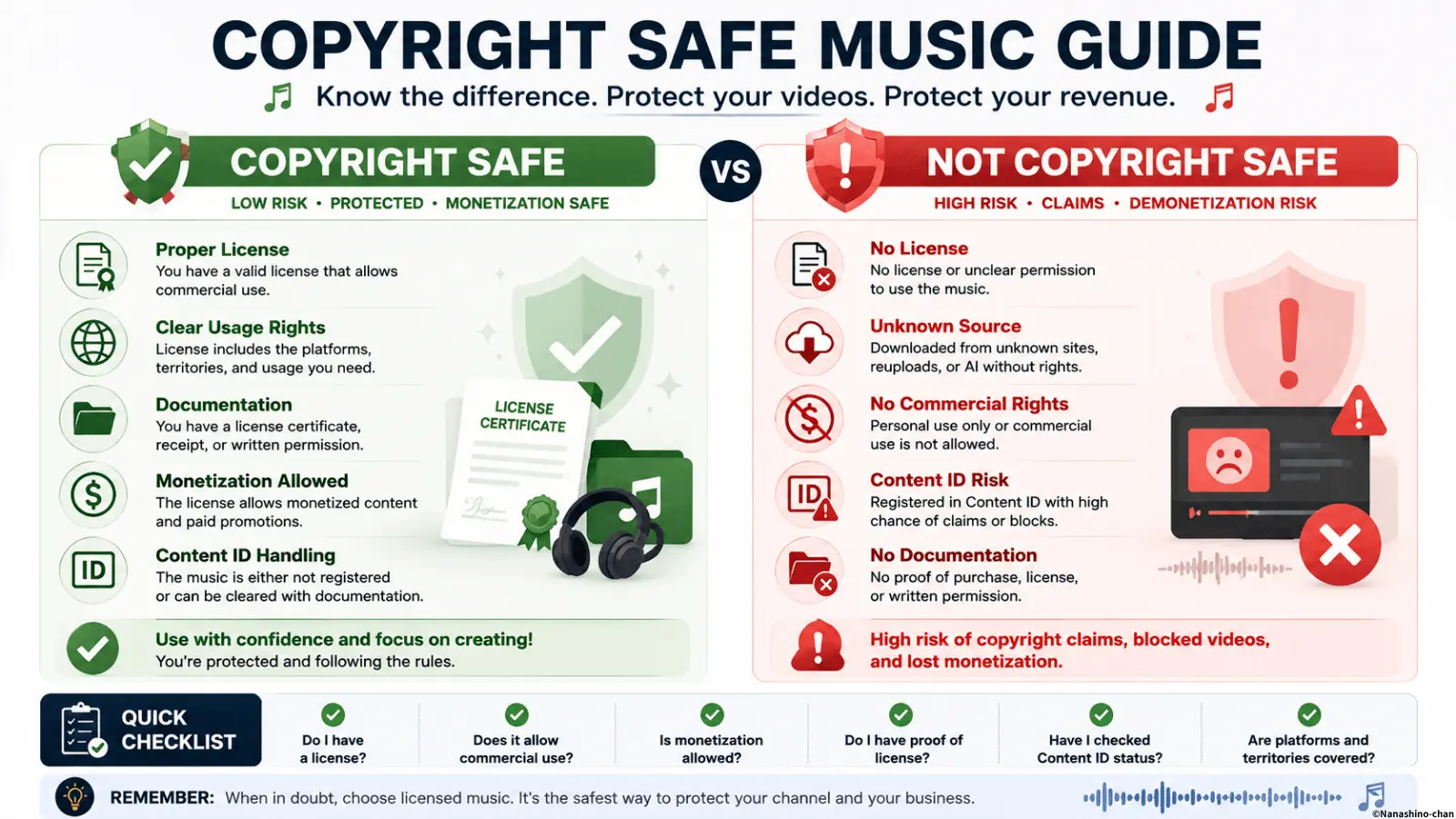
Direct Answer: Sometimes, But Not Automatically
You may be able to use famous songs in some social media situations when the platform provides licensed music for that specific type of use. However, that does not automatically mean the same song can be used for business promotion, paid ads, YouTube monetization, client work, or commercial campaigns.
The key question is not simply “Is this song available on the platform?” The real question is: “Does the license allow this exact use case, account type, platform, campaign, and commercial purpose?”
- • Personal posts and commercial campaigns may have different rules
- • Organic social posts and paid ads may require different permissions
- • Business accounts may face stricter music usage limitations
- • YouTube monetization and brand promotion require careful rights review
Why This Matters for Creators and Brands
Many creators assume that if a song appears in a social media app, it can be used freely. That assumption can be risky. Platform music access may be limited by account type, territory, content type, monetization status, advertising use, and rights holder agreements.
For companies, agencies, influencers, and marketers, the risk is even higher. If a video promotes a product, service, brand, event, store, campaign, or client, the music may be treated as part of a commercial communication asset.
- • A personal Reel is different from a paid Instagram ad
- • A casual TikTok post is different from a brand campaign
- • A fan edit is different from a product promotion
- • A YouTube video for fun is different from a monetized channel asset
- • A company video needs stronger rights clarity than a private post
Two Rights Are Usually Involved: Song and Recording
A famous song usually involves more than one layer of rights. There may be rights in the musical composition, such as melody and lyrics, and rights in the sound recording, also called the master recording or original recording.
This is why using a famous song in a commercial video can be more complicated than simply crediting the artist. In many cases, you need permission from the relevant rights holders before using the music in ads, brand videos, client campaigns, or business content.
Composition Rights
These relate to the written song, including melody, lyrics, and publishing rights.
Master Rights
These relate to the specific recorded version of the song, often controlled by a label or recording owner.
Usage Permission
Your video use may require permission based on platform, campaign, territory, duration, and commercial purpose.
Why Business and Advertising Use Is Different
If a company uses a famous song in a video to promote a product, service, store, course, app, SaaS product, restaurant, event, brand, or campaign, that use is usually more sensitive than a normal personal post.
Advertising use often requires clearer permission because the song becomes part of a commercial message. This can include social media ads, UGC-style ads, influencer campaigns, YouTube ads, product launch videos, and brand storytelling.
- • Product promotion can require commercial music clearance
- • Paid ads usually need stronger permissions than organic posts
- • Client work requires documented rights before delivery
- • Brand campaigns should not rely on unclear platform audio access
- • Using a famous song without proper permission may create legal or platform risk
What About Japanese Hit Songs or Global Hit Songs?
Japanese hit songs, global pop songs, anime songs, movie soundtrack music, and well-known commercial releases are usually protected by copyright and managed by multiple rights holders. Even if a song is popular on TikTok or Instagram, that does not mean every use is allowed.
For commercial use, businesses may need to confirm rights with the relevant music publisher, copyright management organization, record label, master rights owner, or other rights holder. The process can take time and may involve permission review, usage conditions, and fees.
- • Famous songs often involve both publishing rights and master recording rights
- • Permission may be required before using the music in ads or brand videos
- • Rights clearance can take time, especially for commercial campaigns
- • Fees and usage conditions may vary depending on the song and project scope
- • Using the music outside the approved scope can create additional risk
If You Really Want to Use a Famous Song
If a famous song is essential for your campaign, do not assume it is safe just because you found it in an app, on a streaming service, or in a short-form video. Confirm the rights before production or campaign launch.
For commercial use, the safer workflow is to identify the song, identify the relevant rights holders, explain your intended use, request permission, review the terms, and keep documentation before publishing.
1. Identify the Song
Confirm the exact song, artist, recording version, and rights source before using it.
2. Contact Rights Holders
Commercial use may require permission from publishers, labels, rights organizations, or master owners.
3. Use Only as Approved
Follow the approved platform, duration, territory, campaign, format, and usage conditions.
Common Mistakes When Using Famous Songs on Social Media
Most problems happen because creators or businesses assume that music access equals music permission. In reality, a song may be available for listening, available inside an app, or available for certain personal posts, but still not cleared for the intended commercial use.
- • Assuming a trending song is safe because many people use it
- • Using hit songs in paid ads without proper clearance
- • Using streaming music in YouTube videos or brand content
- • Assuming platform music libraries cover all business accounts
- • Posting client videos with unclear music rights
- • Reusing a social media video as an ad without checking music permissions
- • Thinking crediting the artist replaces a license
- • Using remixes, slowed versions, or “original audio” without checking the source
Platform Music Libraries Are Not Always Universal Licenses
Some social platforms provide music libraries for users. These libraries can be useful, but the permitted use may depend on the platform, country, account type, post format, and whether the content is personal, commercial, organic, or paid.
This is especially important for businesses. A song available in a personal account may not be available for a business account, and music allowed in an organic post may not be allowed in a paid advertisement or off-platform campaign.
- • Check whether your account is personal, creator, or business
- • Check whether the video is organic or paid advertising
- • Check whether the music can be used outside the platform
- • Check whether the video can be republished to YouTube, websites, or ads
- • Check whether the use is allowed for brand or client work
A Safer Alternative: Officially Distributed and Licensed Music
If you are creating normal creator content, vlogs, casual Reels, TikTok posts, or non-ad social media videos, using officially distributed music from the artist’s official release can be a cleaner starting point than using anonymous audio or reposted clips.
For business use, brand campaigns, paid ads, sponsored content, product videos, client work, and commercial social media distribution, the safer approach is to use music with clear commercial licensing terms.
- • For personal creator posts: use official releases and follow platform rules
- • For monetized videos: confirm platform and license permissions
- • For business content: use music with commercial usage rights
- • For paid ads: request a sync or campaign license
- • For client work: keep proof of license and usage scope
Using Nanashino-chan Music on Social Media
Nanashino-chan’s officially distributed music is designed for modern creator workflows. For individual creators, using officially released Nanashino-chan tracks in normal social media content such as vlogs, lifestyle videos, and regular Reels can be a practical way to avoid unclear anonymous audio sources.
For companies, agencies, paid advertisements, product promotion, sponsored videos, commercial campaigns, and client projects, a commercial or sync license is recommended so the usage scope is clear before publishing.
For Individual Creators
Use official releases in regular social content while following each platform’s current music and copyright rules.
For Businesses
Request commercial licensing for ads, product promotion, brand videos, social campaigns, and business accounts.
For Agencies
Use clear licensing for client work, sponsored content, paid campaigns, and multi-platform deliverables.
Platform policies and license terms can vary by usage. Always follow the official rules of the platform where you publish, and use the appropriate license for commercial projects.
SNS Music Usage Checklist
Before using a famous song, hit song, or trending track in a social media video, check the actual use case. This is especially important for creators who monetize content and businesses that publish ads or promotional videos.
- • Is the account personal, creator, business, or agency-managed?
- • Is the video personal, monetized, promotional, sponsored, or paid advertising?
- • Is the song available for this exact platform and account type?
- • Can the music be used in business content?
- • Can the video be used as an ad?
- • Can the video be republished on YouTube, websites, or other platforms?
- • Do you need permission for both the song and the recording?
- • Are territory, duration, and campaign scope limited?
- • Do you have proof of permission or license?
- • Is a licensed alternative safer for this project?
Use Cases Where Famous Songs Are Riskier
The more commercial the video becomes, the more careful you should be. Famous songs may create stronger emotional impact, but they also bring more rights complexity.
- • Social media ads
- • Brand campaigns
- • Product launch videos
- • Sponsored influencer content
- • E-commerce product ads
- • SaaS and app demo campaigns
- • YouTube monetized videos
- • LinkedIn company videos
- • Client deliverables
- • Event promotion videos
- • Restaurant, salon, fitness, real estate, or local business promotions
- • AI-generated marketing videos
Official Platform Copyright Policies
Major platforms officially state that purchasing or streaming music does not automatically grant rights for uploading, monetization, commercial use, advertising, or social media distribution. Always check the official rules for the platform and account type you use.
- YouTube Copyright Guidelines
- Instagram Copyright Information
- Facebook Copyright Policy
- TikTok Copyright Policy
- LinkedIn Copyright Policy
Copyright policies and platform rules may change over time. Always review the latest official guidelines before publishing monetized, promotional, or commercial content.
FAQ
Can you use famous songs on social media?
You can use famous songs on social media only when the platform, music source, and rights holders allow that specific use. Personal posts, monetized videos, business posts, ads, and brand campaigns may require different permissions.
Can businesses use hit songs in social media ads?
Businesses should not assume that hit songs can be used in social media ads. Advertising and promotional use usually require clear permission for both the musical composition and the sound recording.
Does using a song from a social media music library make it safe for ads?
Not always. Platform music libraries may have different rules for personal accounts, creator accounts, business accounts, organic posts, and paid advertising. Always check the platform's current terms and your intended usage.
Can I use a Japanese hit song or global hit song in a company video?
A company video using a hit song often requires rights clearance before publication, especially if the video promotes a product, service, brand, campaign, or advertisement.
Who do I need permission from to use a famous song commercially?
Commercial use may require permission for the musical composition and the sound recording. This can involve music publishers, copyright management organizations, record labels, master rights owners, or other rights holders.
What is a safer alternative to famous songs for social media videos?
A safer alternative is to use officially distributed music with clear licensing terms for creator content, or a commercial sync license for ads, brand campaigns, and business use.
Need Safer Music for Social Media Videos?
Use officially distributed lo-fi music for creator content, or request a commercial sync license for ads, brand campaigns, product videos, sponsored content, and business social media use.
► View Licensing OptionsRelated Pages
- Music License Social Media Guide
- How Music Rights Work on Social Media
- Music for Instagram Reels
- Music for TikTok Creators
- Music for LinkedIn Videos
- Music License for Marketing Campaigns
- Music for E-commerce Advertising
- How to Check If Music Is Copyright-Safe
- ISRC and Shazam Music Identification
- Licensing Page