ISRC and Shazam Music Identification
Before using music in a video, ad, social media post, AI-generated video, or client project, it is important to understand whether the track can be identified, who the artist is, and whether the recording appears to be officially released.
ISRC codes and music recognition tools such as Shazam can help creators check recording identity and release information. They do not replace a license, but they can support a safer music selection workflow.
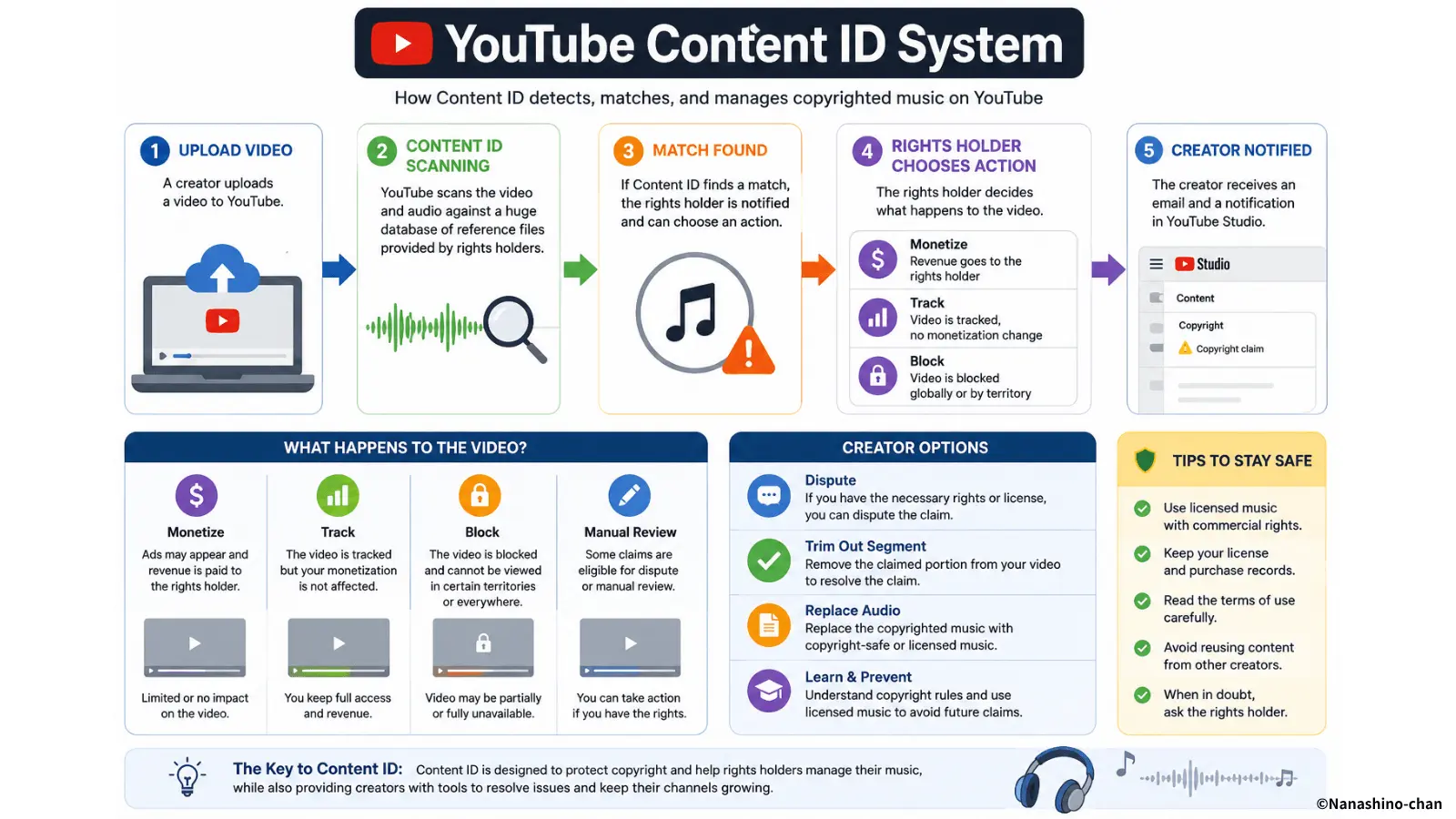
Why Music Identification Matters
Creators often find music through social media, short videos, editing apps, playlists, free download pages, AI tools, or reposted content. The problem is that a good-sounding track is not always easy to verify.
If you cannot identify the recording, artist, release, or rights source, it becomes harder to judge whether the music is suitable for YouTube, Instagram, TikTok, ads, client work, monetized videos, or commercial campaigns.
- • Music identification helps confirm the track title and artist information
- • Official releases are easier to verify than anonymous audio files
- • Commercial use still requires a license, even when a song is identifiable
- • Unclear music sources can create copyright and licensing uncertainty
What Is an ISRC Code?
ISRC stands for International Standard Recording Code. It is used to identify a specific sound recording or music video recording. In simple terms, it helps distinguish one released recording from another.
This matters because a song title alone is not always enough. A track can have remixes, alternate versions, edits, covers, re-releases, and different masters. ISRC helps identify the specific recording being distributed.
Recording Identity
ISRC helps identify a particular recording, not just a song title or general composition.
Release Tracking
Distributed music can be tracked more clearly across platforms, catalogs, and reporting systems.
Rights Context
An identifiable recording can make ownership and licensing questions easier to investigate.
What Shazam Can Tell You
Shazam can often identify music by listening to the audio and matching it against known recordings. When a match is found, it may show information such as the track title, artist name, album, artwork, and links to streaming platforms.
For creators, this can be useful because it helps answer a basic question: “What is this song, and who is it associated with?” That is an important first step before thinking about licensing or commercial use.
- • Track title identification
- • Artist name confirmation
- • Release or album information
- • Links to official music platforms
- • A stronger signal that the recording is formally distributed
Important: Shazam Identification Is Not a License
A successful Shazam result does not mean the song is free to use. It only helps identify the recording. If you want to use that music in a YouTube video, social media campaign, advertisement, client project, AI-generated video, product demo, or commercial video, you still need the proper usage rights.
This is especially important for famous songs, commercial releases, soundtrack music, major-label tracks, and music discovered through social media. Identification helps you know what the track is. Licensing determines whether you can use it.
- • Shazam can help identify music
- • ISRC can help identify a recording
- • Neither automatically grants commercial rights
- • Monetized and commercial videos still need proper permission
- • Ads, brand content, and client projects require stronger licensing clarity
Music Identification Checklist for Creators
Before using a track in a public or commercial video, check more than just whether the music sounds good. Try to confirm the recording identity, release context, licensing terms, and platform suitability.
- • Can the song be identified by title and artist?
- • Does the track appear to be officially released?
- • Is there a known artist, label, distributor, or rights source?
- • Is the recording associated with an ISRC or official release metadata?
- • Are the license terms clearly written?
- • Does the license allow video use?
- • Does the license allow monetized YouTube publishing?
- • Does the license allow commercial or brand usage?
- • Are Content ID or platform claim policies explained?
- • Do you have proof of license or permission?
What If Shazam Cannot Identify the Song?
If Shazam cannot identify a track, that does not automatically mean the music is unsafe. There are many possible reasons: the song may be unreleased, newly distributed, heavily edited, too short, too noisy, not yet available in recognition databases, or simply difficult to match.
However, if a song cannot be identified and you also cannot confirm the artist, rights holder, license terms, or official release source, you should be careful before using it in commercial content.
- • Identification failure is not automatic proof of risk
- • But unclear ownership can increase licensing uncertainty
- • Avoid using anonymous audio in ads, client projects, or monetized videos
- • Use officially released and properly licensed music when rights clarity matters
Be Careful with “Original Audio” Claims
On social media, audio may be labeled as “original audio” or appear to be created by an uploader. But this does not always mean the uploader owns all rights or that the music is safe for commercial use.
A track can be reposted, edited, slowed down, remixed, sampled, or re-uploaded under a different account. For personal posts, creators may not notice the risk immediately. For business use, ads, sponsored content, or client projects, unclear audio sources are much more risky.
- • “Original audio” on a platform does not always mean full ownership is clear
- • Reposted or edited music may still belong to another rights holder
- • Commercial use needs stronger verification than casual personal posting
- • If the source is unclear, choose licensed music instead
Nanashino-chan Music and Identification
Nanashino-chan’s officially distributed tracks are released as identifiable recordings through major music distribution channels. This makes it easier for listeners, creators, and businesses to confirm artist and track information through music platforms and recognition tools.
This matters because creators and businesses need more than a nice background track. They need music with clear source information, artist identity, and licensing direction before using it in public or commercial content.
- • Officially distributed Nanashino-chan tracks are designed to be identifiable
- • Many releases are managed with formal recording metadata
- • The catalog is built around creator and business usage contexts
- • Commercial licensing is available for videos, ads, brands, agencies, and AI content
Identification helps confirm the music source, but it does not replace licensing. For commercial videos, ads, client work, or monetized content, always use the appropriate license.
Use Cases Where Music Identification Helps
Music identification is useful whenever a creator, editor, brand, or agency needs to check whether a track has a clear source before publishing. It is especially important when content is monetized, commercial, client-facing, or distributed across multiple platforms.
- • YouTube videos and YouTube Shorts
- • Monetized creator channels
- • Instagram Reels and TikTok videos
- • Social media ads and brand campaigns
- • AI-generated videos and AI avatar content
- • Product demos and SaaS videos
- • E-commerce product ads
- • LinkedIn and B2B marketing videos
- • Agency client projects
- • Corporate training and business videos
Music Identification and Rights Management
Music identification, ISRC metadata, official distribution, and license documentation all support better rights management. They help creators understand what music they are using, where it comes from, and what permissions may be required.
For commercial projects, the goal is not simply to find music that avoids immediate problems. The goal is to build a repeatable workflow where every track has a clear source, clear usage terms, and clear documentation.
- ✔ Identify the track
- ✔ Confirm the artist and release context
- ✔ Check whether the recording is officially distributed
- ✔ Review license terms before publishing
- ✔ Keep proof of license for future verification
Official Platform Copyright Policies
Major platforms officially state that purchasing or streaming music does not automatically grant rights for uploading, monetization, commercial use, or social media distribution.
- YouTube Copyright Guidelines
- Instagram Copyright Information
- Facebook Copyright Policy
- TikTok Copyright Policy
Copyright policies and platform rules may change over time. Always review the latest official guidelines before publishing monetized or commercial content.
FAQ
What is ISRC in music?
ISRC stands for International Standard Recording Code. It is used to identify a specific sound recording or music video recording.
Can Shazam help identify who made a song?
Yes. Shazam can often identify a released track and show information such as the song title, artist name, album, artwork, and related platform links when the recording is available in recognition databases.
Does Shazam prove that a song is safe to use commercially?
No. Shazam identification can help confirm that a recording is identifiable, but it does not grant commercial usage rights. You still need a proper license for videos, ads, monetized content, or client work.
Is music unsafe if Shazam cannot identify it?
Not always. A track may fail to identify for many reasons. However, if a song cannot be identified and the rights holder or license terms are unclear, creators should be more careful before using it commercially.
Why should creators check music identification before using a song?
Checking music identification can help creators understand whether a track has an official release, artist information, recording identity, and ownership context before using it in video projects.
Can I use Nanashino-chan music after identifying it on Shazam?
Identification alone does not replace a license. Nanashino-chan’s officially distributed music can be identified as released tracks, but commercial use, ads, monetized videos, and client work should follow the appropriate licensing terms.
Need Identifiable, Licensed Music for Your Videos?
Use officially distributed lo-fi music with clear licensing options for YouTube videos, social media content, AI-generated videos, ads, product demos, brand campaigns, and client projects.
► View Licensing Options