ISRC Code Explained
An ISRC code, or International Standard Recording Code, is a unique identifier assigned to a specific sound recording or music video recording.
ISRC helps platforms, distributors, music databases, rights systems, labels, artists, and licensing workflows identify the exact recording being used. It is useful because different versions of the same song can have different recordings.
However, an ISRC is not a music license. It identifies a recording, but creators still need the correct permission to use that recording in YouTube videos, social media posts, ads, client work, or commercial projects.
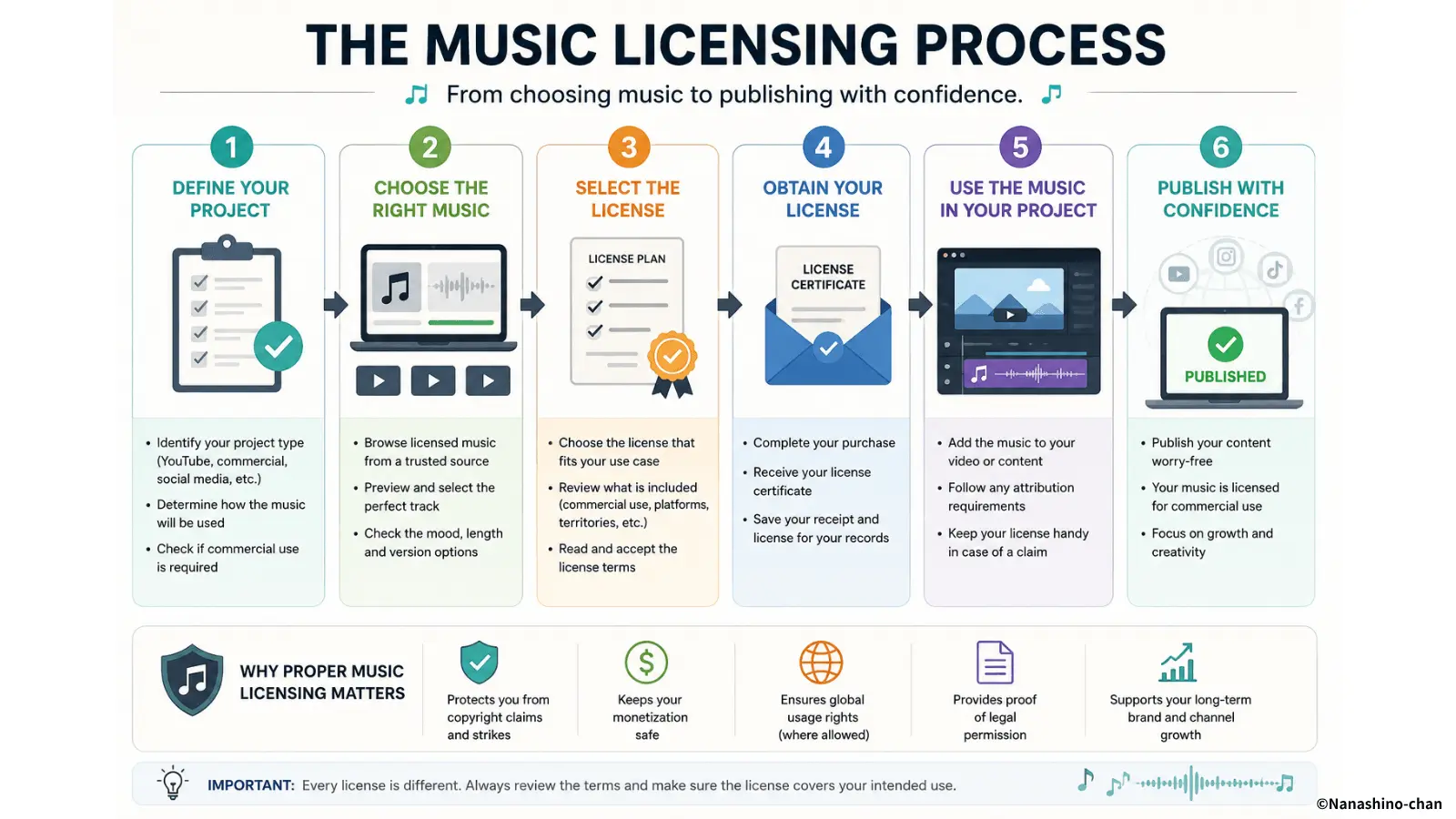
What Is an ISRC Code?
ISRC stands for International Standard Recording Code. It is a unique code used to identify a specific sound recording or music video recording.
The key word is recording. ISRC identifies the recorded audio or music video, not the general song idea, melody, lyrics, or composition by itself.
- • ISRC identifies a specific sound recording
- • It can also identify music video recordings
- • It is used in music distribution and metadata workflows
- • It helps distinguish different versions of the same song
- • It is not the same as copyright ownership
- • It is not the same as YouTube Content ID
- • It does not replace a music license
Why ISRC Matters: One Song Can Have Many Recordings
A single song can exist in multiple recorded versions. Each version may need its own identification because each recording can be distributed, monetized, licensed, and tracked separately.
| Version | Same Song? | Same ISRC? |
|---|---|---|
| Original studio recording | Yes | Has its own ISRC |
| Acoustic version | Same composition, different recording | Usually separate ISRC |
| Remix | Related composition, different recording | Usually separate ISRC |
| Live recording | Same song, different performance | Usually separate ISRC |
| Remastered recording | Same base recording, revised version | May require separate identification depending on release treatment |
What Does an ISRC Code Look Like?
An ISRC is commonly displayed as a 12-character code. It may be shown with hyphens for readability, but the underlying code is typically treated as a continuous identifier.
ISRC JP-ABC-24-12345
Example format only. Do not use this as a real ISRC.
The code helps identify a specific recording in music distribution, reporting, licensing, metadata, and royalty-related workflows.
Does an ISRC Code Mean the Music Is Copyright-Free?
No. An ISRC code does not mean the music is copyright-free, royalty-free, public domain, or automatically safe for YouTube, TikTok, Instagram, ads, or commercial projects.
ISRC identifies the recording. Copyright and licensing determine whether you are allowed to use that recording in your content.
- • ISRC identifies the recording
- • Copyright protects rights in music and recordings
- • A license gives permission for a specific use
- • Content ID may detect copyrighted material on YouTube
- • Shazam may identify a song from audio recognition
- • None of these automatically replace permission
ISRC vs Copyright vs Content ID vs Shazam
These systems are related to music identification and rights, but they are not the same. Confusing them can lead to licensing mistakes.
| Term | What It Does | What It Does Not Do |
|---|---|---|
| ISRC | Identifies a specific recording | Does not grant usage permission |
| Copyright | Protects rights in music, recordings, and creative works | Does not automatically tell you whether you can use a track |
| Music license | Gives permission for defined usage | Does not necessarily mean claim-free in every platform system |
| YouTube Content ID | Detects matching copyrighted audio or video on YouTube | Does not replace licensing or ownership records |
| Shazam | Identifies songs through audio recognition and metadata | Does not prove you have permission to use the music |
ISRC and Shazam: Why Music Identification Matters
When a song can be identified through music recognition services such as Shazam, it often means the recording is part of a recognizable music metadata ecosystem. This can help listeners, creators, and clients identify the artist and track.
However, Shazam recognition is not the same as a license. It can help identify the song, but creators still need permission for YouTube, social media, ads, or commercial use.
- • Shazam can help identify a track from audio
- • ISRC helps identify a specific recording in metadata systems
- • Recognizable music is often easier to verify than anonymous audio
- • Identification does not equal permission
- • For commercial use, a license is still required
For a deeper page on this topic, see: ISRC and Shazam Music Identification.
Why Creators, Brands, and Agencies Should Care About ISRC
Creators often focus on whether a track sounds good. Businesses and agencies also need to know whether the exact recording can be identified, licensed, documented, and used safely in a professional workflow.
- • YouTube creators may need proof of track identity
- • Agencies need cleaner documentation for client work
- • Brands need to avoid anonymous or unclear audio sources
- • Commercial campaigns need track-level licensing clarity
- • Music supervisors and editors need to know which recording is used
- • AI video creators need identifiable music for business workflows
- • Licensing workflows become easier when recordings are clearly identified
How ISRC Supports Music Licensing Workflows
Commercial music licensing works best when the exact recording is clear. The ISRC can help identify the track being licensed so there is less confusion between similar titles, edits, remixes, instrumentals, and alternate versions.
A good music license should still include practical usage terms. ISRC can support identification, but it does not replace the license itself.
- • Track title
- • Artist name
- • Recording identifier or ISRC when available
- • License holder
- • Permitted platforms
- • Commercial-use permission
- • Monetization permission
- • Duration and territory
- • Attribution requirements
- • Content ID or claim policy
ISRC and YouTube: What Creators Should Understand
ISRC is not the same as YouTube Content ID. ISRC identifies a recording. Content ID is YouTube’s automated system for detecting matching copyrighted audio or video.
A track can have an ISRC and still trigger Content ID. A licensed track can also trigger a claim if the rights holder uses Content ID and the claim needs to be released or verified.
- • ISRC helps identify the recording
- • Content ID helps detect matching content on YouTube
- • A license explains what you are allowed to do
- • Proof of license may be needed if a claim appears
- • Monetized videos and sponsored content need stronger documentation
For more detail, see: YouTube Content ID Guide.
How Nanashino-chan Uses Track Identification
Nanashino-chan’s officially distributed music is managed as identifiable recordings. Many releases are associated with formal recording metadata such as ISRC-based identification.
This helps support clearer licensing conversations for creators, brands, agencies, AI video creators, YouTube channels, social media marketers, and commercial projects.
Identifiable Recordings
Officially distributed tracks are easier to identify than anonymous or reposted audio files.
Commercial Licensing
Music can be licensed for creators, brands, campaigns, social content, and client projects.
Creator Workflows
Useful for YouTube videos, Shorts, ads, podcasts, AI videos, and brand storytelling.
Preview Music Before You License
Explore original lo-fi music designed for YouTube creators, social media videos, AI content, brand campaigns, podcasts, client work, and commercial projects.
Browse the catalog → All Tracks
Official ISRC and Platform Copyright Resources
ISRC helps identify recordings, but music usage rights still depend on copyright, licensing terms, platform rules, and the specific project. Always review current official guidance before using music commercially.
- International ISRC Agency
- Japan ISRC Registration Authority
- YouTube Copyright Guidelines
- YouTube Content ID Overview
- Instagram Copyright Information
- TikTok Copyright Policy
This page is an educational guide and not legal advice. ISRC identification does not replace a valid music license.
FAQ
What is an ISRC code?
An ISRC code, or International Standard Recording Code, is a unique identifier assigned to a specific sound recording or music video recording.
Does an ISRC code mean music is copyright free?
No. An ISRC code identifies a recording. It does not mean the music is copyright free, royalty free, or automatically cleared for YouTube, social media, ads, or commercial use.
Is ISRC the same as Content ID?
No. ISRC identifies a specific recording, while YouTube Content ID is an automated system that detects matching copyrighted audio or video on YouTube.
Can ISRC help with music licensing?
Yes. ISRC can help identify the exact recording being licensed, which reduces confusion between different versions, edits, remixes, releases, and recordings.
Can Shazam identify songs through ISRC?
Shazam identifies music through audio recognition and metadata systems. ISRC can support recording identification in distribution metadata, but Shazam recognition does not replace a music license.
Do creators still need permission if a song has an ISRC?
Yes. ISRC helps identify the recording, but creators still need the correct license or permission to use that music in videos, ads, social media posts, client work, or commercial projects.
Need Identifiable Music with Clear Licensing?
Use original lo-fi music with commercial licensing options for YouTube creators, social media videos, AI content, brand campaigns, ads, podcasts, and client projects.