Commercial Use Music Guide
Commercial use music means music used in content connected to business, revenue, promotion, advertising, monetization, client work, brand campaigns, or professional media.
If you use music in YouTube videos, social media ads, Instagram Reels, TikTok campaigns, podcasts, product videos, client projects, SaaS demos, AI-generated videos, or brand content, you may need a commercial music license.
This guide explains what counts as commercial use, which license you may need, what rights to check, and how creators, brands, agencies, and businesses can reduce copyright uncertainty before publishing.
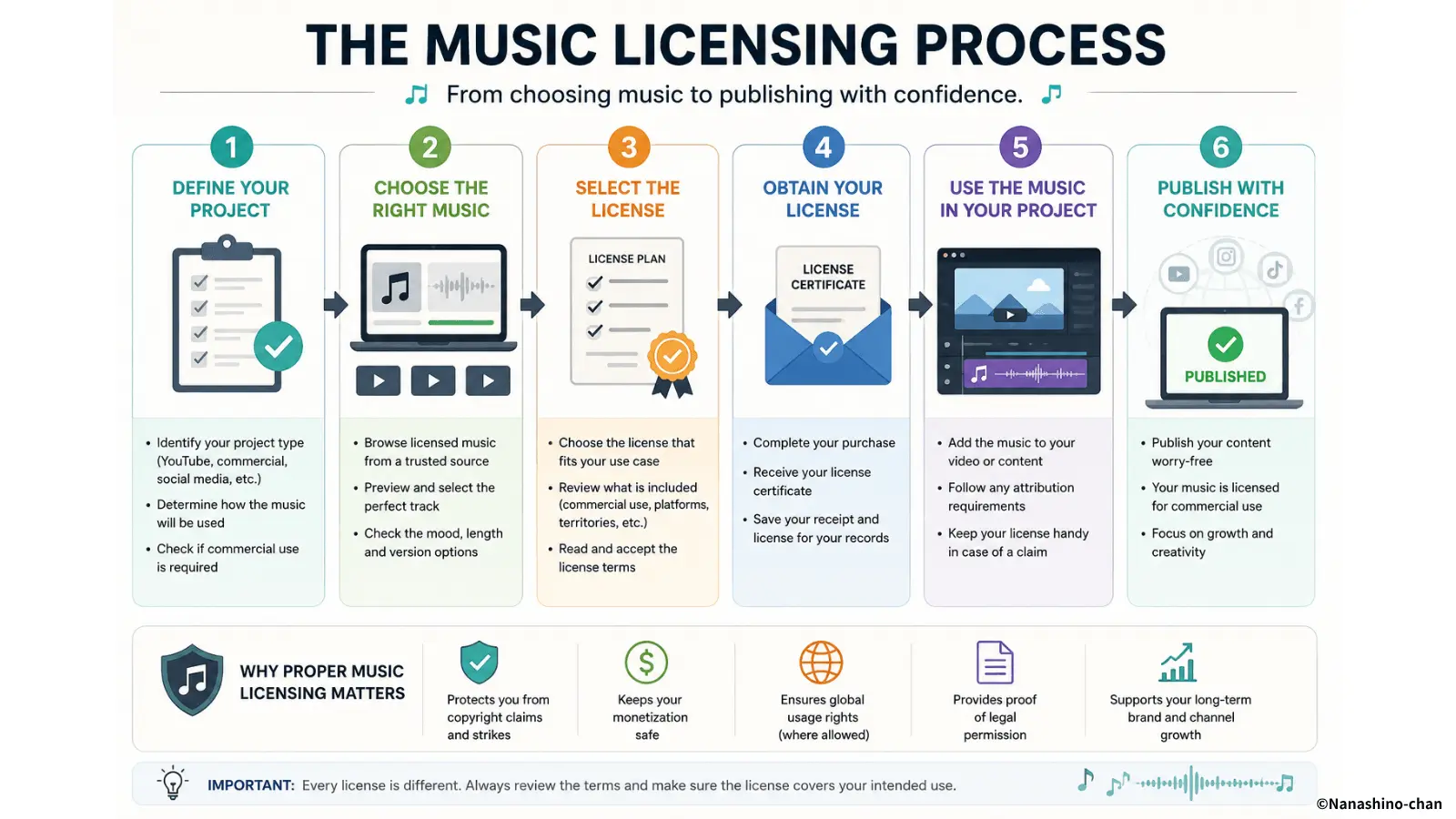
What Is Commercial Use Music?
Commercial use music is music used in content that supports a business, earns revenue, promotes a product or service, represents a brand, supports a client project, or appears in professional media.
The important point is not only whether you personally make money from the video. A video can be commercial if it promotes a brand, supports a campaign, appears on a company account, advertises a service, is delivered to a client, or is used as part of a business workflow.
- • Monetized YouTube videos
- • Sponsored creator content
- • Brand campaigns and product promotions
- • Social media ads and paid campaigns
- • Client videos and agency deliverables
- • Podcasts, webinars, online courses, and livestreams
- • SaaS demos, product videos, app demos, and corporate videos
- • AI-generated marketing videos and business content
Is Your Music Use Commercial?
Many creators are unsure whether their video is “commercial.” Use the table below as a practical guide. The safest approach is to review the license before publishing, especially if the content involves money, promotion, clients, or business visibility.
| Use Case | Usually Commercial? | Recommended Action |
|---|---|---|
| Personal video with no business purpose | Usually no | Check platform rules and attribution requirements. |
| Monetized YouTube video | Yes | Use music with monetization permission. |
| Sponsored creator video | Yes | Use a commercial or sync license. |
| Company Instagram Reel | Usually yes | Check business account and commercial usage rights. |
| TikTok brand campaign | Yes | Use music cleared for campaign or advertising use. |
| Client video editing project | Yes | Confirm client-facing usage rights and documentation. |
| Product demo or SaaS video | Yes | Use a business-friendly commercial license. |
| Paid social media ad | Yes | Use sync, campaign, or custom licensing. |
Why Commercial Music Licensing Matters
Many creators mistakenly believe that buying a song, streaming music, downloading a track, or giving credit automatically allows commercial use. In most cases, those actions do not replace a proper music license.
Commercial music licensing matters because platforms, rights holders, brands, clients, and advertising systems may require proof that the music is allowed for the exact usage.
- • Copyright claims can affect YouTube monetization
- • Social platforms may mute or restrict videos
- • Brand campaigns may require proof of usage rights
- • Client projects need clear handoff documentation
- • Paid ads require stronger rights clarity than casual posts
- • Business videos may be reused across multiple platforms
Music Rights You Should Understand
Commercial music usage often involves more than one layer of rights. This is why famous songs, streaming tracks, and unclear “free music” downloads can be risky for business content.
| Rights Type | Meaning | Why It Matters |
|---|---|---|
| Master Rights | Rights in the specific sound recording | You need permission to use the actual recorded track. |
| Composition Rights | Rights in the melody, lyrics, and composition | Famous songs often require publisher or rights organization clearance. |
| Sync Rights | Permission to synchronize music with video | Important for ads, brand videos, YouTube videos, and social campaigns. |
| Platform Rights | Rules for using music on YouTube, Instagram, TikTok, Facebook, LinkedIn, or other platforms | Platform access does not always equal broad commercial permission. |
| Campaign Scope | Duration, territory, media type, and ad usage | Important for business campaigns, agencies, and client work. |
What Music License Do You Need?
The right license depends on how the music will be used. A personal video, monetized YouTube channel, brand ad, client project, and full campaign may require different licensing scopes.
| Project Type | Recommended License | Best For |
|---|---|---|
| Personal non-commercial content | Personal / platform-permitted use | Casual creator videos and non-commercial projects. |
| Monetized creator content | Commercial license | YouTube monetization, podcasts, Shorts, and creator channels. |
| Sponsored content | Commercial / sync license | Brand deals, influencer campaigns, and product promotions. |
| Paid ads | Sync / campaign license | YouTube ads, Instagram ads, TikTok ads, and e-commerce campaigns. |
| Client work | Commercial / custom license | Freelancers, agencies, client deliverables, and business videos. |
| Large campaign or exclusive use | Custom / buyout license | Major campaigns, exclusive use, broadcast, or special terms. |
Commercial Music Use by Platform
Commercial music rules can vary by platform, account type, and project purpose. A track that works for a personal post may not be safe for a paid ad, business account, client video, or multi-platform campaign.
YouTube
Check monetization rights, Content ID policy, attribution, and whether the track can be used in sponsored or commercial videos.
Instagram & Facebook
Personal, creator, business, organic, and ad use can differ. Business and promotional use need stronger rights clarity.
TikTok
Trending audio may be available for some uses, but brand campaigns and ads should use properly cleared music.
B2B videos, company page posts, thought leadership, and paid campaigns should use commercially licensed music.
Podcasts
Podcast intros, outros, ads, and distribution across platforms may require a license that covers audio publishing.
Websites & Ads
Landing pages, product videos, e-commerce ads, SaaS demos, and sales videos should use clear commercial licensing.
Common Commercial Music Licensing Mistakes
Most commercial music problems happen when creators assume that access equals permission. A track can be easy to download, available in an app, or popular on social media, but still not cleared for your business use.
- • Using Spotify or Apple Music songs in videos
- • Assuming credit replaces permission
- • Using famous songs in brand campaigns without clearance
- • Assuming royalty-free music covers every commercial use
- • Using personal-use music in client projects
- • Reusing organic social videos as paid ads without checking music rights
- • Delivering videos to clients without license documentation
- • Ignoring Content ID, attribution, or platform restrictions
What Should a Commercial Music License Include?
A useful commercial music license should clearly explain what you are allowed to do with the track. If you need to prove your rights later, vague wording is not enough.
- • Track title and artist name
- • License holder or buyer name
- • Permitted platforms
- • Commercial use permission
- • Monetization permission
- • Advertising or campaign permission
- • Duration and territory
- • Client work or agency usage scope
- • Attribution requirements
- • Content ID or claim policy
- • Proof of purchase or license record
ISRC, Track Identification, and Rights Clarity
Commercial music licensing becomes easier when the track is identifiable. ISRC stands for International Standard Recording Code, and it helps identify specific sound recordings.
Nanashino-chan’s officially distributed music is managed as identifiable recordings. Many releases are associated with formal recording metadata such as ISRC-based identification, helping clarify track identity and release context.
- ✔ Identifiable recordings
- ✔ Clearer artist and track identity
- ✔ Commercial licensing available
- ✔ Useful for creators, brands, agencies, and business videos
Track identification supports rights clarity, but it does not replace licensing. Always use the appropriate license for videos, ads, client work, or commercial campaigns.
Commercial-Ready Lo-Fi Music for Creators and Brands
Nanashino-chan provides original lo-fi music with commercial licensing options for YouTube creators, brands, agencies, businesses, AI video creators, podcasters, marketers, and social media teams.
The music is designed for modern content workflows: calm background music, product videos, SaaS demos, brand storytelling, social media campaigns, AI-generated videos, podcasts, and commercial creator projects.
For Creators
Music for monetized videos, Shorts, podcasts, livestreams, tutorials, and social media content.
For Brands
Music for ads, campaigns, product videos, e-commerce content, and business storytelling.
For Agencies
Music for client projects, social campaigns, branded content, and commercial deliverables.
Preview Music Before You License
Listen to lo-fi tracks before using them in YouTube videos, ads, social media content, podcasts, AI-generated videos, brand campaigns, or client projects.
Browse the catalog → All Tracks
Official Platform Copyright Policies
Major platforms officially state that purchasing or streaming music does not automatically grant rights for uploading, monetization, commercial use, advertising, or social media distribution.
- YouTube Copyright Guidelines
- YouTube Audio Library Help
- Instagram Copyright Information
- Facebook Copyright Policy
- TikTok Copyright Policy
- LinkedIn Copyright Policy
Copyright policies and platform rules may change over time. Always review the latest official guidelines before publishing monetized, promotional, or commercial content.
FAQ
What is commercial use music?
Commercial use music means music used in content connected to business, revenue, promotion, advertising, monetization, client work, brand campaigns, or professional media.
Do YouTube creators need a commercial music license?
YouTube creators may need a commercial music license when using music in monetized videos, sponsored content, product reviews, brand deals, client projects, or business-related channels.
Can I use streaming music for commercial videos?
No. Streaming or purchasing music for listening generally does not grant permission to use that music in commercial videos, ads, social media campaigns, or client projects.
What license do I need for ads or brand campaigns?
Ads, brand campaigns, sponsored content, and client work usually need a commercial license, sync license, or custom license that clearly allows promotional and business use.
Is royalty-free music always safe for commercial use?
Not always. Royalty-free music can still have restrictions, attribution requirements, platform limits, Content ID rules, or exclusions for advertising and client work.
What should a commercial music license include?
A commercial music license should explain the track title, artist, license holder, permitted platforms, commercial use rights, monetization rights, campaign scope, duration, territory, and Content ID policy.
Need Music for Commercial Use?
Use original lo-fi music with commercial licensing options for YouTube, social media, ads, podcasts, product videos, AI-generated videos, brand campaigns, agencies, and client projects.
Related Pages
- Commercial Music Licensing
- Music Licensing for Commercial Use Guide
- Music License for Business Videos
- Music License for Marketing Campaigns
- Music License for Agencies
- How to Choose a Music License for Videos
- Can You Use Famous Songs on Social Media?
- YouTube Audio Library vs Commercial Music
- Music Rights Explained
- Licensing Page