YouTube Music Licensing Guide
YouTube Audio Library Commercial Use: Attribution, Outside YouTube & License Terms
Can you use YouTube Audio Library music for commercial use? In many standard YouTube video situations, yes — but creators should still check the official license type, attribution requirements, and usage terms for each track before publishing.
The YouTube Audio Library can be useful for monetized YouTube videos, Shorts, tutorials, educational videos, and creator content. However, it is not the same as a project-specific commercial music license for brand campaigns, client videos, paid ads, AI videos, or multi-platform business use.
This guide explains what to check before using YouTube Audio Library music, when attribution may be required, whether outside-YouTube usage needs extra review, and when dedicated commercial licensing is a better fit.
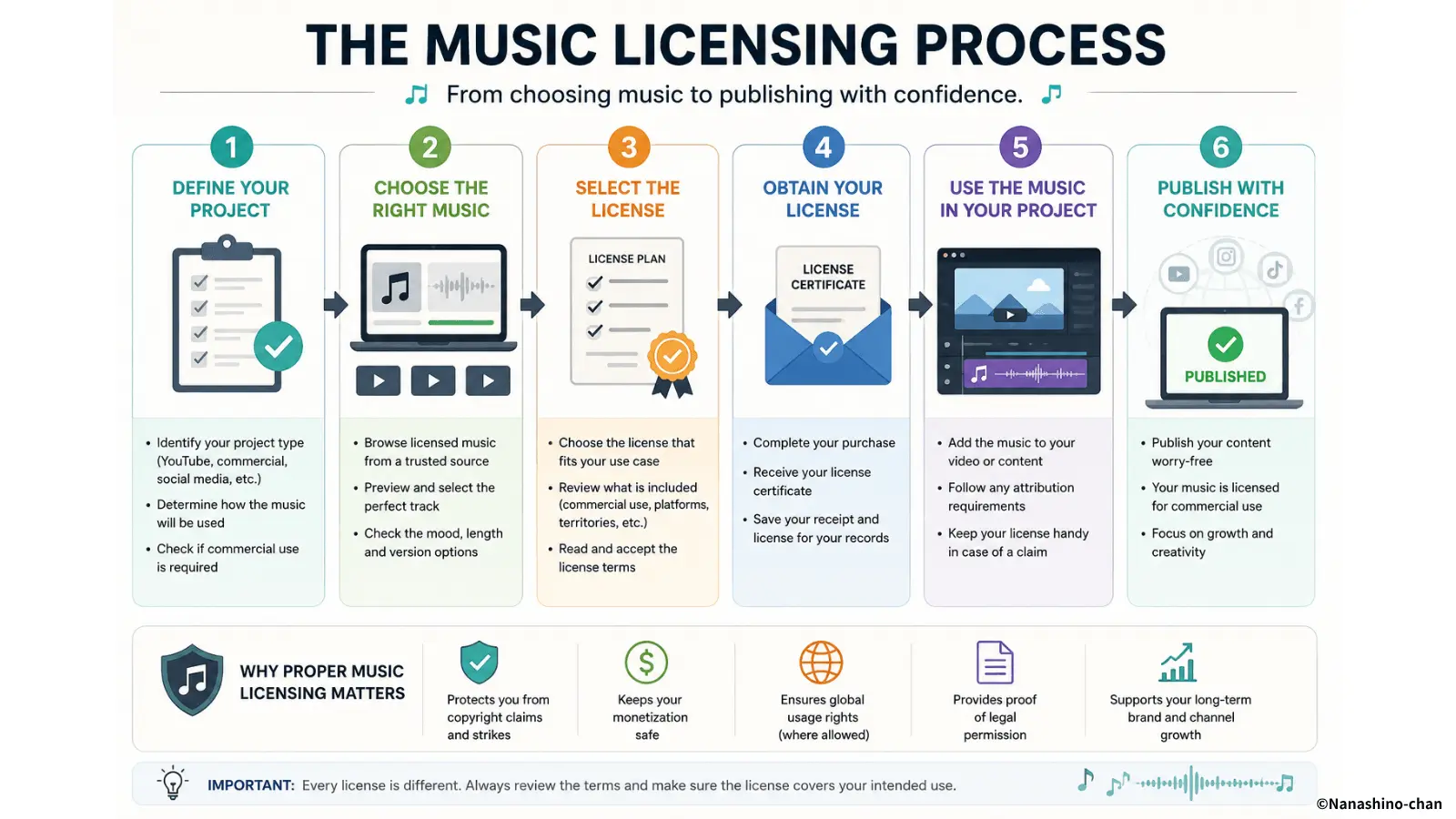
Quick Answer: Can You Use YouTube Audio Library Music Commercially?
Yes, YouTube Audio Library music can often be used in YouTube videos, including many monetized videos. However, you should check the license type, attribution requirements, and official usage terms shown for the specific track inside YouTube Studio.
The bigger question is the use case. A standard YouTube video is different from a brand campaign, paid ad, client deliverable, website video, AI marketing asset, or cross-platform commercial project. For business use, a dedicated commercial or sync license may be easier to document and review.
- • For standard YouTube videos: YouTube Audio Library may be enough if the track terms are followed.
- • For attribution-required tracks: copy and keep the exact attribution text.
- • For outside-YouTube use: review the license carefully before republishing.
- • For paid ads or client work: consider a dedicated commercial music license.
- • For brand campaigns: keep clear proof of music permission and usage scope.
What Is the YouTube Audio Library?
The YouTube Audio Library is a music and sound effects library available through YouTube Studio. It gives creators access to production music and sound effects that can be used in videos according to the applicable license terms.
For new creators, it is one of the easiest places to find music because it is built directly into the YouTube creator workflow. It can be especially useful for simple YouTube videos, tutorials, vlogs, educational content, background music, Shorts, and standard channel production.
Built into YouTube Studio
Creators can search, filter, and download tracks from the YouTube Studio workflow.
Music and Sound Effects
The library includes both background music and sound effects for video production.
Track-by-Track Terms
License type and attribution requirements should be checked for each track.
Can You Use YouTube Audio Library Music for Commercial Use?
For many YouTube creators, YouTube Audio Library music can be used in videos, including monetized YouTube videos, when the applicable track terms are followed. This is why many creators search for “YouTube Audio Library commercial use official” or “YouTube Audio Library monetization.”
However, commercial use is not always one simple category. A monetized YouTube video, a sponsored creator video, a client project, a product ad, and a multi-platform brand campaign may involve different levels of rights review.
A good rule is this: if the video is connected to a business, client, paid campaign, product promotion, or brand deliverable, do not rely only on the word “free.” Check the actual license terms and keep documentation.
YouTube Audio Library Attribution Requirements
Attribution is one of the most important details to check. Some YouTube Audio Library tracks may require attribution, while others may not. You should confirm the license type and attribution information for each track before using it.
If attribution is required, YouTube may provide specific attribution text inside the Audio Library. In that case, copy the attribution text, place it where YouTube instructs, and keep a record of what you used.
Attribution Required
Some tracks may require credit in the video description or another specified format.
Attribution Not Required
Some tracks may be available without attribution, but the license type should still be verified.
Keep Records
Save the track name, artist, license type, attribution text, download date, and video URL.
Can You Use YouTube Audio Library Music Outside YouTube?
This is one of the most important questions for creators, businesses, agencies, and video editors who publish across multiple platforms. A track that is convenient for a YouTube video may not automatically be the best choice for Instagram, TikTok, LinkedIn, Facebook, websites, paid social ads, client deliverables, or product videos.
Before using YouTube Audio Library music outside YouTube, review the license type and official terms. If the video will become a brand campaign, paid ad, website video, product demo, or cross-platform business asset, a dedicated commercial license may provide clearer rights and easier documentation.
- • YouTube-only publishing is different from multi-platform distribution.
- • Organic creator content is different from paid advertising.
- • Personal channel use is different from agency client work.
- • Platform library access is different from a project-specific commercial license.
- • Business campaigns should use music with clear usage scope.
Can You Use YouTube Audio Library Sound Effects Commercially?
The YouTube Audio Library also includes sound effects. Many creators use these sound effects for transitions, tutorials, gaming videos, Shorts, educational videos, and general video editing.
As with music tracks, review the official Audio Library information and usage details before using sound effects in monetized videos, business content, client work, or commercial projects.
- • Sound effects can be useful for standard YouTube video production.
- • Usage details should still be checked before commercial use.
- • Keep records of sound effects used in client or brand projects.
- • For broader campaign use, consider dedicated commercial licensing.
YouTube Audio Library vs Commercial Music License
Both YouTube Audio Library music and commercial music licensing can be useful. The best choice depends on your project type, risk tolerance, publishing platforms, documentation needs, and whether the video is personal, monetized, commercial, client-facing, or campaign-based.
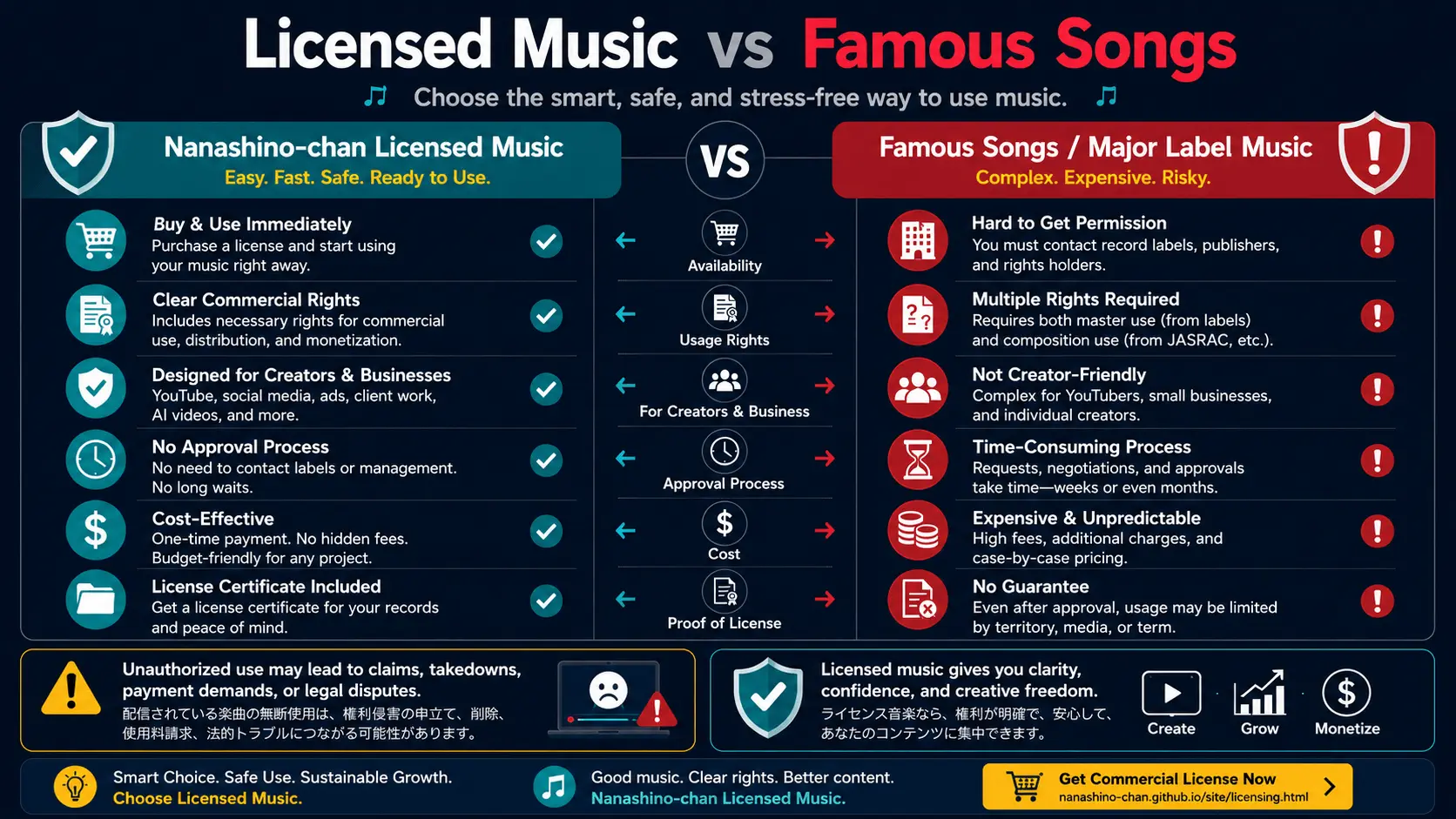
When YouTube Audio Library May Be Enough
YouTube Audio Library may be a good option when your project is mainly a standard YouTube video and you can follow the license conditions shown inside YouTube Studio.
- • You are a new creator.
- • You primarily publish on YouTube.
- • Your content is not a paid brand campaign.
- • You do not need broad client usage rights.
- • You can follow attribution requirements if needed.
- • You are not republishing the same video across business campaigns.
- • You do not need a license certificate or project-specific proof for a client.
When Commercial Music Licensing Is Better
A dedicated commercial license is usually better when the music becomes part of a business asset. This includes brand videos, sponsored content, paid ads, client work, AI videos, product campaigns, and videos reused across several platforms.
- • You are creating sponsored YouTube videos.
- • You are producing client videos or agency deliverables.
- • You are making YouTube ads, Instagram ads, TikTok ads, or product campaigns.
- • You need music for Instagram, TikTok, LinkedIn, Facebook, and websites.
- • You need clearer documentation for a brand, agency, or legal review.
- • You are creating AI-generated marketing videos.
- • You want project-specific commercial usage rights.
- • You need a Gumroad receipt, invoice, license certificate, or other proof of license.
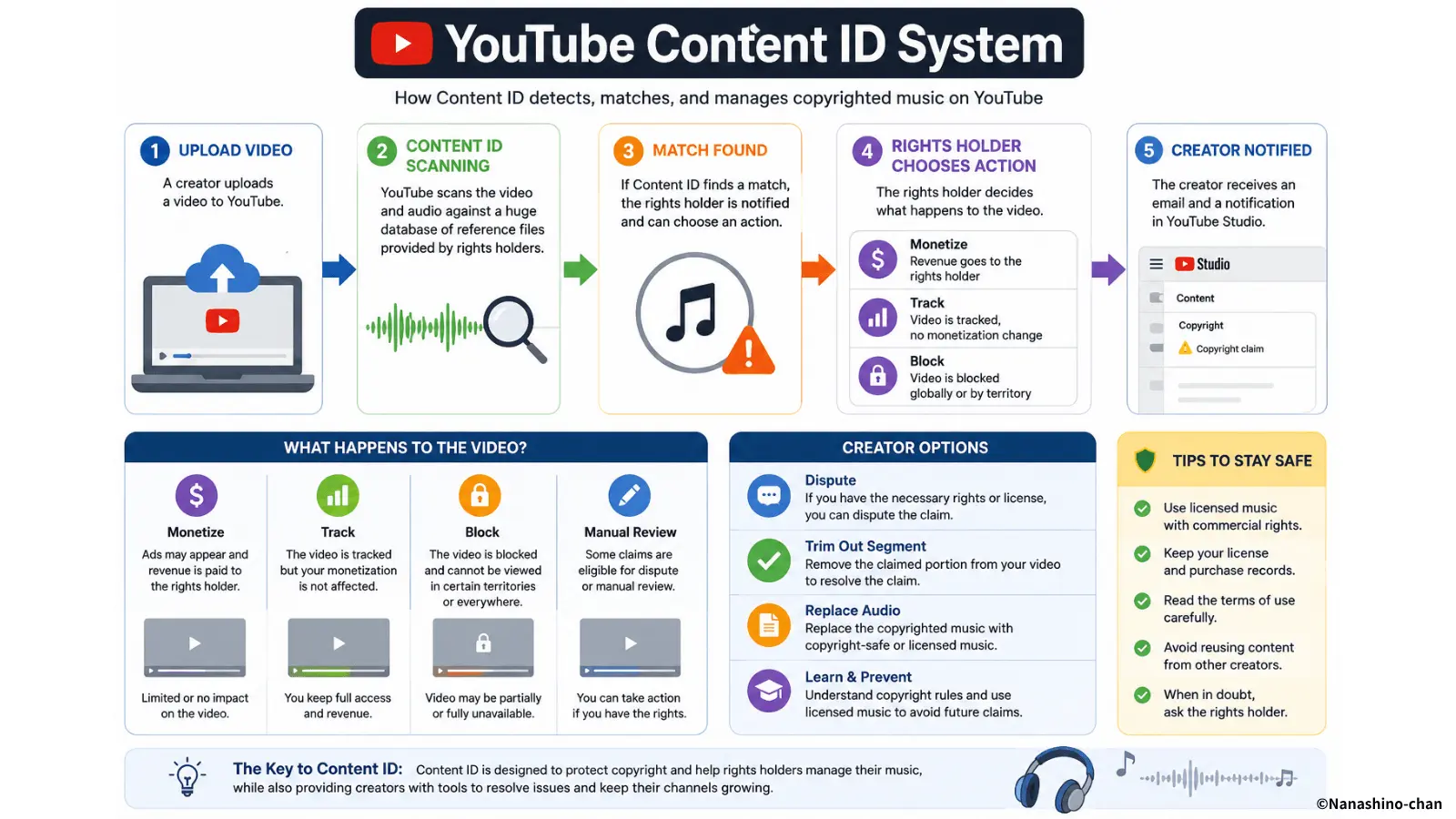
Content ID and Copyright Claim Considerations
Creators often compare YouTube Audio Library and commercial music because they want to reduce copyright uncertainty. The YouTube Audio Library is designed for creator workflows, but it is still important to check the track details before publishing.
Commercial music can also be registered with Content ID, depending on the rights holder and licensing workflow. A good commercial license should explain whether the track may be detected, what happens if a claim appears, and what proof the creator should keep.
- • Check license information before using any track.
- • Keep proof of license or attribution details.
- • Understand whether a Content ID claim may appear.
- • Avoid anonymous audio and reposted tracks for commercial projects.
- • Use clear licensing for long-term YouTube revenue protection.
- • Remember that a license confirms permission, but platform behavior may vary.
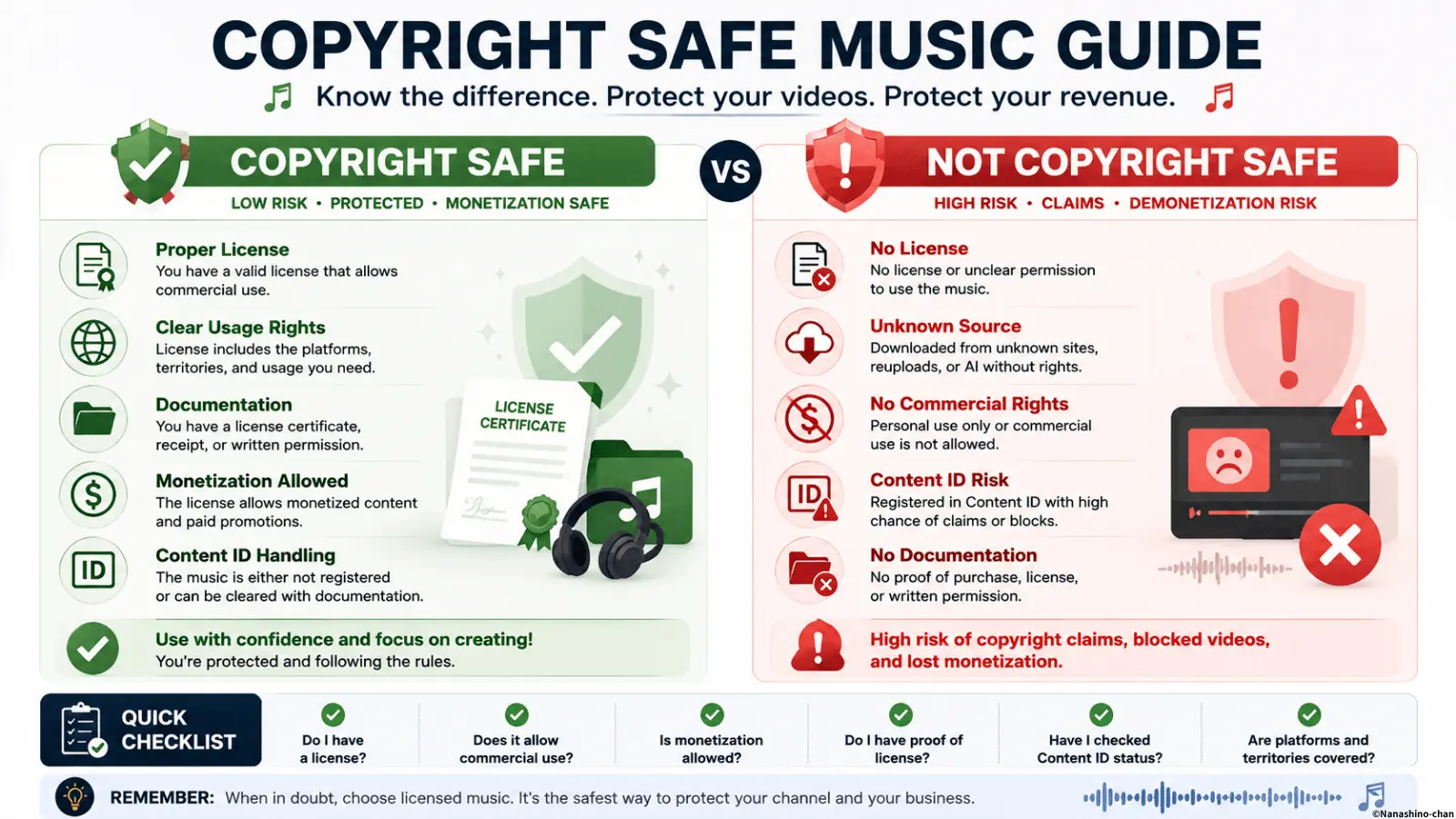
Common Mistakes Creators Make
Most problems happen when creators treat every free or platform-provided music source as a universal commercial license. The safer approach is to check the actual license, usage scope, attribution requirement, and platform terms before publishing.
- • Assuming every YouTube Audio Library track has the same license.
- • Forgetting attribution when a track requires it.
- • Using YouTube-focused music in off-platform campaigns without checking terms.
- • Reusing creator videos as ads without reviewing music rights.
- • Delivering client projects without documentation.
- • Assuming “free music” means “free for all commercial uses.”
- • Not saving license information or attribution text.
- • Confusing platform music access with a commercial license.
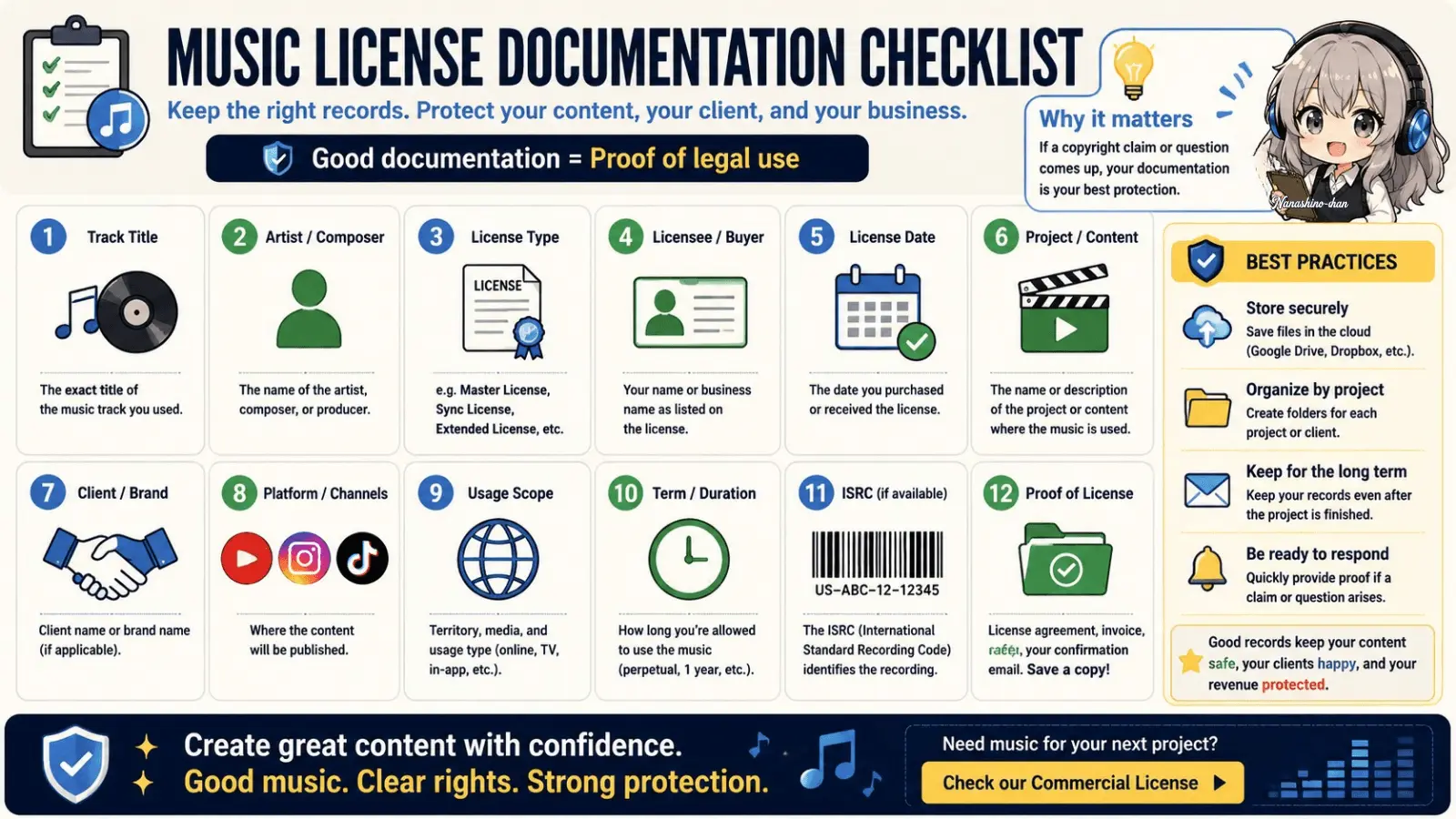
YouTube Audio Library License Checklist
Before using a YouTube Audio Library track in a monetized or commercial video, use this checklist. It helps creators avoid confusion and decide whether a commercial license would be a better fit.
- • Did you check the track’s license type?
- • Does the track require attribution?
- • Did you copy and save the required attribution text?
- • Is the video only for YouTube, or will it be reused elsewhere?
- • Is the video monetized?
- • Is the video sponsored or brand-related?
- • Will the video be used as an ad?
- • Is the video for a client or agency project?
- • Do you need documentation beyond YouTube Studio track information?
- • Would a dedicated commercial license reduce uncertainty?
Commercial-Ready Music for YouTube Creators and Brands
Nanashino-chan provides original lo-fi music with licensing options for YouTube creators, monetized channels, Shorts, podcasts, sponsored videos, brand campaigns, AI videos, product demos, and commercial video production.
If you only need simple YouTube background music, the YouTube Audio Library may be enough. If you need music for a commercial workflow, brand project, agency deliverable, paid ad, or multi-platform campaign, a dedicated commercial license can give clearer usage direction.
Nanashino-chan music is original music managed through the Nanashino-chan project. For many commercial uses, this can make rights review easier because the master recording side and the composition / copyright side are controlled directly.
YouTube Creators
For monetized videos, Shorts, tutorials, podcasts, and creator channels.
Brands & Agencies
For sponsored content, client work, product videos, ads, and social campaigns.
Commercial Projects
For business videos, AI marketing content, SaaS demos, and multi-platform campaigns.
Official YouTube Copyright & Audio Library Resources
YouTube policies and Audio Library terms may change over time. Always check the latest official YouTube Help pages before publishing monetized, commercial, or client-facing content.
- YouTube Audio Library Help
- Add an Audio Track to Your Video
- What Kind of Content Can I Monetize?
- YouTube Copyright Guidelines
- YouTube Content ID Overview
- YouTube License Types
This page is an educational guide and not legal advice. Always review the official YouTube terms and the license information shown for the specific track you want to use.
Frequently Asked Questions
Can YouTube Audio Library music be used commercially?
YouTube Audio Library music can often be used in YouTube videos, including many monetized videos, but creators should check the license type, attribution requirements, and official terms for each track before publishing.
Can YouTube Audio Library music be used outside YouTube?
Do not assume every track is automatically cleared for all off-platform uses. Review the license type, official terms, and platform rules before using Audio Library music on Instagram, TikTok, LinkedIn, Facebook, websites, or ads.
Does YouTube Audio Library music require attribution?
Some tracks require attribution, while others may not. You should check the license type and attribution information shown inside YouTube Studio for each track.
Can YouTube Audio Library sound effects be used in commercial videos?
YouTube Audio Library includes sound effects for video creation, but creators should still review official terms and usage details before using them in monetized, commercial, or client-facing projects.
Can I use YouTube Audio Library music in paid ads?
Paid ads, boosted posts, sponsored content, brand campaigns, and client-facing commercial projects often require clearer campaign-specific rights than standard creator use. For advertising workflows, a dedicated commercial or sync license is usually safer.
Is YouTube Audio Library enough for client work or brand campaigns?
It may be enough for some standard creator videos, but client work, paid ads, sponsored content, brand campaigns, and multi-platform commercial projects often benefit from a dedicated commercial music license.
What is the difference between YouTube Audio Library and commercial music licensing?
YouTube Audio Library is useful for many YouTube creators, while commercial music licensing usually provides clearer project-specific rights for brands, agencies, ads, sponsored content, client videos, and multi-platform campaigns.
What records should I keep when using YouTube Audio Library music?
Keep the track title, artist name, license type, attribution text if required, download date, video URL, publication date, and any relevant project notes. For business or client projects, stronger license documentation may be needed.
Need Music for Commercial YouTube Projects?
Use original lo-fi music with commercial licensing options for YouTube creators, monetized videos, sponsored content, brand campaigns, ads, client work, AI videos, and multi-platform content.
► View Licensing OptionsRelated Pages
Continue with related guides about YouTube music rules, Content ID, commercial music licensing, proof of license, and safe music use for creators, businesses, and agencies.