Business Social Media Music Licensing
Music License for Business Social Media Videos
Businesses, brands, agencies, and creators often need music for Instagram Reels, TikTok videos, YouTube Shorts, LinkedIn posts, product demos, social campaigns, and client-facing video content. The key question is not only whether the music sounds good, but whether the usage is properly licensed for the business context.
This guide explains when a music license is needed for business social media, how organic posts differ from paid ads, what proof of license should be kept, and how Nanashino-chan licensing can help simplify commercial music review.
Quick Answer
You usually need a music license when music is used in business-related social media videos, including branded posts, monetized creator content, product videos, paid ads, sponsored content, client work, company LinkedIn videos, or campaign assets.
A license helps confirm the permitted scope of use. It can also help as proof of permission if a client, agency, platform, ad reviewer, or Content ID claim process asks for evidence. However, a license does not guarantee platform behavior, ad approval, monetization approval, or Content ID outcomes.
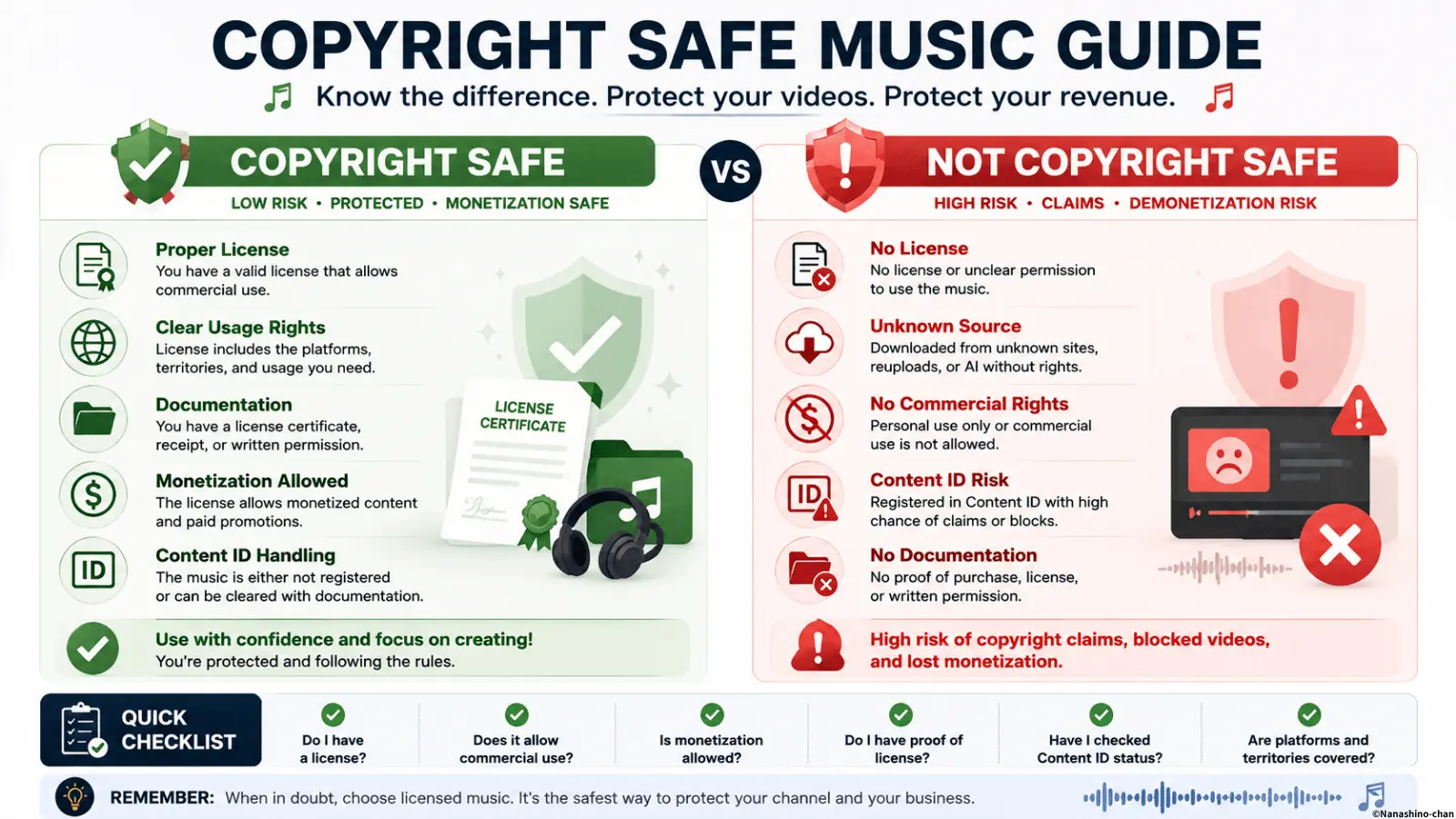
When Does Business Social Media Need a Music License?
Social media music rules can be confusing because platforms may provide music tools inside their apps. However, platform audio access is not always the same as a full commercial music license. When a post is connected to a business, brand, product, client, campaign, or paid promotion, the licensing requirements can become much more important.
Brand Posts
Company posts, product announcements, brand storytelling videos, and official social media content may require commercial-use permission.
Paid Ads
Paid campaigns, boosted posts, social ads, sponsored content, and media-buy assets usually need broader sync or campaign licensing.
Client Work
Agencies, freelancers, video editors, and production teams should keep documentation showing that music use is permitted for the client project.
Common Business Social Media Use Cases
Business social media covers more than traditional ads. Even short videos can become commercial when they promote a company, product, service, campaign, event, or client brand.
Instagram Reels
Product reels, brand visuals, creator collaborations, launch videos, and social proof content.
TikTok Videos
Short-form product content, UGC-style ads, social campaigns, and creator-led promotions.
YouTube Shorts
Brand Shorts, product clips, campaign teasers, channel promotions, and monetized content.
LinkedIn Videos
B2B marketing posts, founder videos, product explainers, hiring content, and event recaps.
Product Videos
E-commerce videos, product demos, website clips, landing page videos, and launch assets.
Agency Deliverables
Client videos, campaign edits, social media packages, paid media assets, and brand decks.
Organic Social Content vs Paid Advertising
The license you need depends heavily on whether the content is organic or paid. A video posted to a business account without paid promotion may need a different license than the same video used as a paid ad or campaign asset.
Platform Music Is Not Always a Business License
Many businesses use music directly inside Instagram, TikTok, YouTube, or other platform tools. This can be convenient, but it should not be confused with a separate commercial license that covers broader brand, client, advertising, or cross-platform usage.
Platform music availability may depend on account type, region, platform rules, music catalog agreements, and whether the content is organic or paid. A track that appears available inside an app may not automatically be cleared for external editing, paid ads, brand campaigns, client videos, or long-term commercial use.
For business use, the safer question is not only “Can I select this audio inside the app?” but “Do I have documentation showing permission for this specific business use?”
Why Both Master Rights and Copyright Permission Matter
In many commercial music uses, two layers of permission may matter: the master recording rights and the underlying composition / copyright rights. Famous songs often involve multiple parties, such as record labels, publishers, composers, producers, collection societies, and other rights holders.
Nanashino-chan music is original music managed through the Nanashino-chan project, with both the master recording side and the composition / copyright side controlled directly. This can make permission review simpler, faster, and easier to document compared with clearing many third-party commercial songs.
Master Recording
Permission related to the actual recorded sound file or released recording used in the video.
Composition / Copyright
Permission related to the underlying musical work, melody, arrangement, and composition rights.
Simpler Review
Direct rights control can reduce approval friction and make license documentation clearer for business users.
Recommended Nanashino-chan License Direction
The right license depends on the business purpose, platform, paid distribution, client involvement, and campaign duration.
Personal
Personal Use License
$19
For personal, non-commercial, hobby, or private creative use.
View Product →Organic Business
Commercial Creator License
$500
For monetized videos, organic social content, business videos, product demos, and creator commercial use.
View Product →Paid Campaign
1-Month Sync License
$500
For short-term paid ads, social campaigns, brand promotions, and campaign videos.
View Product →Longer Campaign
3-Month Sync License
$1,200
For longer social campaigns, paid promotions, brand videos, and extended campaign use.
View Product →License Certificate Samples
Standard Nanashino-chan licenses include a downloadable License Certificate PDF. Please retain your Gumroad receipt / invoice together with the certificate as proof of license.
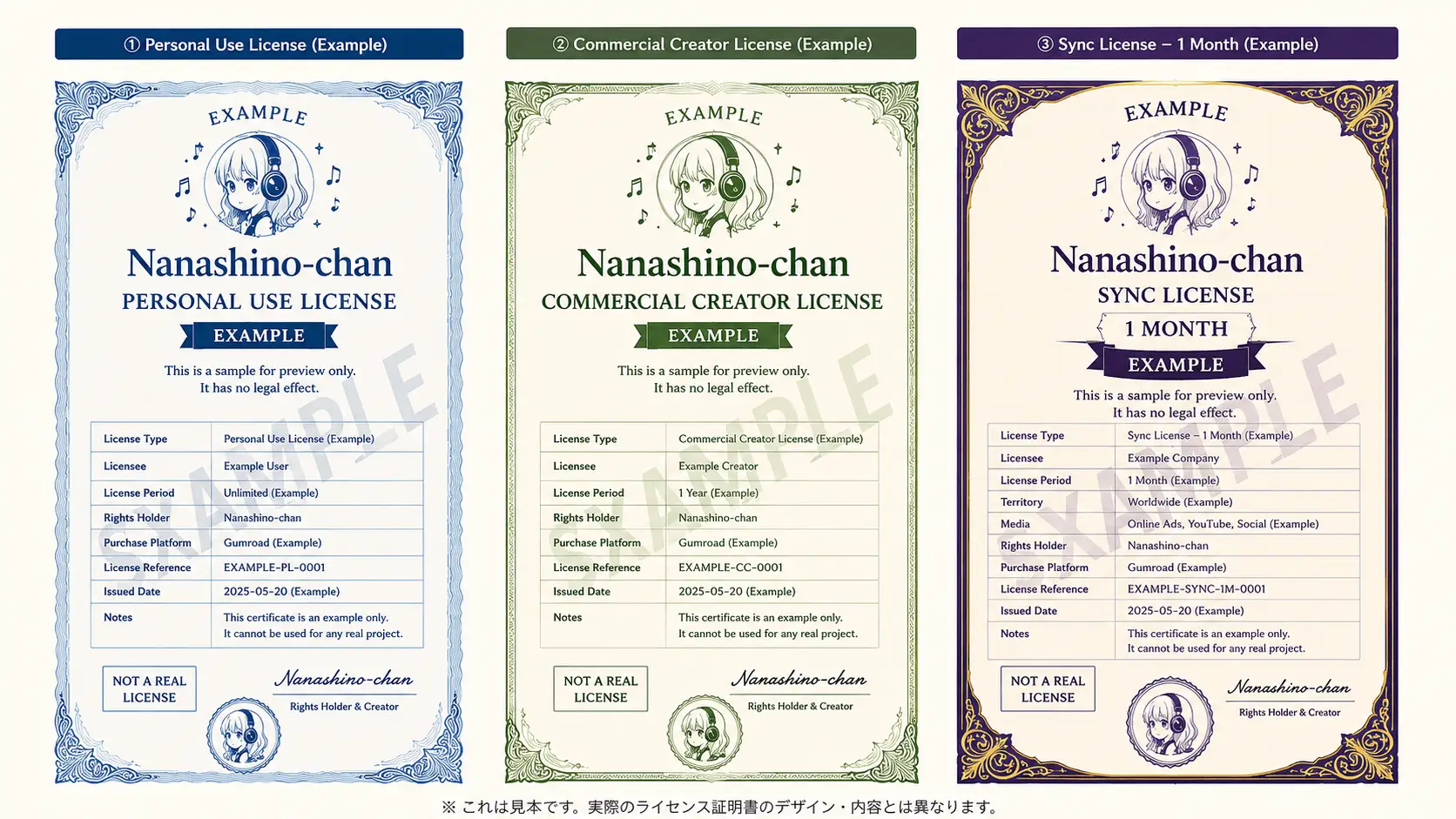
Sample preview only. Actual certificate details may vary by product. This sample image does not grant any rights by itself.
What Proof Should Businesses Keep?
For business social media use, documentation matters. If a client, agency, platform, ad reviewer, or Content ID process asks for evidence, you should be able to show what music was licensed, what license was purchased, and where the music was used.
- • Gumroad receipt / invoice
- • License Certificate PDF
- • Track title or track URL
- • Project URL or video URL
- • Platform name, such as Instagram, TikTok, YouTube, LinkedIn, or website
- • Usage period, campaign dates, or project delivery date
- • Client, brand, or campaign notes if applicable
What Happens If Business Music Use Is Not Licensed?
Using music in business social media videos without permission may lead to copyright issues, muted audio, takedowns, ad rejection, monetization restrictions, Content ID claims, platform review, client concerns, or requests to stop using the content.
This applies not only to Nanashino-chan music, but to commercial music in general. A license helps clarify what use is permitted and provides documentation that can support business review, client delivery, and platform-related inquiries.
Official Platform Copyright Policies
Platform rules can vary by service, account type, region, and use case. Businesses should always review official platform copyright and advertising policies in addition to keeping license documentation.
FAQ
Do businesses need a music license for social media videos?
Yes, businesses usually need a music license when music is used in commercial, branded, monetized, sponsored, paid, or client-facing social media videos. The required license depends on the platform, project type, distribution scope, and whether the content is organic or paid advertising.
Can I use platform music from Instagram, TikTok, or YouTube for business content?
Platform music tools may allow certain in-app uses, but they do not automatically provide a full commercial license for brand campaigns, paid ads, client work, product videos, or external business use. Businesses should confirm the platform rules and obtain a separate commercial license when needed.
What is the difference between organic business social content and paid ads?
Organic business social content is usually posted to a company or creator account without paid media spend. Paid ads, boosted posts, sponsored campaign assets, and client advertising usually require broader sync or campaign licensing because the music is being used in promotional media distribution.
What proof should a business keep after purchasing a music license?
Businesses should keep the Gumroad receipt / invoice, License Certificate PDF, track title or track URL, project URL, usage dates, platform names, and campaign details if applicable. These records can help explain licensed use if a client, agency, platform, ad reviewer, or Content ID process asks for evidence.
Does a music license guarantee no Content ID claims or ad review issues?
No responsible license should guarantee platform behavior, ad approval, monetization approval, or Content ID outcomes. A license confirms permitted use within the purchased scope and can help reduce uncertainty by documenting permission.
Why can Nanashino-chan licensing be simpler than clearing famous songs?
Many commercial music uses require permission for both the master recording and the underlying composition / copyright. Nanashino-chan music is original music managed directly through the Nanashino-chan project, which can make permission review simpler and easier to document compared with clearing many third-party songs.
Need Music for Business Social Media?
Nanashino-chan provides original lo-fi music for creators, businesses, brands, agencies, social media campaigns, product videos, AI-generated content, and visual storytelling.
Related Licensing Guides
Continue with related guides for business video licensing, social media, paid campaigns, Content ID, proof of license, and commercial music use.