Music License for YouTube Creators
Where can you find music for YouTube videos with a commercial license? If you publish monetized videos, sponsored content, product reviews, Shorts, tutorials, podcasts, or brand collaborations, you need music with clear usage rights.
A good YouTube music license should explain whether you can use the track in monetized videos, commercial videos, sponsored content, client work, and long-term creator publishing.
This guide explains what YouTube creators should check before choosing music, what a license should include, and when a dedicated commercial license is better than unclear “free” or platform-only music.
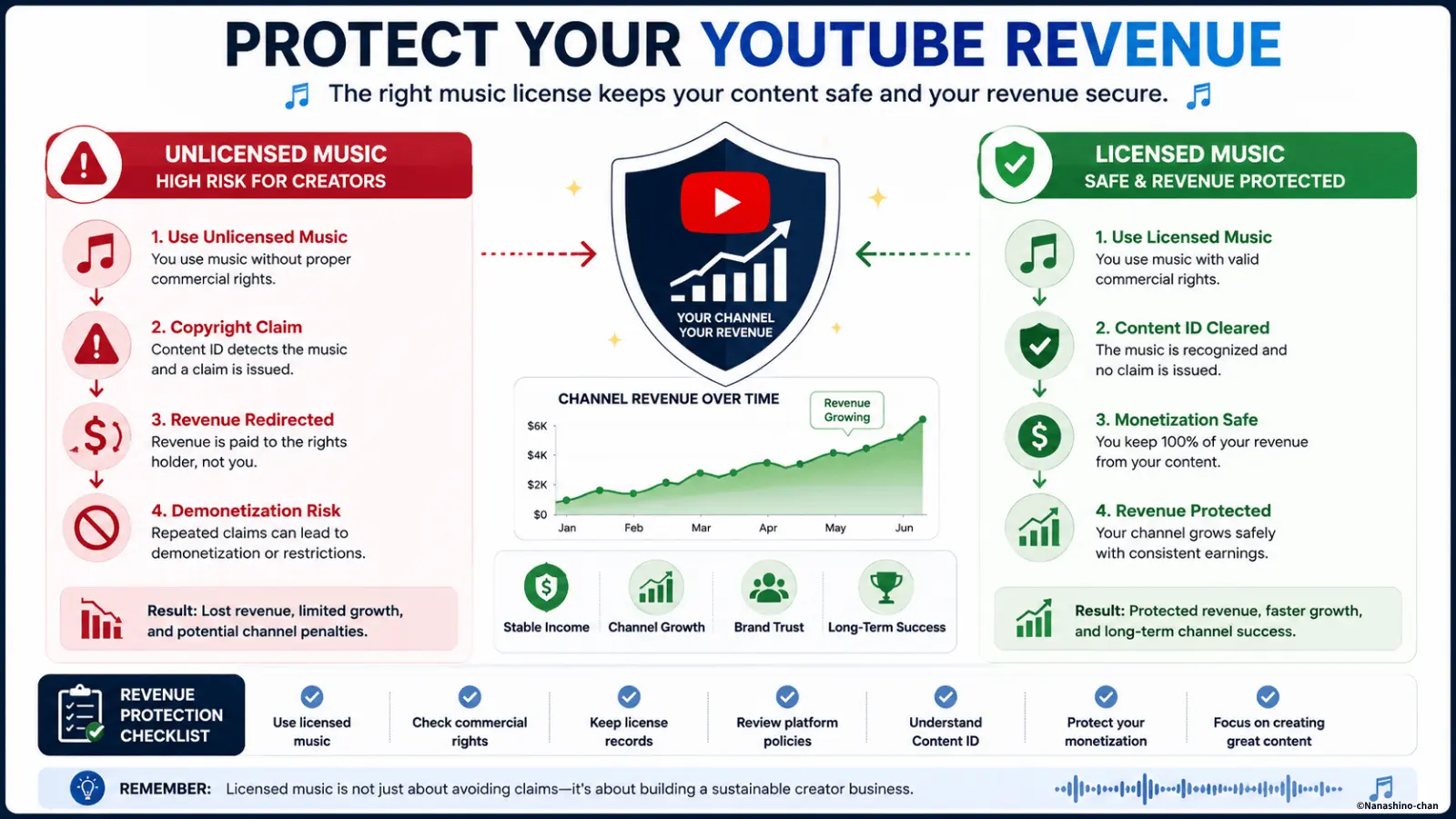
Where Can You Find Music for YouTube Videos with a Commercial License?
YouTube creators can find commercially licensed music through creator-focused music libraries, direct artist licensing pages, sync licensing catalogs, subscription music platforms, and commercial license stores. The important point is not only where the music comes from, but whether the license clearly matches your YouTube use case.
If your video is monetized, sponsored, promotional, client-facing, or part of a creator business, you should look for music that clearly allows commercial use and YouTube publishing.
- • Direct artist licensing pages
- • Commercial music licensing platforms
- • Sync licensing catalogs
- • Creator-focused licensed music libraries
- • Music stores that provide proof of commercial usage rights
- • Officially distributed music with clear licensing terms
Nanashino-chan provides original lo-fi music with commercial licensing options for YouTube creators, monetized videos, Shorts, podcasts, brand content, sponsored videos, AI videos, and business use.
Why YouTube Creators Need Music Licensing
Many YouTube creators now operate like independent media businesses. A channel may include ad revenue, memberships, sponsorships, affiliate links, client work, product reviews, courses, podcasts, Shorts, and brand partnerships.
When music is part of this business workflow, the creator needs more than a downloaded audio file. The creator needs permission to use the music in the specific video, platform, monetization model, and commercial context.
- • Monetized YouTube videos
- • YouTube Shorts and short-form content
- • Sponsored creator videos
- • Product reviews and affiliate content
- • Brand partnerships
- • Podcasts and video podcasts
- • Client editing projects
- • Creator businesses and long-term publishing workflows
What Should a YouTube Music License Look Like?
A useful music license should be easy to understand. If a creator needs to prove usage rights later, the license should clearly explain who is allowed to use the track, where it can be published, and what kind of commercial use is permitted.
If you are asking “what does a license look like for a YouTuber?”, the answer is that it should include practical details, not vague promises.
| License Item | Why It Matters |
|---|---|
| Track title | Confirms the exact song being licensed. |
| Artist name | Connects the music to the creator or rights source. |
| License holder | Shows who is allowed to use the music. |
| Allowed platforms | Clarifies whether YouTube, Shorts, podcasts, websites, or social media are covered. |
| Commercial use permission | Important for creator businesses, brands, ads, sponsorships, and client work. |
| Monetization permission | Clarifies whether the music can be used in videos that generate revenue. |
| Duration and territory | Explains whether the license is limited by time, region, or campaign scope. |
| Content ID policy | Explains what happens if the track is registered with a claim system. |
| Proof of purchase or license record | Helps creators keep documentation for future verification. |
Common YouTube Music Licensing Concerns
YouTube creators usually search for music licensing because they want to avoid revenue interruptions, copyright confusion, and unclear usage terms. These concerns are reasonable, especially when the channel is monetized or used for business.
- • Can I monetize my video with this music?
- • Will this track trigger a Content ID claim?
- • Do I need attribution?
- • Can I use the same track in Shorts?
- • Can I use the music in sponsored content?
- • Can I use the music in client videos?
- • Can I use the video on other platforms later?
- • What proof should I keep if I need to verify my rights?
A clear commercial license does not guarantee every platform outcome, but it can reduce uncertainty by documenting what usage is allowed.
Which Type of Music License Is Best for YouTube Creators?
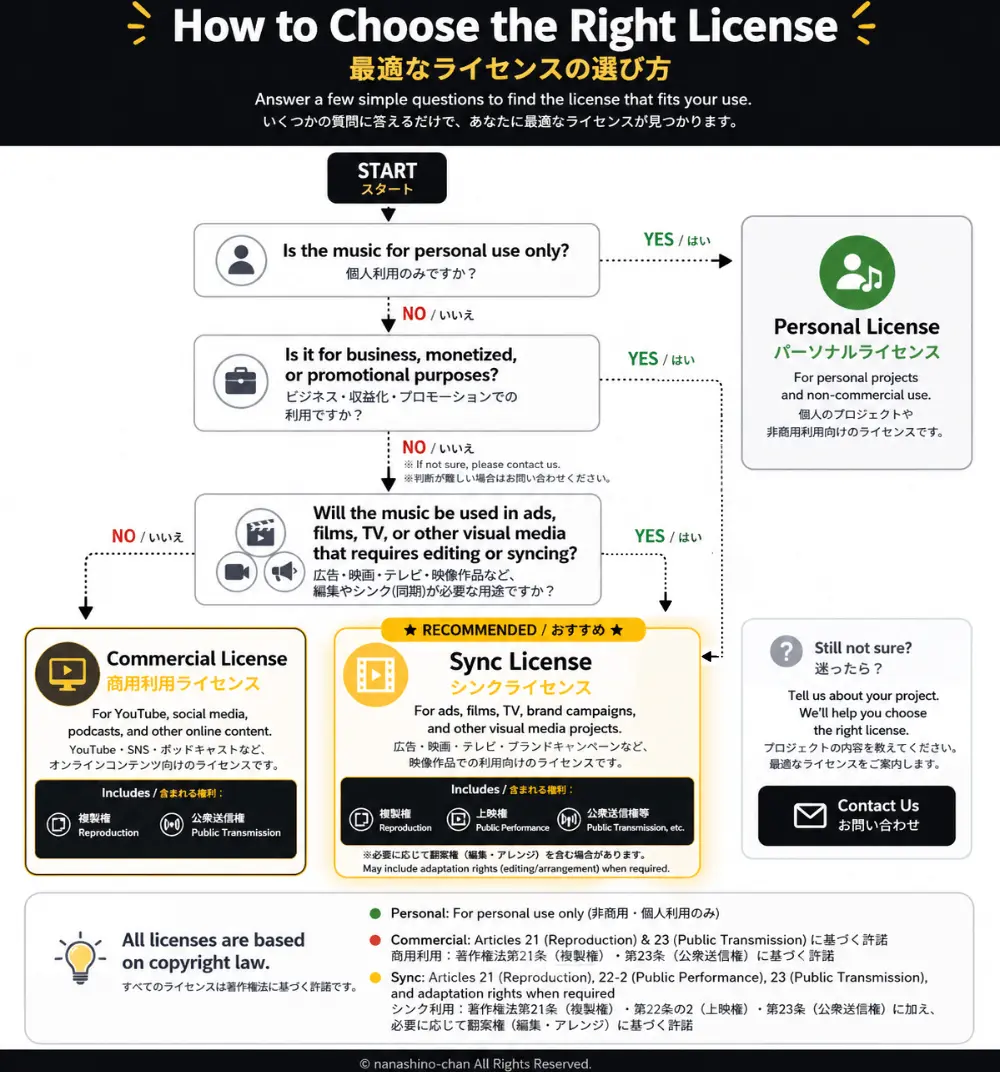
The best license depends on how you use the music. A casual personal upload, a monetized YouTube channel, a sponsored brand video, and a client campaign do not have the same level of licensing risk.
| Use Case | Recommended License | Notes |
|---|---|---|
| Personal non-commercial upload | Personal / platform-permitted music | Check platform terms and attribution requirements. |
| Monetized YouTube video | Commercial license | The license should clearly allow monetized video use. |
| Sponsored creator video | Commercial / sync license | Brand involvement increases the need for rights clarity. |
| YouTube ads or product campaigns | Sync / campaign license | Advertising use usually requires stronger commercial permissions. |
| Client work or agency editing | Commercial / custom license | Confirm client-facing use, platform scope, and distribution rights. |
YouTube Audio Library vs Commercial Music License
The YouTube Audio Library can be useful for many creators, especially when you need music for standard YouTube videos and you follow the license terms for each track. However, it may not always be the best fit for every commercial workflow.
If you need music for sponsored videos, brand campaigns, product ads, client work, cross-platform marketing, AI-generated videos, or long-term business content, a dedicated commercial music license can provide clearer project-specific usage rights.
- • YouTube Audio Library may be useful for standard creator videos
- • Commercial licenses are better for business and campaign-specific usage
- • Attribution and platform terms should always be checked
- • Brand deals and client projects need clearer documentation
- • Cross-platform reuse should be reviewed before publishing
For a full comparison, see: YouTube Audio Library vs Commercial Music.
Commercial-Ready Lo-Fi Music for YouTube Creators
Nanashino-chan provides original lo-fi music designed for YouTube creators, monetized channels, Shorts, podcasts, AI video workflows, agencies, and branded campaigns.
The catalog is designed for calm, modern, cinematic creator content where music supports the video without distracting from narration, visuals, product reviews, tutorials, or brand storytelling.
YouTube Monetization
Music for creator channels, long-form videos, Shorts, and monetized publishing workflows.
Sponsored Content
Useful for brand deals, product reviews, creator campaigns, and commercial video projects.
License Documentation
Commercial licensing helps creators keep clearer records for future verification.
Rights Management and ISRC Transparency
Music identification and rights management matter when creators publish videos at scale. Officially distributed tracks are easier to identify than anonymous audio files or reposted music clips.
Nanashino-chan’s officially distributed music is managed as identifiable recordings. Many releases are associated with formal recording metadata such as ISRC-based identification, which helps clarify track identity and release context.
- ✔ Officially distributed recordings
- ✔ Clearer artist and track identity
- ✔ Commercial licensing available
- ✔ Designed for creator and business workflows
- ✔ Useful for monetized videos, brand content, and long-term publishing
Identification and metadata support rights clarity, but they do not replace licensing. Always use the appropriate license for your video, campaign, or commercial project.
Preview Music Before You License
Explore lo-fi music designed for YouTube creators, monetized videos, Shorts, podcasts, brand content, AI videos, and commercial publishing workflows.
Browse the catalog → All Tracks
Official Platform Copyright Policies
Major platforms officially state that purchasing or streaming music does not automatically grant rights for uploading, monetization, commercial use, or social media distribution.
- YouTube Copyright Guidelines
- YouTube Audio Library Help
- Instagram Copyright Information
- Facebook Copyright Policy
- TikTok Copyright Policy
Copyright policies and platform rules may change over time. Always review the latest official guidelines before publishing monetized or commercial content.
FAQ
Where can I find music for YouTube videos with a commercial license?
You can find music with a commercial license through direct artist licensing pages, commercial music platforms, sync licensing catalogs, and creator-focused libraries that clearly state YouTube monetization and commercial usage rights.
Do YouTube creators need music licenses?
YouTube creators may need a music license when using music in monetized videos, sponsored content, brand deals, client videos, ads, product reviews, or commercial creator projects.
What should a YouTube music license include?
A YouTube music license should include the track title, artist name, license holder, permitted platforms, commercial use permission, monetization permission, duration, territory, proof of purchase, and Content ID policy.
Does buying music automatically give YouTube usage rights?
No. Buying, downloading, or streaming music does not automatically grant permission to use that music in YouTube videos, monetized content, ads, or commercial creator projects.
Can licensed music still receive Content ID claims?
Some licensed music may still be registered with Content ID. Creators should check the license terms, claim policy, and dispute instructions before publishing.
What is the safest music workflow for YouTube creators?
A safer workflow is to use music with clear commercial rights, keep proof of license, check monetization permission, understand Content ID rules, and avoid unclear or anonymous audio sources.
Need Music with Clear Commercial Rights for YouTube?
Use original lo-fi music designed for YouTube creators, monetized videos, Shorts, podcasts, sponsored content, brand campaigns, AI videos, and commercial creator workflows.
Related Pages
- Best Music Licenses for YouTube Monetization
- YouTube Audio Library vs Commercial Music
- Music for YouTube Monetization
- How to Use Music Legally on YouTube
- Copyright-Safe Music for YouTube
- How to Choose a Music License for Videos
- Which Music License Is Best for YouTube?
- How to Check If Music Is Copyright-Safe
- ISRC and Shazam Music Identification
- Licensing Page