Music for AI Content Creators
AI content creators are producing videos, shorts, ads, avatars, visual stories, product clips, and social media campaigns faster than ever.
But even when visuals, scripts, or voiceovers are generated with AI, music still requires proper licensing if the content is monetized, commercial, sponsored, or client-facing.
This guide explains how AI creators can choose copyright-safe, commercial-ready music for modern content workflows.
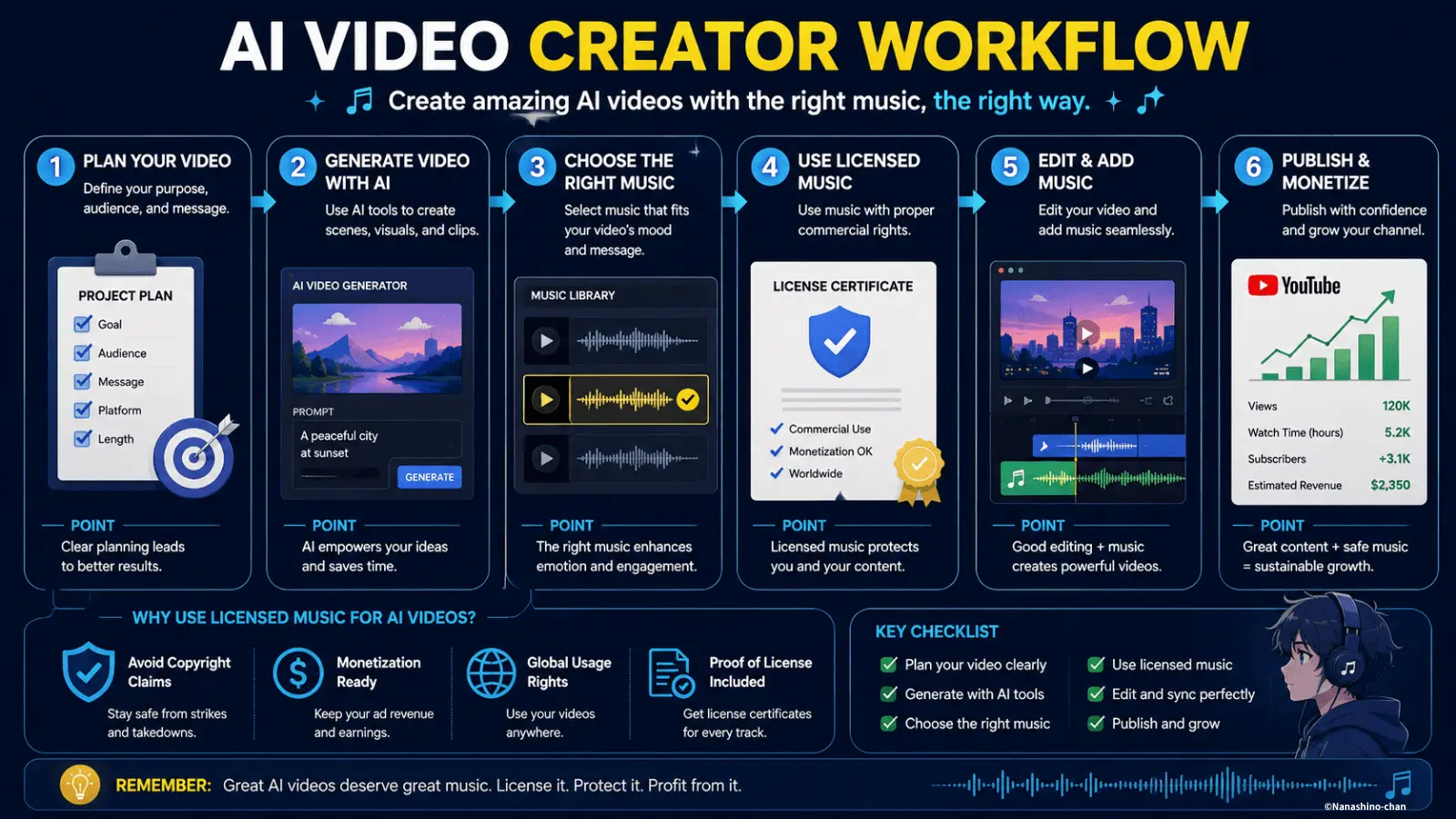
AI content workflows become safer when music rights are handled before publishing or delivering content to clients.
Why Music Licensing Matters for AI Creators
AI creation tools can speed up production, but they do not remove copyright responsibilities.
A creator may generate original visuals with AI, write a script with AI, or produce an AI avatar video — but the music used in that project remains a separate rights layer.
- • Music may be protected by copyright
- • YouTube Content ID can still detect audio
- • Monetized content may require commercial permissions
- • Brand campaigns may require proof of licensing
- • Client projects need clear usage documentation
- • Platform rules may vary across YouTube, TikTok, Instagram, and Facebook
Types of AI Content That May Need Licensed Music
AI content creators use music in many different formats. Each format may require different permissions depending on the platform and commercial purpose.
- • AI-generated YouTube videos
- • AI-generated YouTube Shorts
- • AI avatar explainers
- • AI product demo videos
- • AI-generated social media ads
- • AI visual storytelling videos
- • AI-generated UGC-style content
- • AI-assisted podcast clips
- • AI music visualizers
- • AI marketing videos for brands
AI Content Has Multiple Rights Layers
AI content is not a single rights issue. It often combines several creative layers that must be checked separately.
| Layer | What to Check |
|---|---|
| AI Visuals | AI tool usage terms and commercial permissions |
| Script | Ownership, originality, and client-use permissions |
| Voiceover | Voice model rights and platform restrictions |
| Music | Music license, commercial use, Content ID, and monetization rights |
| Distribution | YouTube, TikTok, Instagram, ads, websites, and client usage |
Music is often the layer most likely to trigger automated copyright systems after publishing.
What Music License Do AI Content Creators Need?
The correct license depends on how the AI content will be used.
| Use Case | Recommended Rights |
|---|---|
| Personal AI Content | Basic usage permission |
| Monetized YouTube Content | Monetization rights |
| AI Social Media Ads | Commercial advertising rights |
| Client AI Content | Client-use commercial license |
| Brand Campaigns | Commercial and multi-platform rights |
Content ID Considerations for AI Content
AI content creators should pay close attention to Content ID because automated copyright systems identify audio regardless of how the visuals were created.
A video can be generated with AI and still receive a copyright claim if the music is protected, registered, or used outside the allowed license terms.
Before publishing AI-assisted content with music, creators should verify:
- • Whether the music is registered with Content ID
- • Whether monetization is permitted
- • Whether commercial AI content is allowed
- • Whether client-use rights are included
- • Whether claim release documentation is available
- • Whether the license covers the intended platforms
Commercial Use for AI Content Creators
Many AI creators start with personal experiments and later move into commercial content production.
Commercial use may include monetization, sponsorships, ads, client projects, social campaigns, product demos, and brand storytelling.
Commercial AI Content May Include:
- • Monetized YouTube videos
- • AI-generated Shorts and Reels
- • Paid social media ads
- • AI avatar explainer videos
- • UGC-style brand content
- • Client video deliverables
- • Product launch videos
- • Startup and SaaS promotional content
Why Licensed Music Is Better for AI Creator Workflows
Licensed music helps AI creators build repeatable and professional workflows.
Instead of choosing music randomly for each project, creators can build a library of tracks with clear usage rights, documentation, and commercial permissions.
| Benefit | Why It Matters |
|---|---|
| Commercial Permissions | Supports monetized and business content |
| Rights Documentation | Helps resolve claims and client questions |
| Workflow Consistency | Improves repeat production for AI content |
| Brand Readiness | Supports commercial campaigns and partnerships |
AI Content Music Licensing Checklist
Use this checklist before publishing or delivering AI content that includes music.
- ✓ AI tool usage terms reviewed
- ✓ Music source identified
- ✓ Music license obtained
- ✓ Commercial use confirmed
- ✓ Monetization rights confirmed
- ✓ Client-use rights confirmed
- ✓ Content ID policy reviewed
- ✓ License certificate saved
- ✓ Platform distribution rights checked
- ✓ Attribution requirements reviewed
Common Mistakes AI Content Creators Make
AI workflows make production faster, but fast production can also increase licensing mistakes.
- • Assuming AI-generated content is automatically copyright-safe
- • Using music found on social platforms without permission
- • Ignoring music license terms
- • Using personal-use music for client work
- • Forgetting to save licensing documentation
- • Publishing monetized videos without checking Content ID policies
- • Delivering commercial AI content without proof of music rights
Official Platform Copyright Policies
Official Platform Copyright Policies
Why Rights-Managed Music Matters for AI Creators
AI creators often work across multiple platforms, formats, and clients. This makes rights transparency especially important.
All distributed tracks are individually identified with ISRC codes. This supports rights identification and helps distinguish properly managed recordings from unclear or unverified music sources.
Tracks are properly managed for licensing and rights identification, making them better suited for professional AI creator workflows.
- • ISRC-based recording identification
- • Clearer rights management
- • Commercial-ready licensing structure
- • Better suitability for monetized and client-facing content
Frequently Asked Questions
Can AI content creators use copyrighted music?
Only when they have the necessary rights or license for the intended use.
Does AI-generated content automatically avoid copyright claims?
No. Music can still trigger copyright claims even if the visuals or script were generated with AI.
Can I monetize AI content with licensed music?
Yes, if the license allows monetized use and the content follows platform policies.
Do AI ads need commercial music licenses?
Yes. Paid advertising and brand campaigns generally require commercial usage permissions.
What is the safest music option for AI creators?
Using properly licensed music with clear commercial rights, monetization permissions, and documentation is generally the safest approach.
License Music for AI Content
Create AI-generated videos, ads, social media clips, and client projects with music designed for commercial creator workflows.
► Get Commercial License