How to License Music for AI-Generated Videos
AI-generated videos are now used for YouTube channels, brand campaigns, product explainers, AI avatar videos, ads, social media clips, and commercial storytelling.
But AI video generation does not remove music copyright requirements. If your video includes music, you still need the right license for publishing, monetization, commercial use, client work, and platform distribution.
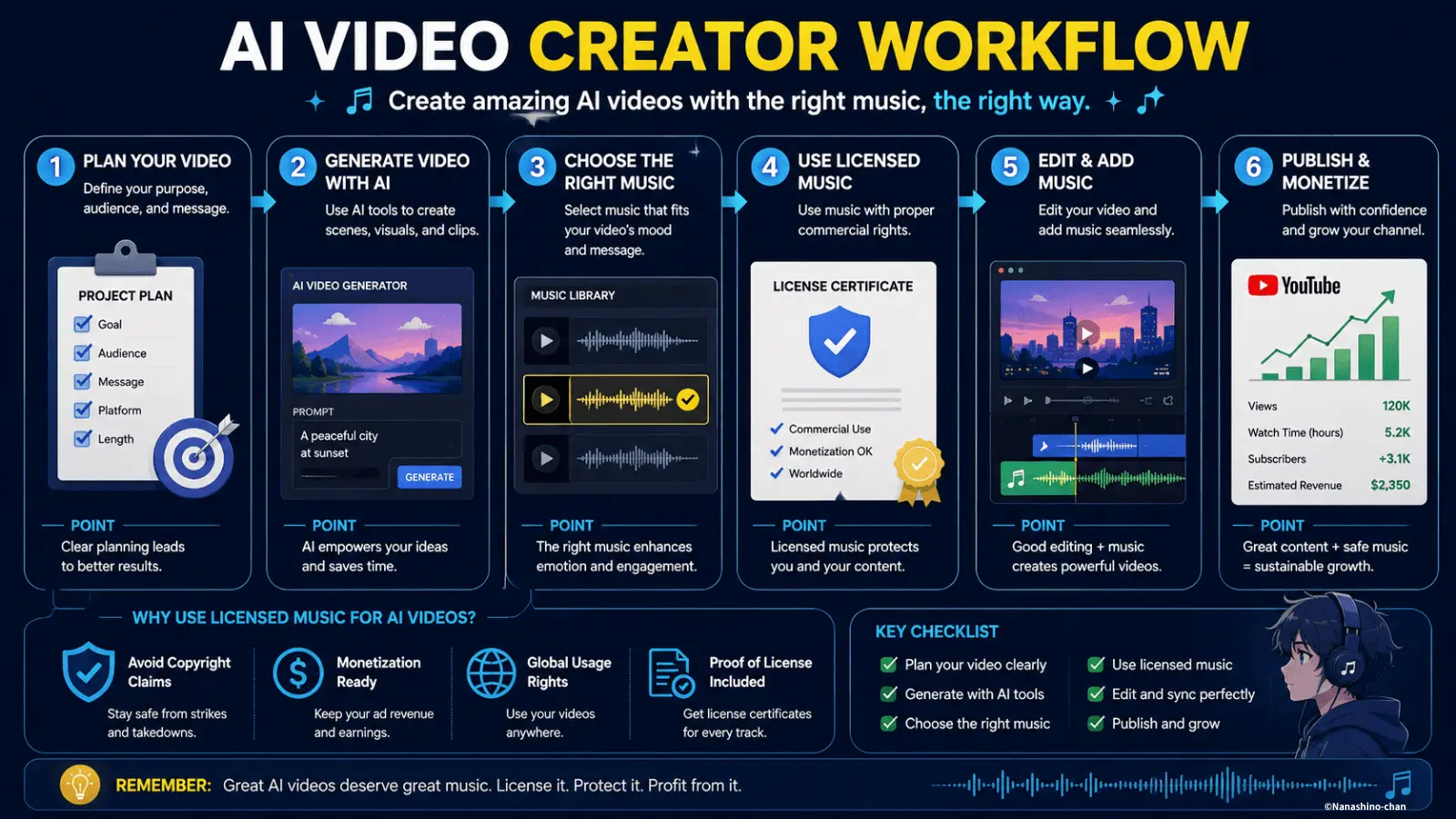
Why AI-Generated Videos Still Need Music Licenses
An AI-generated video may be created with automated visuals, synthetic narration, AI avatars, text-to-video tools, or generative editing systems. However, the music used in the final video is still a separate creative asset with its own copyright and usage rights.
This means the licensing question is not only about how the video was made. The more important question is how the finished video will be used. A private test video, monetized YouTube upload, paid social ad, product demo, and client campaign may all require different levels of music permission.
- • AI-generated visuals do not automatically clear music rights
- • Monetized videos need stronger permission than private drafts
- • Brand campaigns and client projects require commercial usage clarity
- • Platform rules can still affect uploads, claims, and monetization
Step-by-Step: How to License Music for AI-Generated Videos
The safest workflow is to treat music licensing as part of the AI video production process from the beginning. Do not wait until after the video is exported, delivered to a client, or scheduled for publication.
1. Define the Use Case
Decide whether the video is for YouTube, social media, paid ads, client work, brand content, or internal use.
2. Choose Licensed Music
Select music with clear permission for commercial video, monetization, online distribution, and campaign usage.
3. Keep Proof
Save license information, purchase records, usage terms, and any documentation that confirms your rights.
What Type of License Do AI Videos Need?
For most public or commercial AI-generated videos, the best option is a commercial music license. This type of license should clearly cover online video use, monetized publishing, social media distribution, advertising, and client-facing work.
If the AI video will be used for business growth, sponsored content, lead generation, paid ads, product promotion, affiliate marketing, or client delivery, avoid vague music sources that do not clearly define commercial rights.
- • Commercial video license
- • YouTube monetization permission
- • Social media publishing rights
- • Advertising and campaign usage
- • Client work and agency permissions
- • Clear Content ID and copyright policy
AI Video Use Cases That Require Licensing Clarity
Music licensing becomes especially important when AI-generated videos are used beyond personal experimentation. If the content supports a brand, business, channel, client, product, or campaign, the music should be licensed for that context.
- • AI-generated YouTube videos
- • AI YouTube Shorts
- • AI avatar videos
- • AI marketing content
- • AI product explainers
- • AI-generated advertisements
- • AI videos for websites and landing pages
- • AI videos for client campaigns
- • AI educational videos
- • AI social media content
Common Music Licensing Mistakes in AI-Generated Videos
AI production workflows can make mistakes scale quickly. A single unclear music track may be used across many videos, templates, ads, or client versions before the licensing issue becomes visible.
The goal is not only to avoid one copyright claim. The goal is to build a repeatable workflow where every AI-generated video uses music with clear, documented rights from the start.
- • Assuming “AI-generated” means copyright rules do not apply
- • Using free music without checking commercial permissions
- • Reusing one track across multiple clients without checking scope
- • Publishing monetized YouTube videos without reviewing Content ID rules
- • Using personal-use music in paid advertising or brand campaigns
- • Failing to keep proof of license for future disputes or client questions
AI Video Music Licensing Checklist
Before publishing an AI-generated video with music, check the license against the final usage. This checklist is useful for creators, agencies, marketers, YouTube channel operators, and businesses.
- • Does the license allow commercial video use?
- • Does it allow monetized YouTube uploads?
- • Can the music be used in AI-generated or AI-assisted videos?
- • Is social media distribution allowed?
- • Are paid ads or promotional campaigns covered?
- • Can the music be used in client-facing work?
- • Are Content ID rules clearly explained?
- • Can the video be edited, republished, or reused later?
- • Do you have proof of license or purchase?
- • Does the license match the platform where the video will be published?
Why This Is Safe for AI Video Creators
A professional licensing structure helps AI video creators reduce uncertainty before publication. Clear rights make it easier to use music in monetized videos, client projects, brand campaigns, social content, and repeatable production workflows.
Nanashino-chan’s licensing-focused structure is designed for creators and businesses that need music for commercial video, AI-generated content, YouTube channels, social media publishing, and brand use cases.
- • Commercial-ready licensing structure
- • Copyright-safe design for creators
- • ISRC-based rights management
- • Transparent usage policy
Official Platform Copyright Policies
Major platforms officially state that purchasing or streaming music does not automatically grant rights for uploading, monetization, commercial use, or social media distribution.
- YouTube Copyright Guidelines
- Instagram Copyright Information
- Facebook Copyright Policy
- TikTok Copyright Policy
Copyright policies and platform rules may change over time. Always review the latest official guidelines before publishing monetized or commercial content.
FAQ
Do AI-generated videos need music licenses?
Yes. AI-generated videos need music licenses when they use copyrighted music and are published, monetized, used commercially, shared on social platforms, or delivered to clients.
How do I license music for AI-generated videos?
Choose music with a license that matches your use case, confirm commercial permissions, check platform rules, review Content ID policies, keep proof of license, and publish only within the allowed scope.
Can I use royalty-free music in AI-generated videos?
Royalty-free music may be usable if the license clearly allows AI video use, commercial publishing, monetization, client work, and multi-platform distribution.
Can AI-generated YouTube videos get copyright claims?
Yes. AI-generated YouTube videos can still receive copyright claims if the music is not properly licensed or if the track is registered with Content ID.
What license is best for commercial AI videos?
A commercial music license that covers online video, social media, advertising, monetization, brand use, and client-facing projects is usually the best option.
Should agencies keep proof of music licenses?
Yes. Agencies should keep proof of license, purchase records, usage terms, and project documentation in case a client, platform, or rights holder asks for verification.
Need Licensed Music for AI-Generated Videos?
Use licensed music designed for AI-generated videos, YouTube channels, commercial campaigns, avatar videos, and creator workflows.
► View Licensing OptionsRelated Pages
- Music for AI Video Generators
- Music for AI Content Creators
- Licensed Music for AI Commercial Videos
- Music for AI Marketing Content
- Music for AI Avatar Videos
- Music for AI YouTube Channels
- Copyright-Safe Music for AI Videos
- Can You Use Copyrighted Music in AI Videos?
- AI Video Music Licensing Guide
- Licensing Page