Music License for Small Business
Small businesses use music in more places than ever: YouTube videos, Instagram Reels, TikTok posts, product demos, website videos, ads, brand stories, presentations, and customer-facing content.
But business use is not the same as personal use. If your company uses music to promote a product, service, brand, store, offer, or campaign, you need music with clear commercial licensing rights.
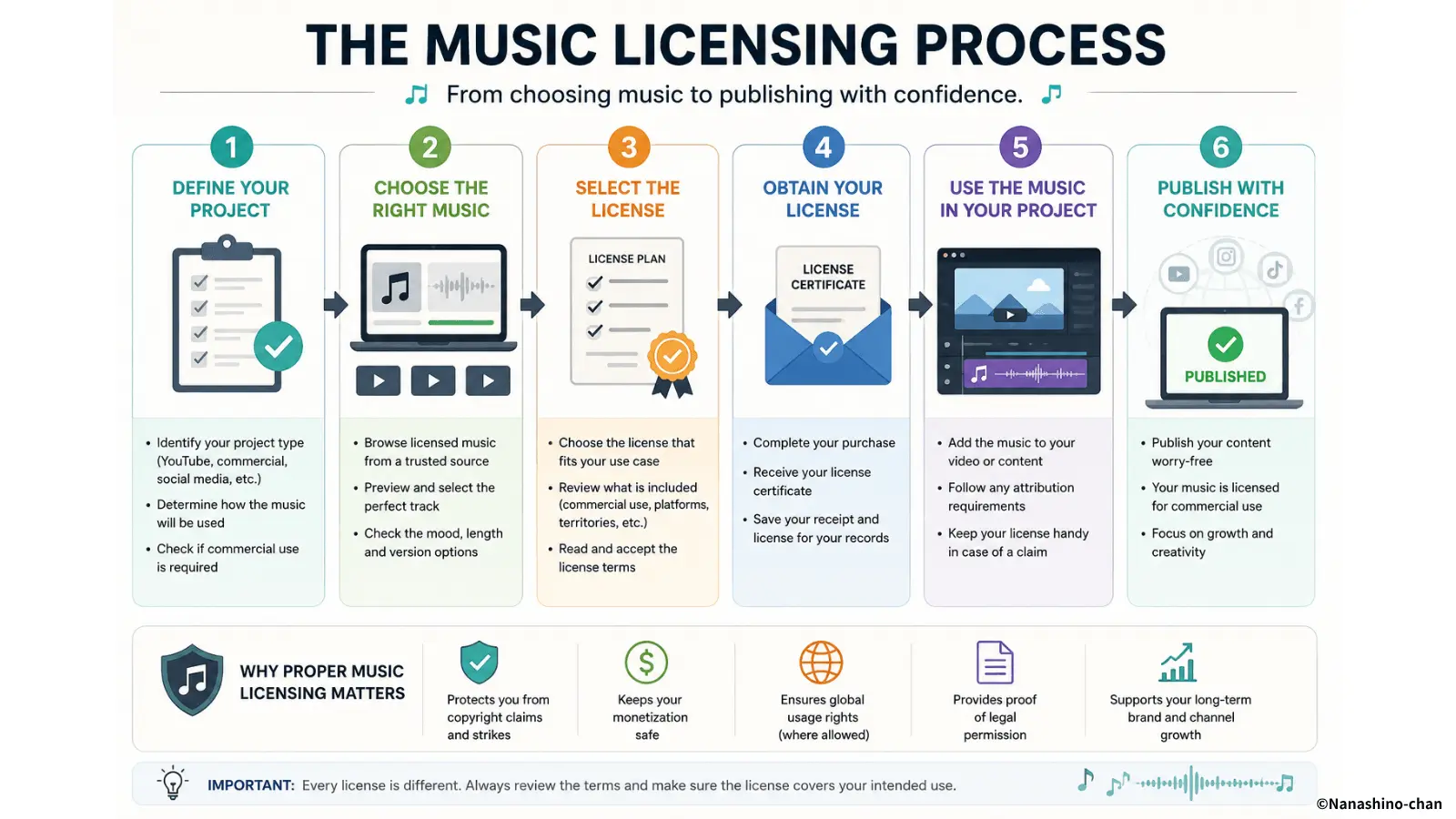
Why Small Businesses Need Music Licenses
Many small business owners assume that music found online can be used in marketing videos if the video is short, posted on social media, or created for a local audience. In practice, music rights still apply when the content is used to promote a business.
A video does not need to be a national TV commercial to count as commercial use. A product demo, restaurant reel, local service ad, coaching video, real estate walkthrough, SaaS explainer, or brand story can all require proper music permission.
- • Business videos usually count as commercial content
- • Social media posts can still require music licensing
- • Website and landing page videos need clear usage rights
- • Ads and promotional campaigns need stronger licensing clarity
What Counts as Business Use?
Business use includes any content that supports a company, brand, product, service, store, campaign, client offer, or revenue-generating activity. The music may be used only in the background, but it still becomes part of a commercial communication asset.
For small businesses, this often includes content that feels informal: Instagram videos, TikTok clips, YouTube Shorts, website explainers, customer testimonials, local ads, or behind-the-scenes brand content.
Marketing Videos
Videos used to promote products, services, stores, events, launches, offers, or brand awareness.
Social Media Content
Reels, Shorts, TikToks, Facebook posts, LinkedIn videos, and other business-owned social content.
Website Content
Landing page videos, product demos, background videos, testimonials, explainer videos, and sales pages.
Best Type of Music License for Small Businesses
The best music license for a small business is a commercial license that clearly explains where and how the music can be used. The license should cover online video, websites, social media, advertising, product promotion, and general business marketing.
Avoid relying only on vague labels such as “free music,” “copyright-free,” or “royalty-free.” These terms can mean different things depending on the source. The important question is whether the license actually covers your business use case.
- • Commercial video usage
- • Social media publishing rights
- • Website and landing page usage
- • Paid advertising and campaign permissions
- • YouTube monetization support
- • Brand and product promotion rights
- • Clear Content ID and copyright policy
- • Proof of license or purchase documentation
Small Business Examples
Music licensing applies across many small business categories. Even when the video is simple, the usage may still be commercial if it promotes a business, supports customer acquisition, or appears on official brand channels.
- • A restaurant posting a new menu video on Instagram
- • A real estate agent publishing a property walkthrough
- • A fitness studio promoting a new class package
- • A SaaS startup sharing a product demo on YouTube
- • An e-commerce store creating a product ad
- • A local salon posting before-and-after videos
- • A coach or consultant creating educational content
- • A small agency delivering social videos to a client
Common Music Licensing Risks for Small Businesses
Small businesses often move quickly. A founder, marketer, editor, or social media manager may choose a track because it sounds good, appears in a template, or is available in a platform library. But convenience does not always mean commercial permission.
The risk is larger when a video is used across multiple platforms or in paid campaigns. A track that is acceptable inside one app may not be cleared for use on YouTube, a website, an advertisement, or a client deliverable.
- • Using streaming music in business videos
- • Assuming social platform audio is cleared for all commercial use
- • Using free music without checking advertising rights
- • Posting the same video across platforms without checking license scope
- • Uploading promotional videos to YouTube without reviewing Content ID risk
- • Using personal-use music for brand or product promotion
- • Failing to keep license proof for future disputes
Where Small Businesses Use Licensed Music
A strong small business music license should support the places where modern businesses actually publish content. This includes social media, websites, video platforms, ad channels, presentation decks, and client-facing materials.
- • YouTube videos and YouTube Shorts
- • Instagram Reels and feed videos
- • TikTok business content
- • Facebook videos and ads
- • LinkedIn business videos
- • Website and landing page videos
- • Product demo videos
- • E-commerce advertisements
- • Local business promotions
- • Sales presentations and brand explainers
Small Business Music License Checklist
Before using music in a business video, check the license against the final use case. This is especially important when the video promotes a product, service, offer, client, event, or brand.
- • Does the license allow commercial video use?
- • Can the music be used for business promotion?
- • Can the video be posted on YouTube, Instagram, TikTok, Facebook, LinkedIn, and websites?
- • Are paid ads or promotional campaigns allowed?
- • Is YouTube monetization allowed?
- • Are Content ID rules clearly explained?
- • Can the video be reused, edited, localized, or republished later?
- • Can employees, freelancers, or agencies use the music for your business content?
- • Do you have proof of license or purchase?
- • Does the license match your actual publishing platform?
Why This Is Safe for Small Business Marketing
A professional licensing structure helps small businesses reduce uncertainty before publishing. Clear rights make it easier to create social content, upload videos, run campaigns, work with freelancers, and build a repeatable brand media workflow.
Nanashino-chan’s licensing-focused structure is designed for creators and businesses that need music for videos, social media, commercial campaigns, websites, product demos, and brand content.
- • Commercial-ready licensing structure
- • Copyright-safe design for creators and businesses
- • ISRC-based rights management
- • Transparent usage policy
Official Platform Copyright Policies
Major platforms officially state that purchasing or streaming music does not automatically grant rights for uploading, monetization, commercial use, or social media distribution.
- YouTube Copyright Guidelines
- Instagram Copyright Information
- Facebook Copyright Policy
- TikTok Copyright Policy
Copyright policies and platform rules may change over time. Always review the latest official guidelines before publishing monetized or commercial content.
FAQ
Do small businesses need a music license for videos?
Yes. Small businesses usually need a music license when using music in videos, ads, social media posts, websites, product demos, or other commercial marketing materials.
Can small businesses use royalty-free music in ads?
Royalty-free music may be usable in ads only if the license clearly permits commercial advertising, social media distribution, online video use, and business marketing.
What type of music license does a small business need?
A commercial music license that covers online video, social media, advertising, websites, product promotion, and business use is usually the best fit.
Can a small business use music from streaming services in videos?
No. Purchasing or streaming music generally does not grant permission to use that music in business videos, ads, websites, or social media marketing.
Can music licensing reduce copyright claim risk?
A clear commercial music license can reduce uncertainty by documenting permitted use, platform scope, monetization rights, and commercial permissions.
Should small businesses keep proof of music licenses?
Yes. Keep license documents, purchase records, usage terms, and project notes in case a platform, client, partner, or rights holder asks for verification.
Need Music for Small Business Videos?
Use licensed music designed for small business videos, social media content, websites, ads, product demos, and commercial marketing campaigns.
► View Licensing OptionsRelated Pages
- Music License for Marketing Campaigns
- Music License for Business Videos
- Music License for Agencies
- Music for SaaS Product Videos
- Music for App Demo Videos
- Music for E-commerce Advertising
- Music for B2B Marketing Videos
- How to Choose a Music License for Videos
- Music Licensing for Commercial Use Guide
- Licensing Page