Brand-Owned Content Music Guide
Music License for Brand Content
A music license for brand content should match the real use of the asset—not just its file format. An organic Instagram Reel, a product video on a website, a sponsored creator post and a paid social ad can require different permission even when they use the same track.
Use this guide to identify the content type, distribution method, rights scope and records your brand, agency or creator should confirm before publishing.
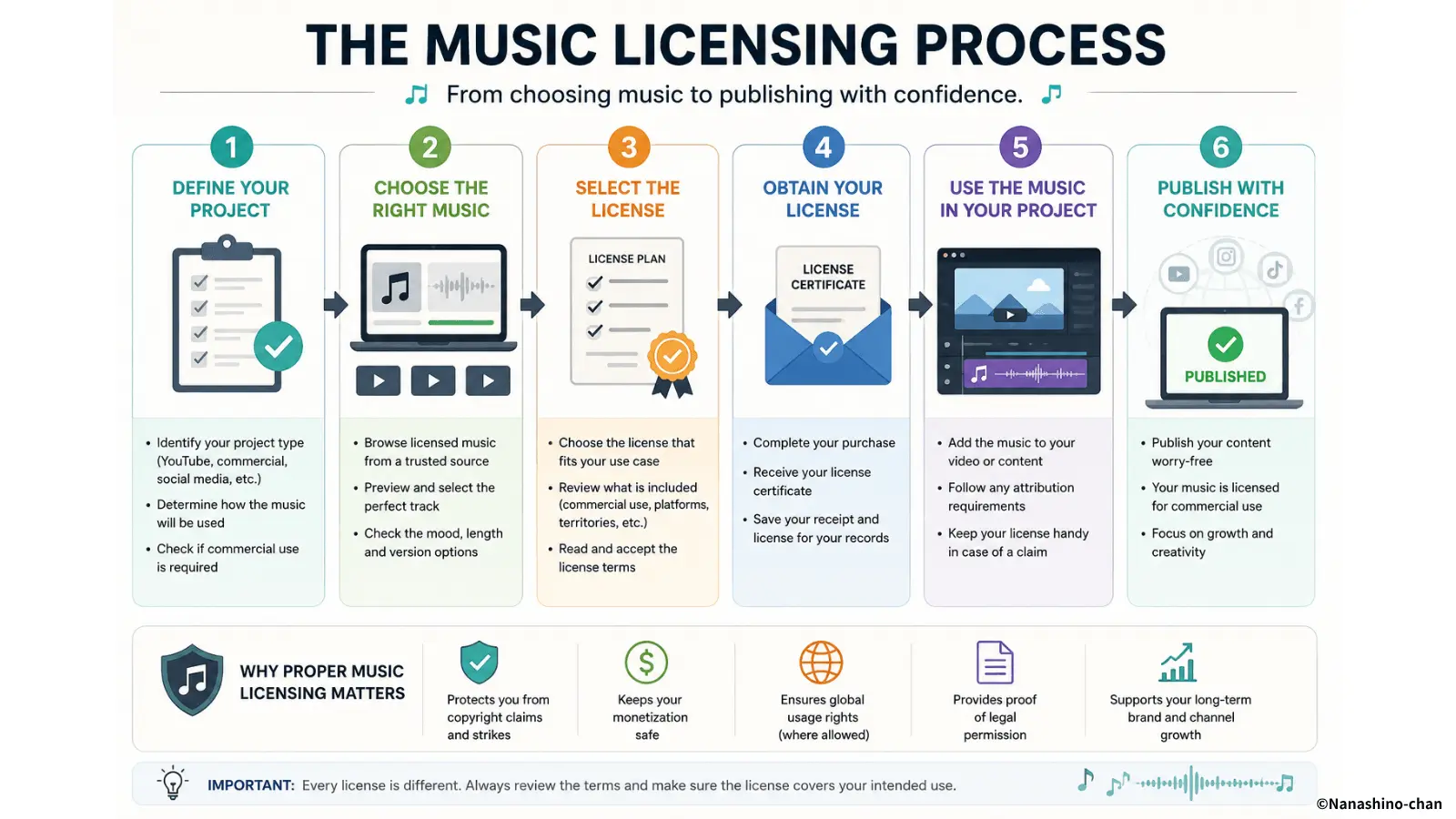
Quick Answer: Does Brand Content Need a Music License?
Usually, yes—unless the music is original to the brand or is supplied under terms that clearly cover the planned brand use.
Brand content is commercial communication when it supports a company, product, service, sponsor or campaign. Music shown inside an app, bought for personal listening or described only as “royalty-free” is not automatically cleared for every brand-owned channel.
- For organic, non-ad brand content, confirm commercial use, platforms and reuse.
- For websites and product pages, confirm off-platform and business-owned use.
- For sponsored content, confirm the brand, creator, deliverables and promotional scope.
- For boosted posts and paid ads, require explicit advertising or campaign permission.
- For agency work, identify the licensee, client and final distribution before delivery.
What Counts as Brand Content?
Brand content is content created by, commissioned by or published for a business identity. It does not need to look like a traditional commercial. The purpose, account owner and distribution plan matter more than whether the video feels informal.
Brand-Owned Social
Instagram Reels, TikTok videos, YouTube Shorts, LinkedIn posts, event recaps and founder updates published by a business.
Product & Website Content
Product demos, launch teasers, website hero videos, landing pages, app walkthroughs, case studies and sales content.
Sponsored Creator Content
Paid partnerships, affiliate videos, PR-package posts, brand deals, whitelisted creator assets and client deliverables.
Advertising & Campaigns
Boosted posts, Meta Ads, TikTok Ads, YouTube Ads, LinkedIn Ads, launch campaigns and multi-platform promotional edits.
Choose the License by Distribution, Not by Video Length
A 10-second ad can need broader permission than a five-minute organic video. Before selecting music, classify the final use with the table below.
| Final Use | What to Confirm | Typical License Direction |
|---|---|---|
| Organic brand social post | Business account, commercial use, named platforms, number of posts and reuse. | Commercial permission for non-ad brand-owned content. |
| Website or product video | Off-platform publishing, website domains, embeds, edits and how long the asset stays live. | Commercial permission that expressly includes website or product use. |
| Sponsored creator post | Creator and brand accounts, deliverables, campaign period, affiliate or paid-partnership status and reuse by the brand. | Sponsored-content, sync or campaign-specific permission. |
| Boosted post or paid ad | Advertiser, platform, duration, territory, spend, versions, whitelisting and media buying. | Sync, advertising or campaign license. |
| Multi-platform launch campaign | All organic and paid channels, campaign cutdowns, landing pages, territories and campaign dates. | Sync or custom campaign license. |
| Agency or client deliverable | Who buys the license, named client, handoff rights, final channels, paid use and future reuse. | Commercial or sync permission based on the client's final distribution. |
This table is a planning guide, not a substitute for reading the specific license terms.
Six Questions to Answer Before Publishing
1. Where did the music come from?
A social app, stock library, composer, direct rights holder or streaming service can provide very different permissions.
2. Who is publishing?
Identify the brand, agency, client, creator and every account that will upload or advertise the asset.
3. Is distribution paid?
Boosting, media buying, partnership ads, Spark Ads and whitelisting should be treated separately from organic posting.
4. Will the asset move?
Confirm websites, landing pages, social platforms, presentations and later campaign cutdowns before licensing.
5. How long and where?
Check the campaign period, territories, publication term and whether old posts may remain live after paid use ends.
6. What proof will you keep?
Store the terms, purchase record, track details, approved scope and final URLs in the same project folder.
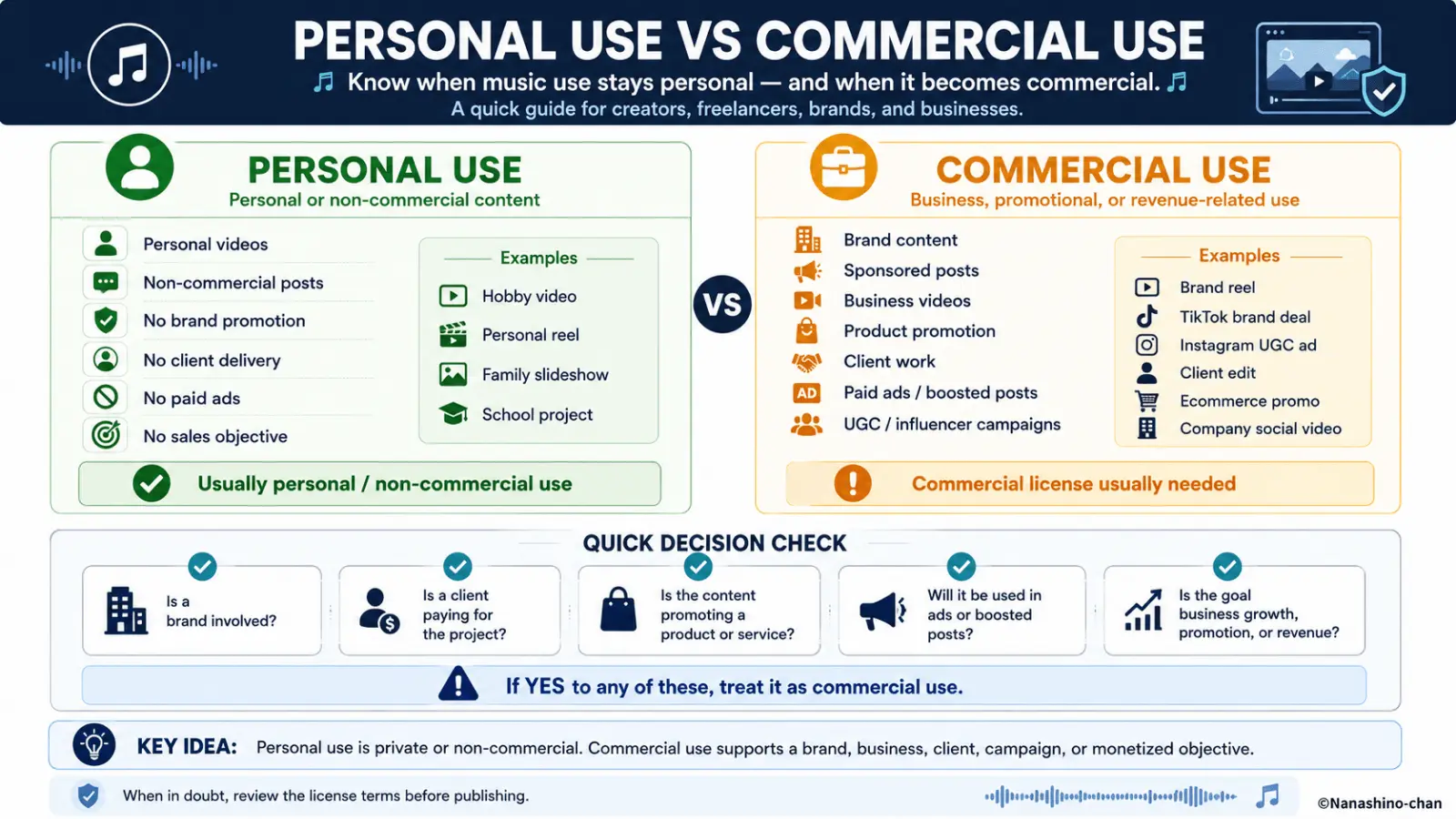
Platform Music vs Directly Licensed Music
Platform music can be appropriate when the platform's current terms cover the account and exact use. The risk begins when teams assume that in-app availability is a portable license for advertising, client delivery, websites or other platforms.
| Question | Platform-Provided Music | Directly Licensed Music |
|---|---|---|
| Where can it be used? | Usually governed by the supplying platform, account type, region and feature-specific rules. | Governed by the written license's platforms, projects, territories and term. |
| Does it cover paid ads? | Only when the relevant platform music option and terms expressly allow advertising. | Only when paid advertising or campaign use is expressly included. |
| Can it move off-platform? | Do not assume that in-app access covers websites, downloads or another platform. | Cross-platform use can be included and documented when stated in the license. |
| What proof is available? | Teams may need to preserve the applicable platform terms and evidence of the selected library or feature. | Terms, receipt or invoice, certificate and project scope can be stored together. |
Meta says Instagram's general licensed music library is intended for personal, non-commercial use and points businesses toward Sound Collection for commercial uses. TikTok directs businesses to its Commercial Music Library for commercial activities. YouTube Audio Library and Creator Music each have their own usage conditions. Review the current official terms for the exact tool you use.
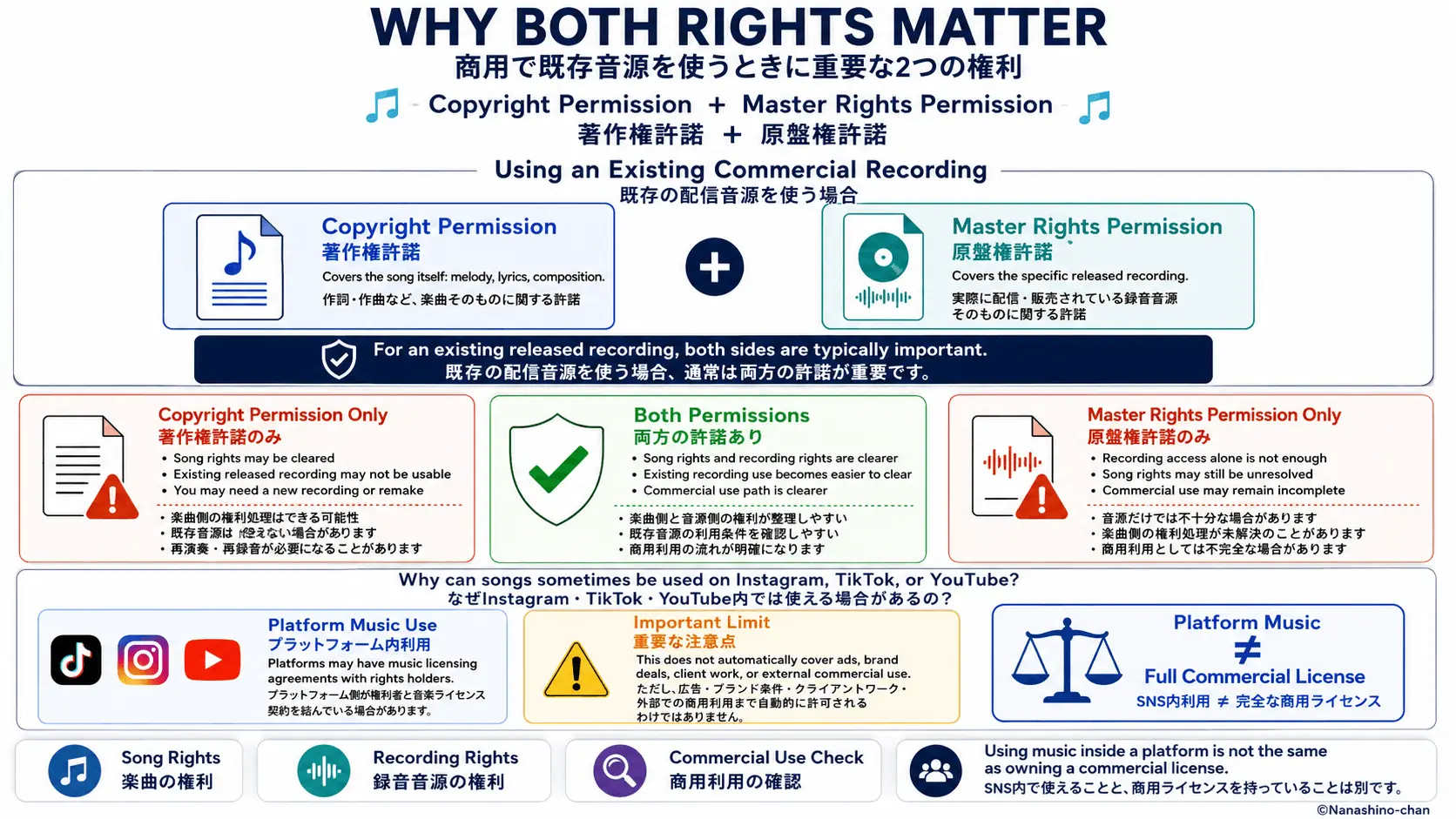
What Rights Should the License Address?
Music in video can involve the specific sound recording, the underlying composition and permission to synchronize the music with visual media. Commercial brand use may add restrictions related to advertising, clients, platforms, duration and territory.
Master Recording
Permission connected to the specific recorded performance or sound file used in the content.
Composition
Permission connected to the underlying musical work, which can be controlled separately from the recording.
Sync & Commercial Scope
Permission to combine music with visuals and use the result for the stated business, promotional or advertising purpose.
For a deeper explanation, read How Music Rights Work and What Are Sync Rights?
Nanashino-chan License Direction for Brand Content
Under Nanashino-chan's licensing structure, the Commercial Creator License and Sync License are product names with defined scopes. They are not universal legal categories used by every music provider.
| Nanashino-chan Option | Starting Point | Important Limit |
|---|---|---|
| Commercial Creator License | Eligible non-ad commercial online content, including organic social posts, website videos and small-business video use within scope. | Paid ads and brand campaigns are not included in this license. |
| Sync License | Eligible paid ads, brand campaigns, sponsored campaign videos, promotional distribution and approved multi-platform campaign use. | The project, platforms, duration and other limits must match the selected Sync terms. |
| Custom License | Large or unusual campaigns, broader client packages, exclusivity, broadcast, apps, games or another use outside standard terms. | Confirm the scope before editing, delivery or publication. |
Nanashino-chan offers 2,000+ Original Lo-Fi Tracks. The project directly manages the master-recording side and composition/copyright side of its original catalog, which can make approved use easier to review and document than music involving multiple unrelated rights holders.
Public Brand and Visual Use Contexts
Public social references show Nanashino-chan music used alongside fashion, luxury-media, interior, real-estate and corporate visuals. These examples help demonstrate visual fit; they do not by themselves prove a direct partnership, endorsement, paid campaign or licensing arrangement.
Fashion & Luxury Media
A Harper's BAZAAR Hong Kong and Cartier-related public Reel context shows how calm lo-fi can support polished event and editorial visuals.
Interior & Lifestyle
Arte Moderna Retrô provides a public example of warm lo-fi paired with design, furniture and lifestyle imagery.
Corporate & Real Estate
A Chuo-Nittochi / BAUS public visual context shows the music alongside calm corporate and real-estate communication.
View the public use references and full context before drawing conclusions about any example.
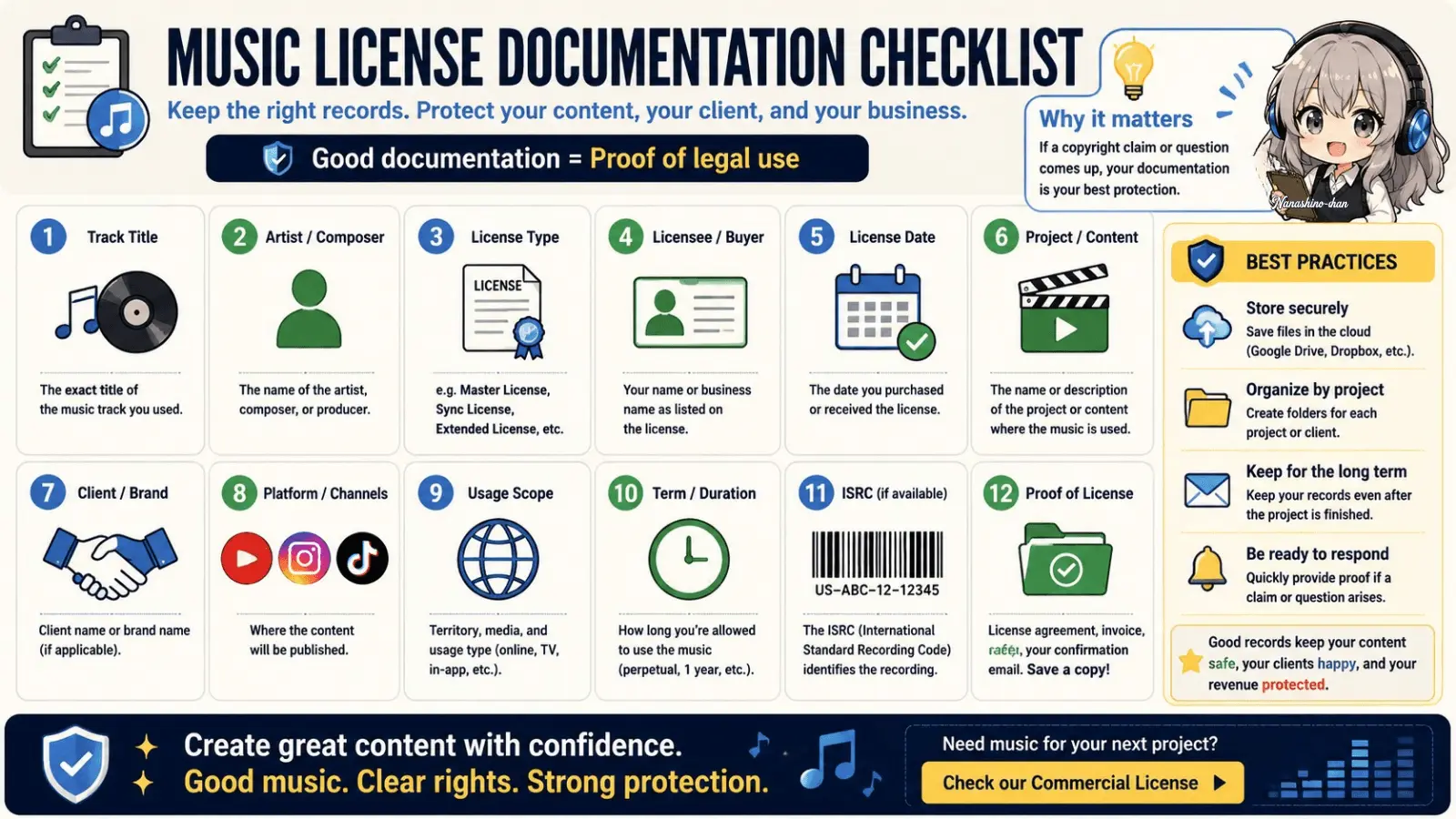
What Music License Records Should a Brand Keep?
Keep enough information to connect the music, buyer, project and approved use. This matters when an editor leaves the project, an agency hands assets to a client or an organic post is later considered for paid distribution.
- License terms and the version or purchase date.
- Receipt, invoice, order confirmation and license certificate if provided.
- Track title, artist, track URL and recording identifier if available.
- Licensee, brand, agency, client and project or campaign name.
- Approved platforms, territories, campaign period, edits and paid or organic status.
- Final video files, published URLs and screenshots of any platform claim or notice.
Use the Music License Documentation Checklist for a fuller project record.
A Practical Brand Music Workflow
1. Map the Final Use
List every account, website, paid placement, edit, territory, client and campaign date before choosing the track.
2. Match the License
Read the actual permitted uses and exclusions. Do not choose a plan from its name alone.
3. Save the Evidence
Store the terms, payment record, certificate, track details and approval notes with the production files.
4. Recheck Before Reuse
Review the scope again before boosting, extending, localizing, transferring or republishing the asset.
Official Platform Music Resources
Platform catalogs, account restrictions, advertising tools and music terms can change. Check the latest official guidance for the exact platform feature and account you plan to use.
Frequently Asked Questions
Does every piece of brand content need a separate music license?
Not necessarily. One license may cover more than one asset when its terms expressly allow the planned projects, platforms, accounts, edits, duration and distribution. Do not assume that permission for one post automatically covers a website video, paid ad or later campaign cutdown.
Can a brand use music from Instagram or TikTok?
Sometimes, when the specific platform terms and music library cover that account and use. General in-app availability should not be treated as permission for every commercial post, paid ad, website, client deliverable or cross-platform reuse.
Is an organic brand post different from a paid ad?
Yes. Both can be commercial, but paid distribution, boosting, whitelisting and campaign media buys usually require a license that expressly covers advertising. A license for non-ad commercial content should not be assumed to include paid promotion.
Which Nanashino-chan license fits brand content?
Under Nanashino-chan's licensing structure, eligible non-ad commercial online content may fit the Commercial Creator License. Paid ads, brand campaigns, sponsored campaign videos and wider promotional distribution require a Sync License or custom terms. Check the current product terms before publishing.
Can licensed music be reused across platforms and edits?
Only when the license covers the planned platforms, number of assets or projects, edits, accounts, territories, duration and distribution. Confirm reuse before turning an organic post into a website video, paid ad or multi-platform campaign.
What proof of music permission should a brand keep?
Keep the license terms, receipt or invoice, certificate if provided, track title and artist, licensee and client details, project name, approved platforms, usage period and final published URLs.
Need Original Music for Brand Content?
Explore 2,000+ Original Lo-Fi Tracks and choose a license based on the real distribution plan: non-ad commercial content, paid campaigns or a custom project.