Sponsored Content Music Licensing
Music License for Sponsored Content
Sponsored content sits in a risky middle area. It may look like a normal YouTube video, Instagram Reel, TikTok post, Shorts video, or creator review, but the purpose is commercial because a brand, product, service, affiliate offer, or campaign is involved.
That means music rights matter more than they do in a casual personal post. A track that feels safe for a hobby video may not be appropriate for a sponsored video, paid partnership, PR package, product review, affiliate campaign, or brand deal.
This guide explains when sponsored content needs a commercial music license, why platform music can be risky, what proof creators and brands should keep, and how Nanashino-chan licensing can reduce uncertainty for creator-brand collaborations.
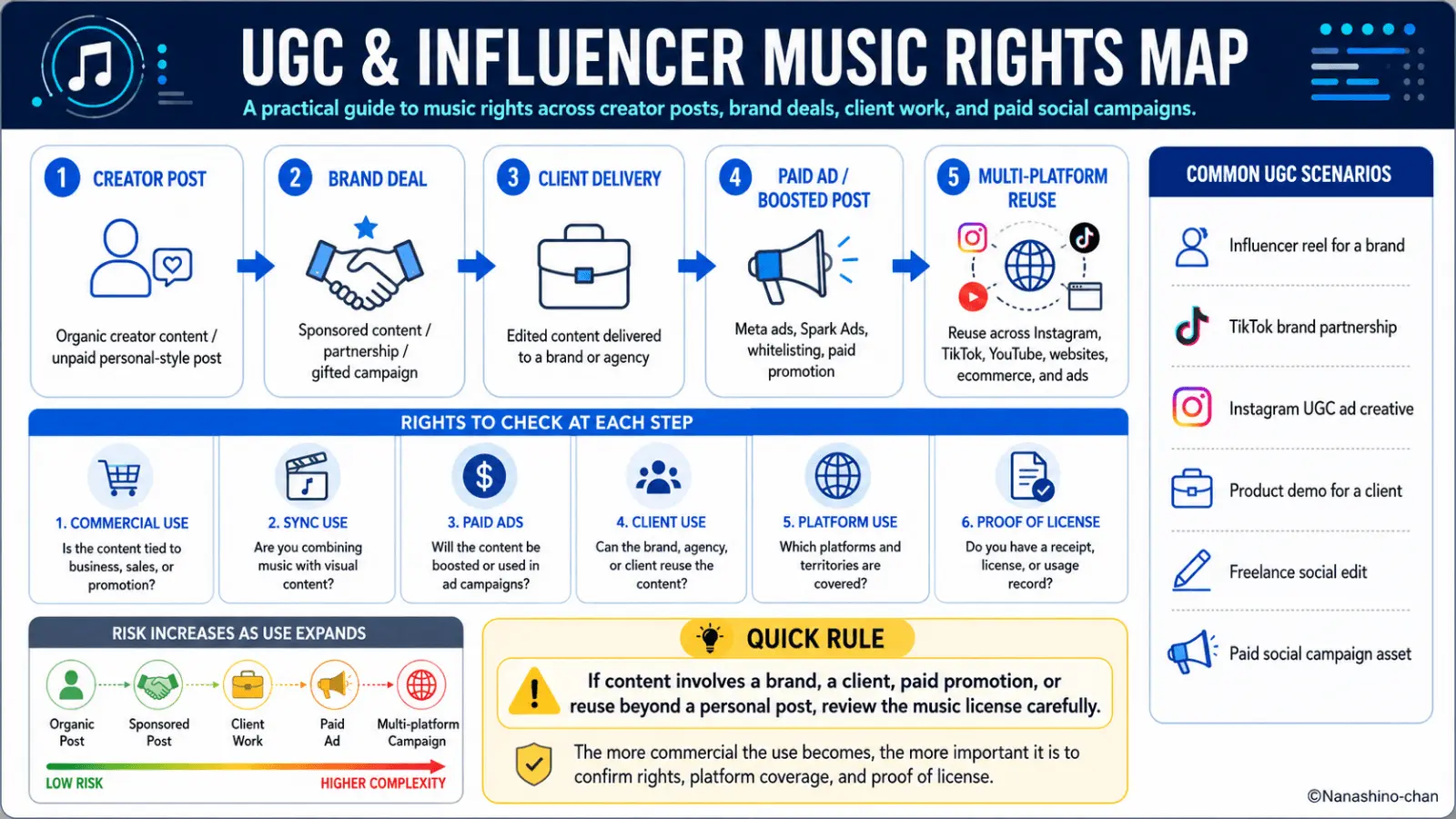
Quick Answer: Do Sponsored Videos Need a Music License?
Yes, sponsored content usually needs music rights that match the commercial purpose of the video. A song being available inside Instagram, TikTok, YouTube, or another platform does not automatically mean it is cleared for paid partnerships, PR videos, brand deals, product reviews, affiliate campaigns, or client deliverables.
If the content promotes a brand, product, service, campaign, sponsor, affiliate link, or client, treat the music as part of a commercial asset. For organic sponsored creator videos, a Commercial Creator License may be suitable if the use fits the scope. For paid ads, boosted posts, media buys, or larger campaign distribution, a Sync License or custom campaign license is usually safer.
- • Sponsored content is usually commercial or promotional in practical licensing terms.
- • Platform music access does not always cover paid partnerships or brand deals.
- • Trending sounds may be risky for product promotion.
- • Brands and agencies may ask for proof of music permission.
- • Boosted posts and paid ads usually need clearer campaign rights.
- • License documentation helps protect the creator, brand, and agency workflow.
Why Sponsored Content Creates Music Licensing Anxiety
Many creators feel comfortable choosing background music for personal content, but become unsure when a brand deal is involved. The reason is simple: sponsored content changes the purpose of the video.
A normal vlog may be entertainment. A sponsored vlog segment can become brand promotion. A casual product mention may become paid partnership content. A simple Instagram Reel may become a campaign asset. When the purpose changes, the music rights question also changes.
The important question is not only “Can I use this song on this platform?” The better question is “Can I use this song in this sponsored or brand-related context?”
What Counts as Sponsored Content?
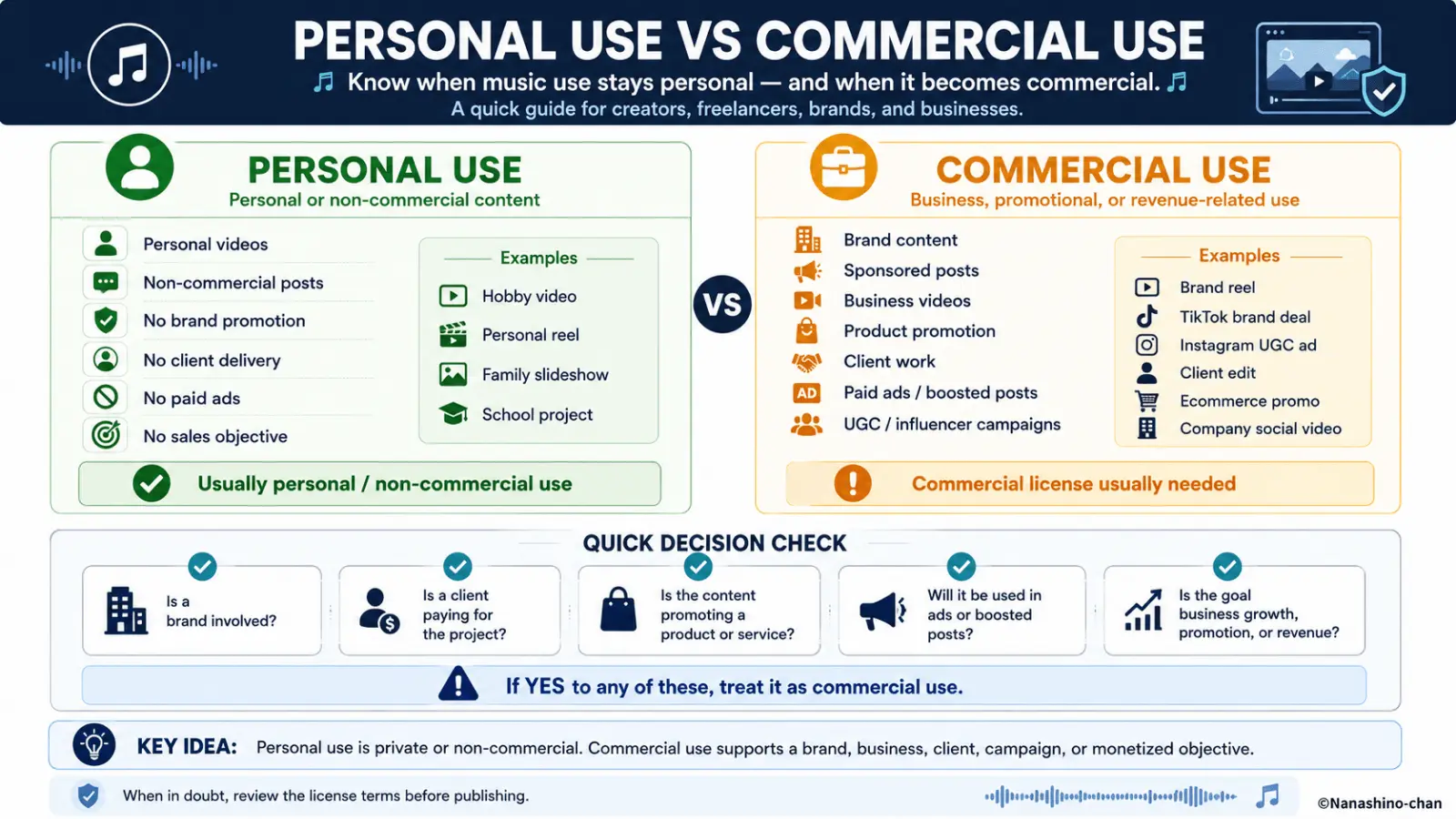
Sponsored content can take many forms. It does not always look like a traditional advertisement. In music licensing, the concern is whether the video supports a brand, product, service, campaign, or paid collaboration.
Sponsored Content Is Different From Personal Use
A creator may personally like a song, use platform audio in casual posts, or add music to non-commercial videos. Sponsored content is different because the video now supports a commercial relationship.
That difference matters even when the content is posted on the creator’s own account. If a sponsor, brand, affiliate program, product, service, or campaign is involved, the music should be checked against the commercial purpose of the post.
Platform Music Can Be Risky for Sponsored Content
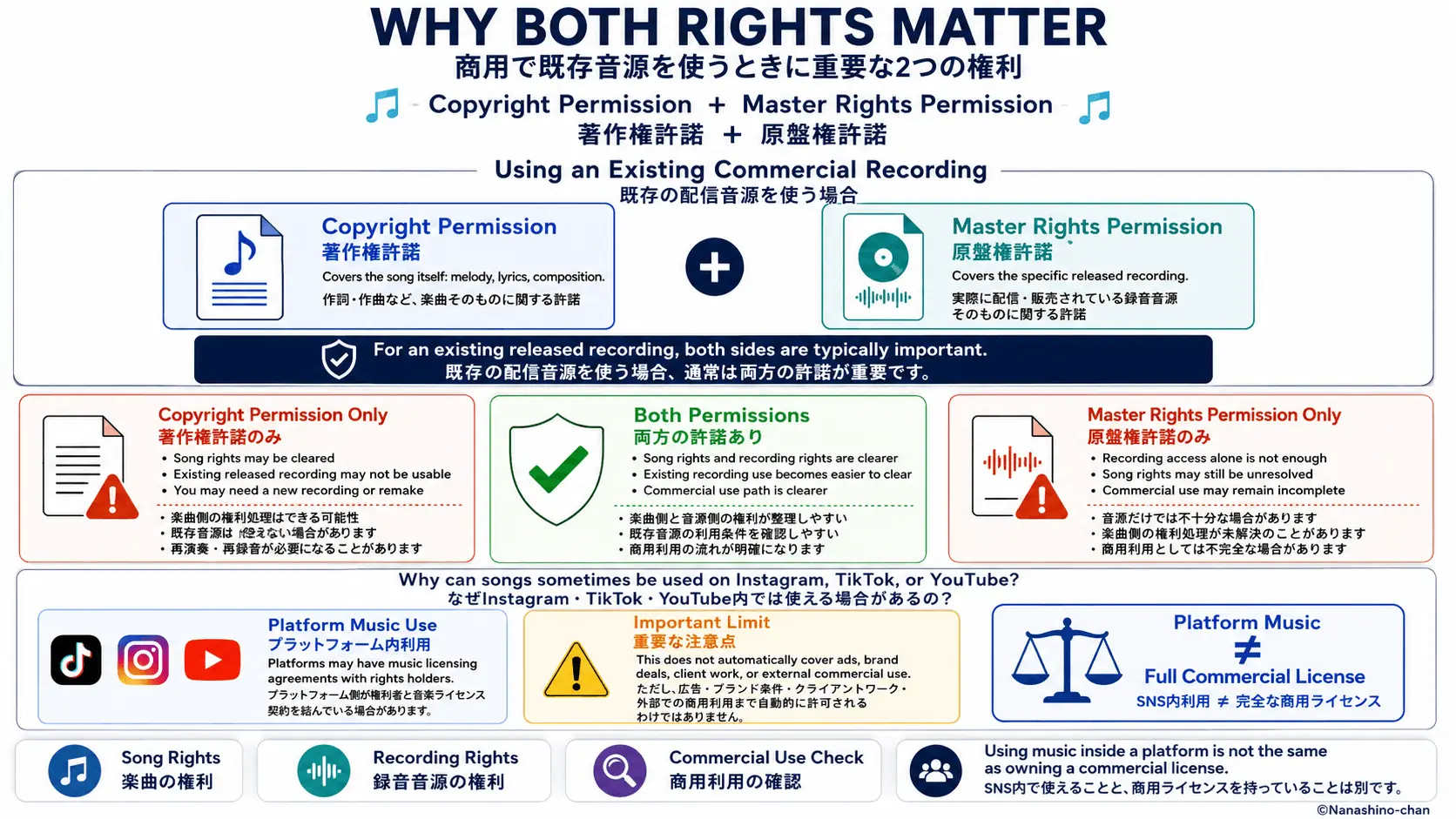
Sponsored content often begins inside a platform: Instagram Reels, TikTok videos, YouTube Shorts, YouTube videos, Facebook posts, LinkedIn videos, or creator livestream clips. The problem is that platform music access does not always equal commercial clearance.
A song may be available in a platform’s audio picker, but that availability may depend on account type, region, platform rules, library source, and the type of content being published.
Platform Availability
A song being selectable inside an app does not automatically mean it is cleared for sponsored use.
Brand Promotion
When a product, service, affiliate link, or sponsor is involved, music rights become more sensitive.
Paid Distribution
Boosted posts, paid ads, whitelisted content, and media buys usually need clearer rights.
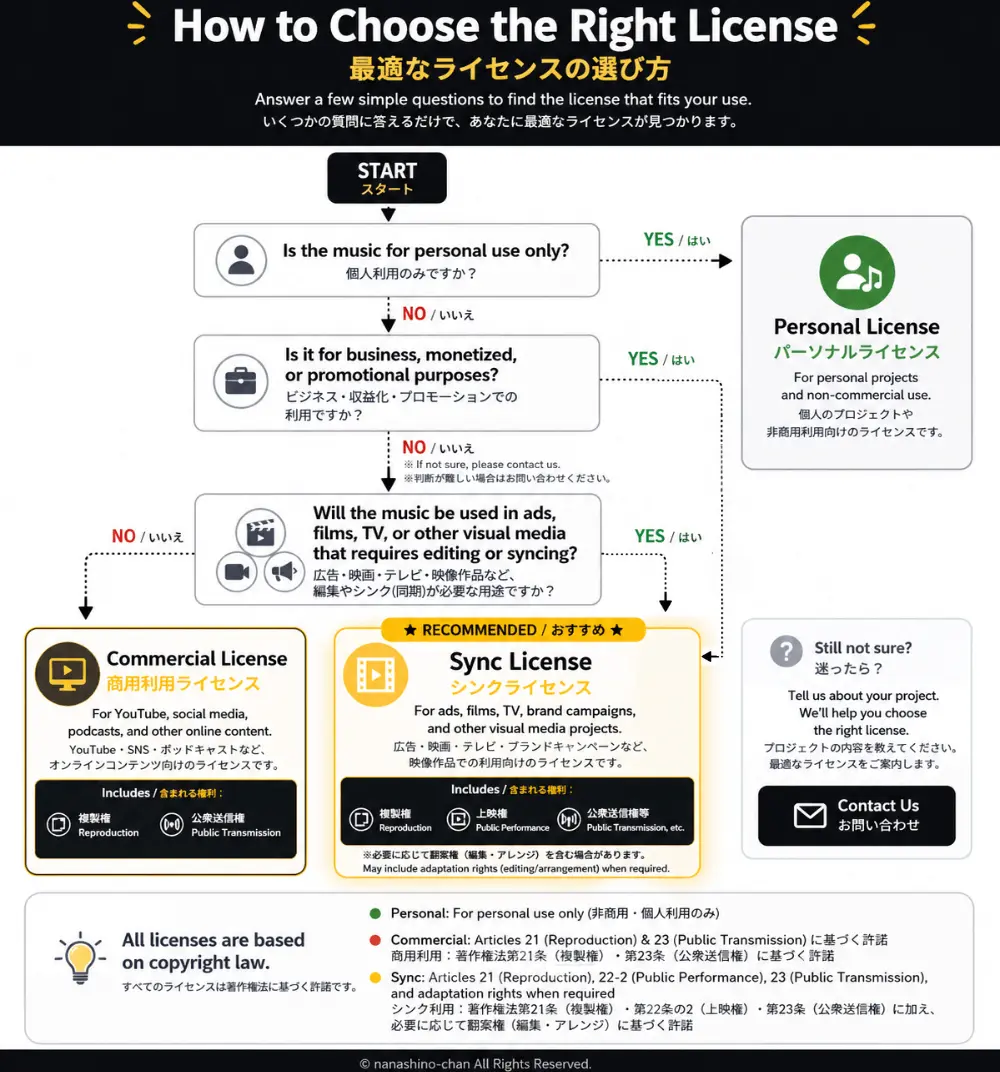
Commercial Creator License vs Sync License for Sponsored Content
Not every sponsored content use needs the same license. The right license depends on whether the video is organic creator content, brand-controlled campaign material, paid advertising, or a larger media buy.
For many organic creator posts, a Commercial Creator License can be appropriate if the use fits the license scope. For paid advertising, boosted posts, campaign distribution, brand-controlled assets, or time-limited ad use, a Sync License or custom campaign license is usually the safer direction.
Music Rights Questions Creators Should Ask Before Accepting a Brand Deal
Before publishing sponsored content, creators should clarify how the video will be used. The music license should match the actual project, not just the platform where the video is first uploaded.
- • Is this an unpaid product mention, PR post, paid partnership, or formal campaign?
- • Will the sponsor approve or review the video before publication?
- • Will the brand repost the video on its own account?
- • Will the post be boosted or used in paid advertising?
- • Will the content be edited into ads, cutdowns, Shorts, Reels, or TikToks?
- • Will the video be used on a website, landing page, or sales page?
- • Will the agency or brand ask for music license proof?
- • Does the license cover the platforms, duration, and project type?
- • Does the license cover only creator posting, or also brand and ad use?
- • Do you have a receipt, invoice, certificate, and track record saved?
Why Both Master Rights and Copyright Permission Matter
Sponsored content uses music as part of a business message. That means both the recording and the underlying music rights should be considered.
A platform may allow certain in-app uses, but a sponsored post can involve product promotion, client approval, paid distribution, brand reposting, or campaign reuse. In those situations, clearer permission can reduce confusion.
What Can Go Wrong With Unclear Music in Sponsored Content?
The problem is not only copyright. In sponsored content, unclear music rights can affect the relationship between the creator, brand, agency, and platform.
- • The sponsor may ask for proof of music permission after the video is delivered.
- • The platform may mute or restrict audio in certain contexts.
- • A boosted post may not be approved as expected.
- • The creator may need to replace audio close to the posting deadline.
- • The brand may be unable to reuse the video on other platforms.
- • The agency may need documentation for the client file.
- • The video may work organically but become risky when turned into an ad.
- • The campaign may require edits, re-uploads, or replacement versions.
For sponsored content, the goal is not just to find music that sounds good. The goal is to use music that can survive brand review, campaign delivery, platform review, and client documentation.
What Proof Should Creators, Brands, and Agencies Keep?
Sponsored content often involves more stakeholders than a normal creator upload. The creator, brand, manager, agency, editor, and client may all need to understand what music was used and why it was allowed.
Good documentation makes this easier. It does not guarantee platform behavior, but it gives the team a clearer record of the licensing decision.
- • License file or license terms
- • Gumroad receipt or invoice
- • License certificate PDF if available
- • Track title and artist name
- • Project name or sponsored video title
- • Sponsor, brand, or client name
- • Platform names where the video will appear
- • Campaign dates or posting period
- • Whether the video is organic, boosted, paid, or reused
- • Notes about permitted use and excluded use
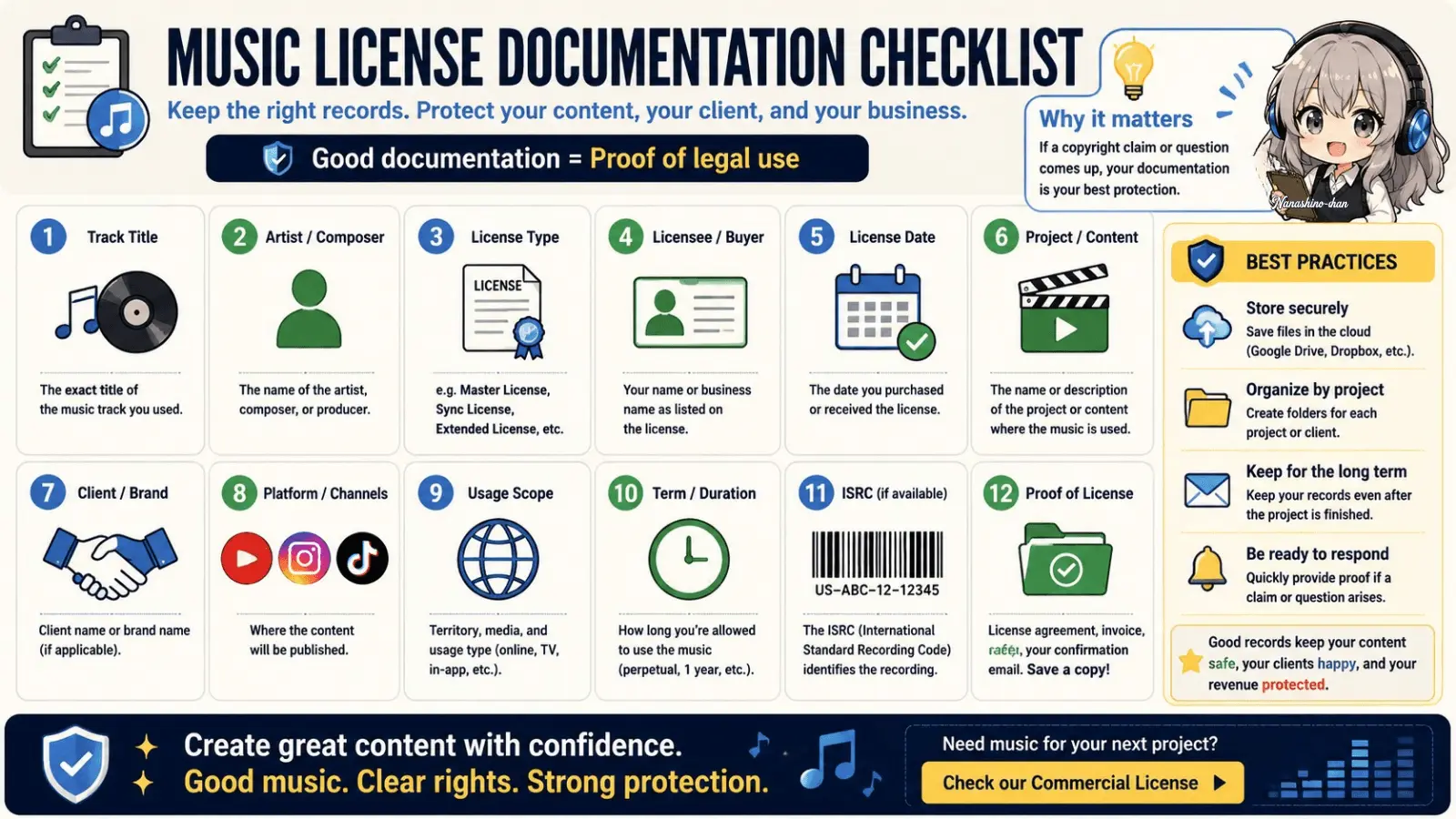
Sponsored Content Music License Checklist
Use this checklist before publishing sponsored content with music. The more commercial control, paid distribution, or brand reuse involved, the more important clear licensing becomes.
How Nanashino-chan Licensing Helps Sponsored Content Workflows
Nanashino-chan provides original lo-fi music for creators, brands, agencies, sponsored videos, product reviews, social media campaigns, AI videos, and business video production.
Instead of relying only on platform music, creators and brands can choose a license that explains the permitted use more clearly. This is especially useful when the content involves a sponsor, brand approval, client delivery, paid promotion, or campaign reuse.
For standard purchases, the Gumroad receipt / invoice and included license certificate PDF can be kept together as proof of license. This helps creators and business teams keep a simple project record without overcomplicating the workflow.
For Creators
Use clearer music documentation when delivering sponsored videos, affiliate content, product reviews, and brand deal posts.
For Brands
Reduce uncertainty when approving creator content, reposting sponsored videos, or preparing campaign assets.
For Agencies
Keep licensing records for client delivery, paid campaign planning, internal review, and social content production.
Official Platform Music Resources
Sponsored content can involve platform music rules, business account restrictions, advertising review, and brand documentation. Always review the latest official information before publishing commercial, paid, client-facing, or brand-related content.
- Instagram Licensed Music Library / Meta Sound Collection
- Meta Music Guidelines
- TikTok Commercial Use of Music
- TikTok Commercial Music Library
- YouTube Audio Library
- YouTube Creator Music License Tracks
This page is an educational guide and not legal advice. Sponsorship disclosure, advertising compliance, platform review, and music licensing are separate issues. Always review official platform rules and the license information shown for the specific music you want to use.
Frequently Asked Questions
Do sponsored videos need a music license?
Sponsored videos usually need clearer music rights than casual personal posts because the content promotes a brand, product, service, affiliate offer, or paid partnership. A commercial music license is usually safer than relying only on platform music availability.
Can I use Instagram or TikTok platform music in sponsored content?
Creators and brands should not assume that platform music is automatically cleared for sponsored content. A sound available in an app may not cover brand promotion, paid partnerships, client deliverables, boosted posts, paid ads, or off-platform reuse.
Is sponsored content commercial use?
In many practical licensing contexts, sponsored content is treated as commercial or promotional use because the video supports a brand, product, service, campaign, affiliate link, or paid collaboration.
Can I use trending songs in a paid partnership video?
Creators should be careful with trending songs. A sound being popular or available inside an app does not necessarily mean it is cleared for brand deals, product promotion, paid partnerships, or sponsored campaigns.
What license is better for sponsored content?
For organic sponsored creator videos, a Commercial Creator License may be appropriate if the use fits the license scope. For paid ads, boosted posts, campaign media buys, or brand campaign distribution, a Sync License or custom campaign license is usually safer.
Can a brand reuse my sponsored video if I licensed the music?
Only if the license scope allows that type of reuse. Creator posting, brand reposting, paid advertising, website use, and campaign reuse can be different rights situations. The license should match the actual use.
What proof should creators keep for sponsored video music?
Creators should keep the license file, Gumroad receipt or invoice, license certificate if available, track title, artist name, sponsored video URL, campaign period, platforms used, sponsor or brand name, and any usage notes.
Can a brand or agency ask the creator for music license proof?
Yes. Brands and agencies often need proof that music used in sponsored content is suitable for the project. A dedicated license, receipt, invoice, and license certificate can make review and approval easier.
Need Music for Sponsored Content?
Use original lo-fi music with licensing options for sponsored videos, paid partnerships, product reviews, affiliate videos, PR posts, brand deals, YouTube videos, Instagram Reels, TikTok videos, Shorts, and campaign assets.
Related Pages
Continue with related guides about sponsored content music, platform audio, brand campaigns, commercial licensing, paid ads, client work, proof of license, and safe music use for creators, brands, and agencies.