Agency Music License Documentation
Music License Documentation for Agencies
Agencies and production companies do not only need music that sounds good. They need music rights that can be explained to a client, saved in a project folder, reviewed during campaign approval, and reused as proof if questions appear later.
That is why music license documentation matters. A client video, sponsored content package, product demo, SaaS walkthrough, paid social ad, LinkedIn campaign, or brand asset may need a clear record showing what music was used and why it was allowed.
This guide explains what agencies, editors, creators, marketers, and production teams should keep as music license proof when delivering commercial video projects.
Quick Answer: What Music License Proof Should Agencies Keep?
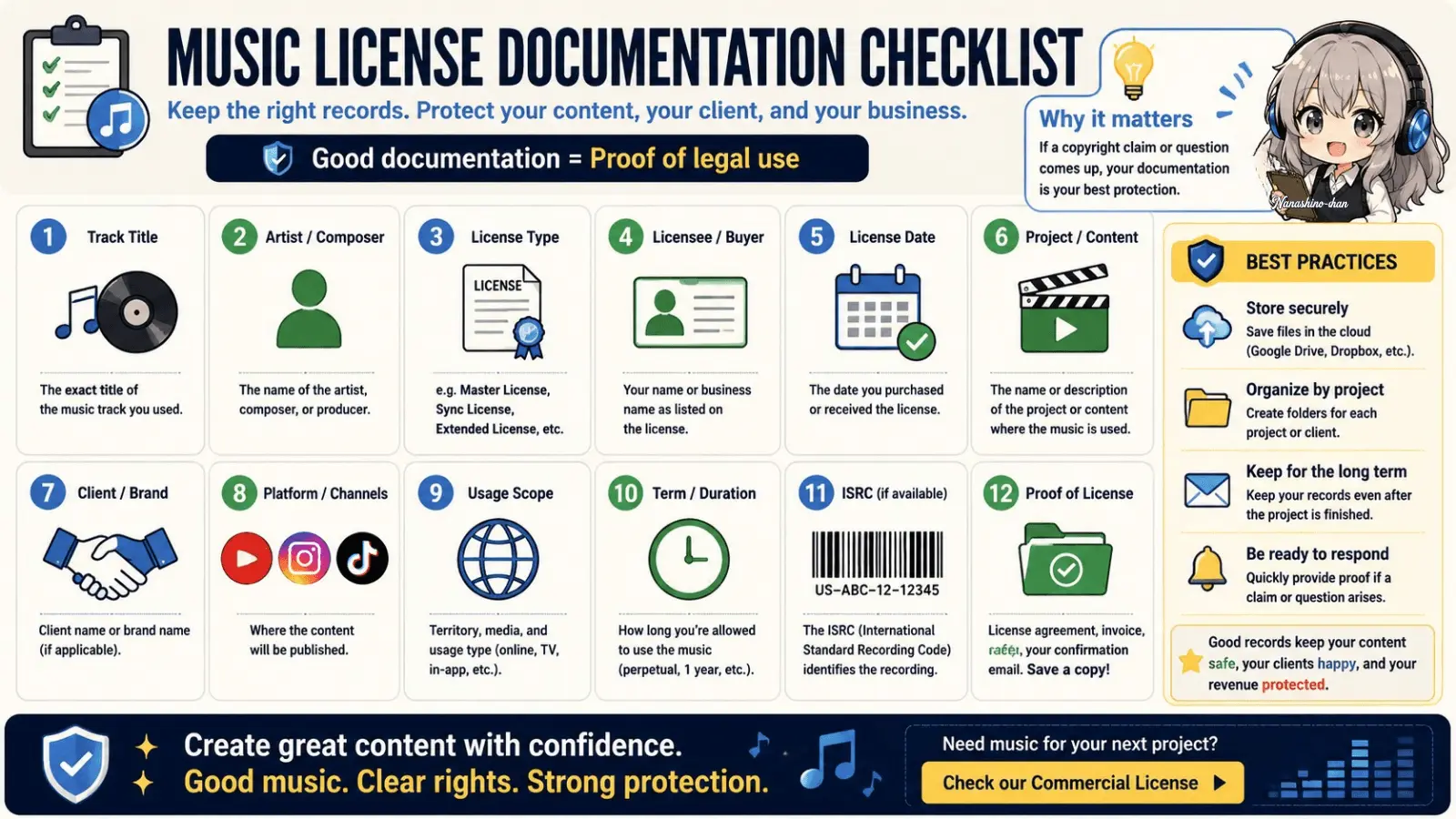
Agencies should keep a complete music license record for every client project that uses licensed music. The record should connect the track, license, client, project, platforms, campaign period, and permitted use.
At minimum, keep the license file, receipt or invoice, license certificate if available, track title, artist name, client name, project name, video URL, platform list, campaign dates, and notes about whether the use is organic, paid, sponsored, boosted, or reused.
- • A receipt alone is useful, but it may not explain the license scope.
- • A license certificate helps connect the purchase to the project record.
- • Paid ads need stronger documentation than casual organic posts.
- • Client work should have proof that survives handoff and review.
- • Platform music is often harder to document for agency deliverables.
- • A simple rights folder can prevent confusion after delivery.
Why Agencies Need Music License Documentation
Agencies often work between multiple parties: the client, the brand team, the editor, the production company, the media buyer, the creator, the platform, and sometimes a legal or procurement team. If music rights are unclear, the agency may be asked to explain the decision later.
That question may come before campaign launch, after client delivery, during ad review, when a video is repurposed, or when a new team member inherits the project. Good documentation makes the answer easier.
For agency work, music licensing is not only a creative choice. It is part of the delivery record.
What Counts as Music License Documentation?
Music license documentation is the set of files and notes that prove how music was selected, purchased, licensed, and used in a project.
The goal is not to create unnecessary paperwork. The goal is to make the music rights understandable to someone who was not involved in the original purchase.
Agency Use Cases That Need Stronger Music Records
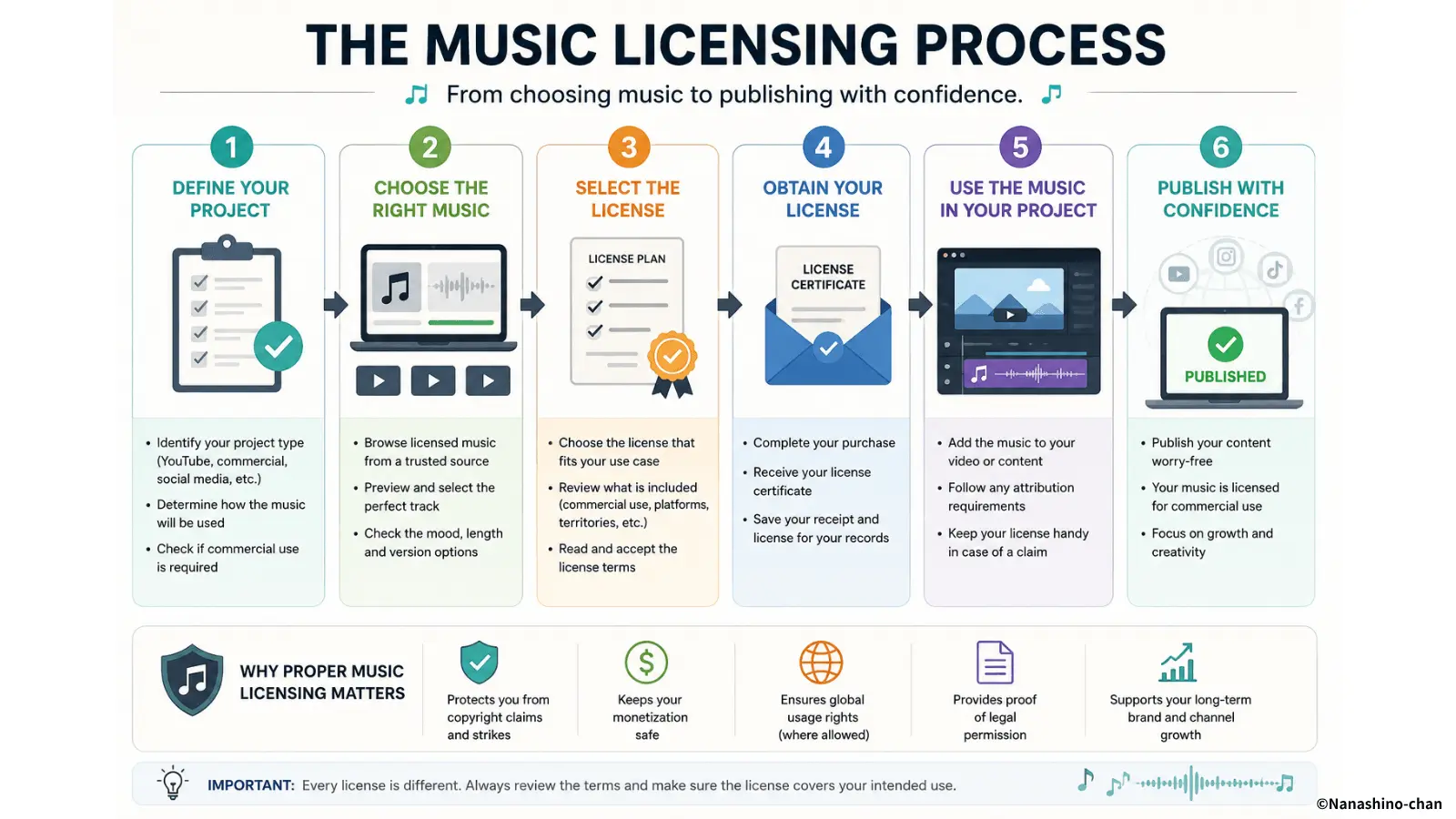
Not every project has the same level of rights sensitivity. A simple organic social post and a paid campaign with multiple cutdowns are different documentation situations.
Agencies should document music more carefully when the content is client-facing, paid, reusable, campaign-based, or likely to be repurposed across platforms.
Why Platform Music Is Hard to Document for Agency Work
Platform music may be convenient for native posts, but agencies often need documentation that can be handed to a client. That is where platform music can become difficult.
A sound being available inside Instagram, TikTok, YouTube, or another app does not automatically create a client-ready license record. It may be unclear whether the music is allowed for business use, paid ads, website videos, agency deliverables, or reuse outside the original platform.
- • Platform availability does not always explain commercial permission.
- • Business account access can differ from personal account access.
- • Paid ads may be reviewed differently from organic posts.
- • Client work often needs records that can be saved after delivery.
- • Platform music may not transfer cleanly to websites, sales decks, or other channels.
- • A screenshot of a sound in an app may not be enough for client documentation.
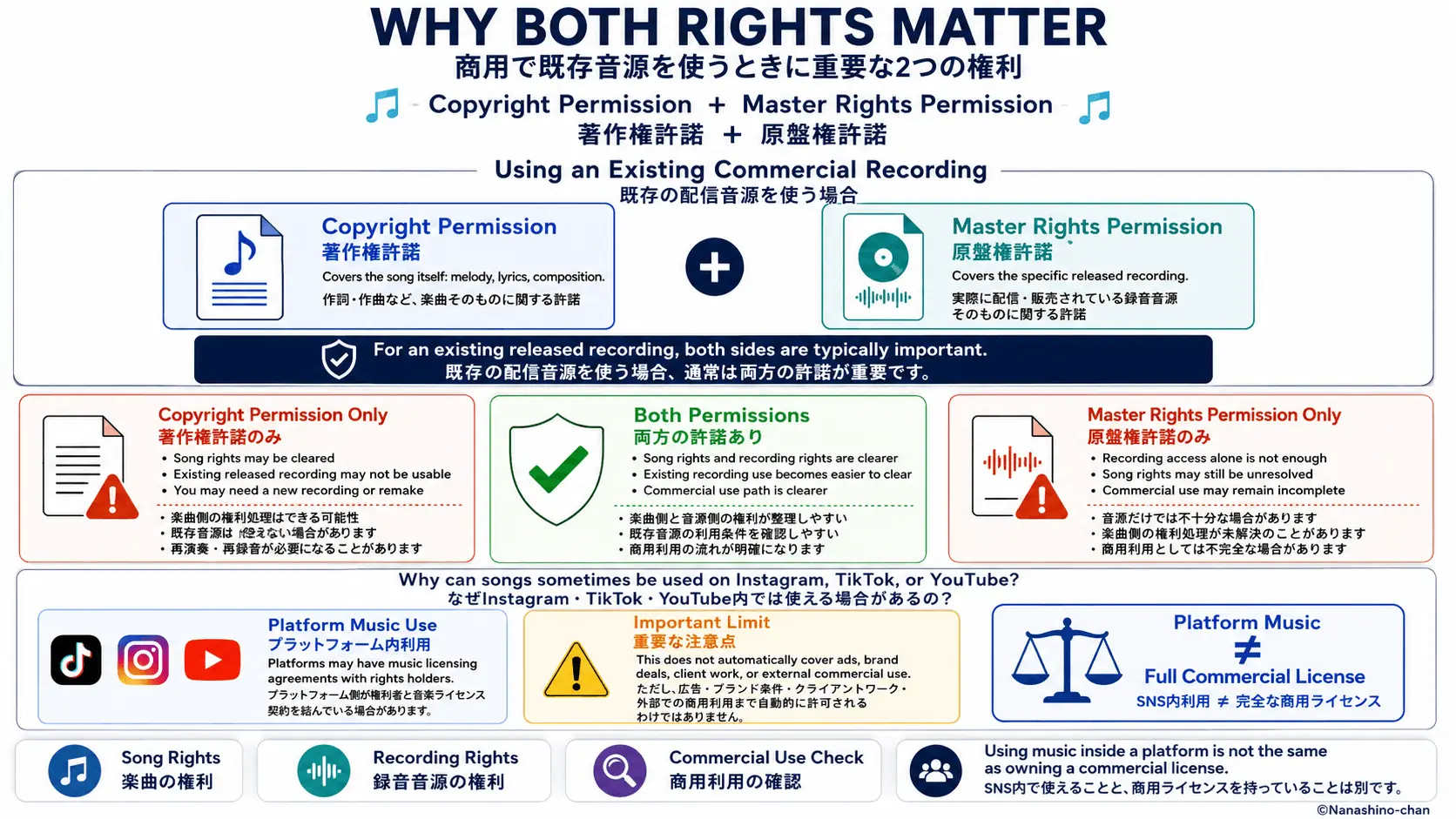
Why Both Master Rights and Copyright Permission Matter
Agency projects often use a finished recording as part of a client deliverable. Depending on the music source, commercial use can involve permission connected to the master recording and permission connected to the underlying musical work.
This matters because a client video can move across many contexts: Instagram, TikTok, YouTube, LinkedIn, websites, sales pages, pitch decks, paid campaigns, webinars, and internal presentations. The documentation should explain the permission in a way that still makes sense after the project has been delivered.
Master Recording
Permission related to the actual recorded sound file used in the video.
Composition Rights
Permission related to the underlying musical work, melody, composition, and copyright.
Usage Scope
Permission should match the actual project use: organic content, paid ads, client delivery, or campaign reuse.
Commercial License vs Sync License Documentation
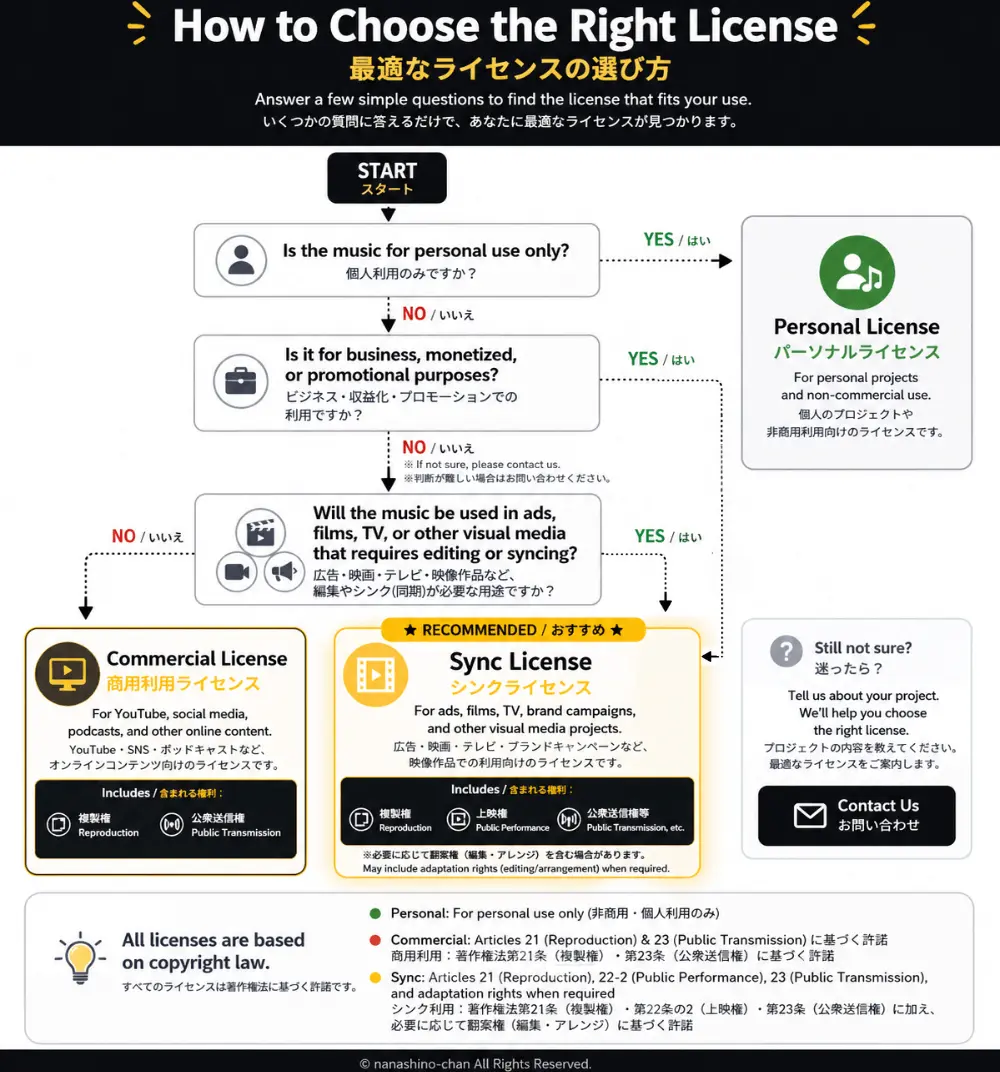
Agencies should document not only that music was purchased, but also what kind of use the license supports. Organic client content and paid campaign content are different situations.
For organic business videos, product demos, LinkedIn posts, YouTube videos, website content, and client social videos, a Commercial Creator License may be appropriate if the use fits the scope. For paid ads, boosted posts, media buys, launch campaigns, retargeting, and time-limited advertising, a Sync License or custom campaign license is usually safer.
Recommended Agency Music Rights Folder Structure
A simple folder structure helps future editors, account managers, clients, and campaign teams understand the music rights without searching through emails.
Client-Project-Name/
  01_Final_Deliverables/
    final-video-16x9.mp4
    final-video-9x16.mp4
    final-video-1x1.mp4

  02_Music_License/
    license-file.pdf
    receipt-or-invoice.pdf
    license-certificate.pdf
    track-info.txt
    usage-notes.txt

  03_Campaign_Records/
    platform-list.txt
    campaign-dates.txt
    paid-or-organic-notes.txt
    final-urls.txt

  04_Client_Approval/
    approval-email.pdf
    scope-confirmation.pdf
    delivery-notes.pdf
What Should Be Written in the Usage Notes?
Usage notes do not need to be complicated. They should explain the project in plain language so the license record can be understood later.
- • Client name
- • Brand name
- • Agency or production company name
- • Project title
- • Video title or deliverable name
- • Licensed track title
- • Artist name
- • License type
- • Purchase date
- • Intended platforms
- • Organic, paid, boosted, sponsored, or client-owned use
- • Campaign period or publication dates
- • Final URLs after publication
- • Notes about excluded use or future reuse
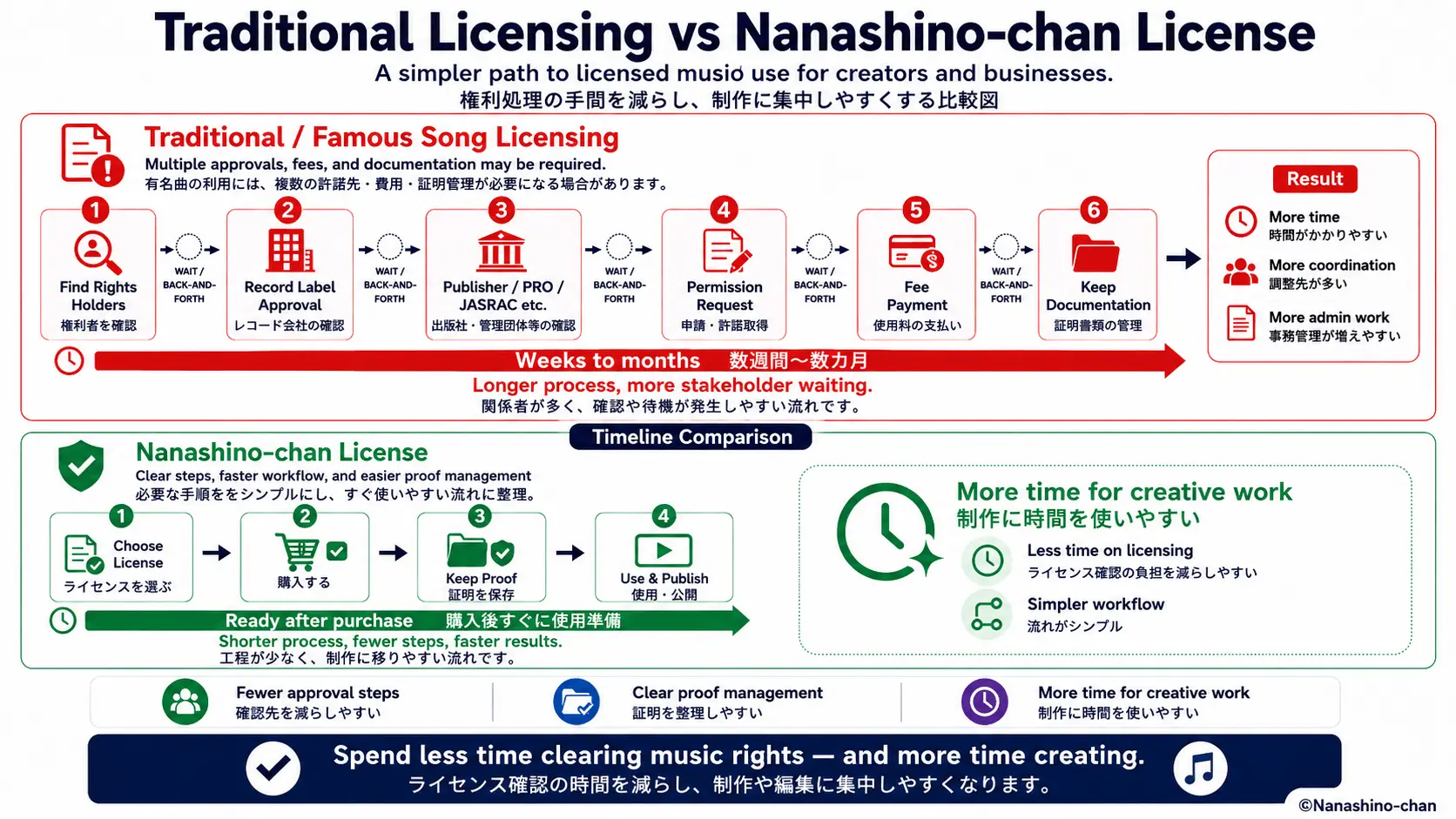
How Nanashino-chan Licensing Helps Agency Documentation
Nanashino-chan provides original lo-fi music for agencies, production companies, creators, brand teams, product videos, SaaS demos, sponsored content, B2B marketing videos, AI videos, paid campaigns, and commercial video production.
For agency workflows, the advantage is documentation. Instead of relying only on platform music or unclear audio sources, an agency can save the Gumroad receipt / invoice together with the license certificate PDF, track information, and project usage notes.
Because Nanashino-chan music is original music managed through the Nanashino-chan project, many commercial video use cases can be easier to explain than trying to document whether a trending platform sound is cleared for client work or paid campaign use.
For Agencies
Keep a clearer record for client videos, paid campaigns, social assets, and multi-platform deliverables.
For Production Teams
Save track details, license files, receipts, certificates, export notes, and final URLs in one project folder.
For Clients
Receive a more understandable proof package instead of a vague statement that the music was found online.
Agency Music License Documentation Checklist
Use this checklist before delivering a client video that contains licensed music. The more commercial, paid, or reusable the content is, the more important clear documentation becomes.
Official Platform Music Resources
Agencies often deliver assets across multiple platforms. If music is selected from a platform tool, review the latest official platform information and confirm whether the use matches client work, paid ads, business accounts, or off-platform distribution.
- Instagram Licensed Music Library / Meta Sound Collection
- Meta Music Guidelines
- TikTok Commercial Use of Music
- TikTok Commercial Music Library
- YouTube Audio Library
- YouTube Creator Music License Tracks
This page is an educational guide and not legal advice. Always review official platform rules and the license information shown for the specific music you want to use.
Frequently Asked Questions
What music license documentation should agencies keep?
Agencies should keep the license file, receipt or invoice, license certificate if available, track title, artist name, client name, project name, platform list, campaign period, usage scope, deliverable URLs, and notes about permitted or excluded use.
Why do agencies need proof of music license?
Agencies need proof of music license because client videos, paid campaigns, sponsored content, brand assets, product demos, and social media deliverables may be reviewed by clients, platforms, ad teams, legal teams, or future production partners.
Is a receipt enough proof of music rights?
A receipt is useful, but it is stronger when saved together with the license terms, license certificate if available, track information, project notes, platform list, and usage scope. A receipt alone may not explain what the buyer is allowed to do.
What should be included in a client music clearance record?
A client music clearance record should include the licensed track, artist, license type, purchaser, client or brand name, project name, content type, publication platforms, paid or organic use, campaign period, license file, receipt, certificate, and contact information.
Do agencies need different documentation for paid ads?
Yes. Paid ads, boosted posts, retargeting, campaign media buys, and time-limited advertising usually need clearer records than one-time organic content. Agencies should document the campaign period, platforms, ad format, license type, and whether paid distribution is covered.
Can agencies use platform music in client videos?
Agencies should be careful. Music available inside a platform may not automatically cover client work, paid ads, brand campaigns, website videos, product demos, or off-platform reuse. Dedicated commercial or sync licensing is usually easier to document for client delivery.
Should the agency or the client buy the music license?
That depends on the project contract and internal workflow. What matters is that the license holder, client, project, permitted use, and documentation are clear. Agencies should avoid leaving ownership or proof of purchase ambiguous.
What should be handed to the client after delivery?
For music documentation, the agency should provide or archive the license file, receipt or invoice, license certificate if available, track information, usage notes, platform list, campaign dates, and any limits on reuse.
Need Documented Music for Client Work?
Use original lo-fi music with licensing options for agency client videos, sponsored content, product demos, SaaS videos, LinkedIn campaigns, brand content, paid social ads, B2B marketing videos, AI videos, and commercial production workflows.
Related Pages
Continue with related guides about agency music licensing, proof of license, client delivery, platform music, paid ads, product demos, B2B marketing videos, brand content, and commercial music use.