AI Ad Sync Licensing
Sync License for AI-Generated Ads
AI-generated ads are still advertisements. If the finished video uses music and is distributed as a paid campaign, boosted post, retargeting creative, product launch ad, app install ad, SaaS ad, or client campaign asset, the music should be licensed for advertising use.
A Sync License connects the music to the visual ad. It helps define the campaign period, paid use, platform list, final ad assets, and documentation that brands, agencies, media buyers, and clients may need before launch.
This page is focused specifically on AI advertising and campaign use: when a Sync License is needed, how it differs from general commercial use, what proof to keep, and how Nanashino-chan original lo-fi music can support AI-generated ad campaigns.

Quick Answer: Do AI-Generated Ads Need a Sync License?
Usually, yes. If music is synchronized with an AI-generated video and the finished asset is used as a paid ad, campaign creative, product launch ad, retargeting video, app install ad, or agency client deliverable, Sync License review is usually the safer path.
AI generation changes how the visuals are made. It does not automatically clear the music. The final ad still contains a sound recording and a musical work, and the license should match the real advertising use.
- • AI-generated does not mean music-rights-free.
- • Paid advertising usually needs stronger rights than organic business posting.
- • Sync licensing connects the music to the finished visual ad.
- • Campaign period, platform list, paid use, and ad variations should be documented.
- • Agencies, media buyers, and clients may need proof of music permission.
- • Keep the license, receipt, certificate, campaign dates, ad platform list, and final asset records together.
Why Sync Licensing Matters for AI Advertising
AI advertising workflows are fast. A team can generate visuals, test hooks, create multiple cutdowns, localize captions, resize videos for different platforms, and produce dozens of ad variations in a short time.
That speed is useful, but it also increases the need for clear music records. If the same track is used across several paid ad variations, the team should know whether the license covers advertising use, campaign dates, platform list, final assets, client delivery, and future reuse.
For AI-generated ads, the license should follow the campaign — not only the editing tool, AI video tool, or social platform where the video is uploaded.
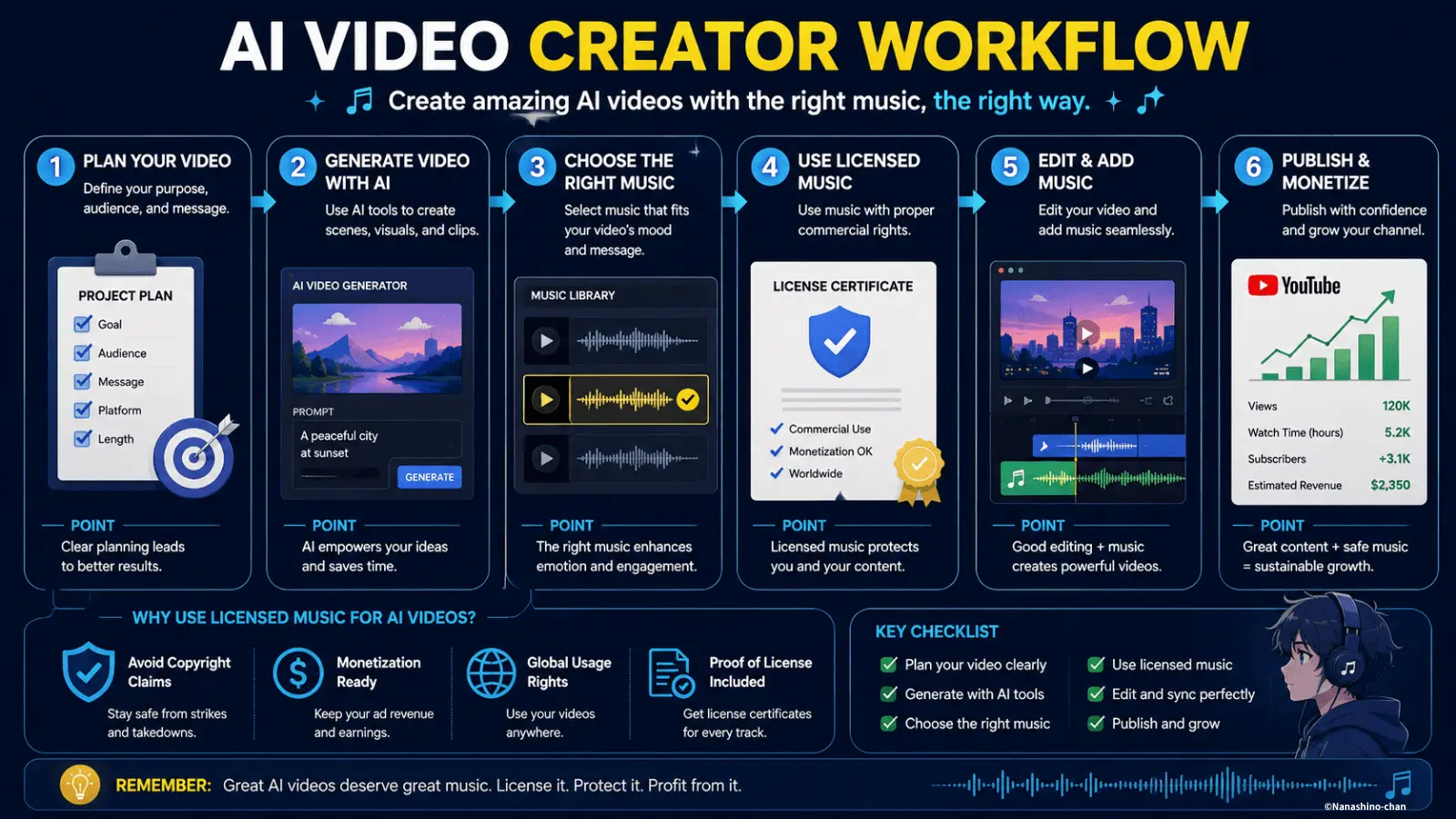
When AI-Generated Ads Usually Need Sync License Review
Not every AI-generated video is an ad. But once the video is used for paid promotion, campaign media, retargeting, client advertising, or product launch distribution, the music rights should be reviewed carefully.
Sync License vs Commercial Creator License for AI Ads
The key difference is paid advertising. A Commercial Creator License may be suitable for some organic business videos if the use fits the scope, but AI-generated ads usually involve paid distribution, retargeting, boosting, media buying, or campaign-specific use.
For that reason, AI-generated ads should usually be reviewed as Sync License or custom campaign license use.
Nanashino-chan Sync License Options for AI-Generated Ads
For AI-generated ads, paid social campaigns, product launch ads, retargeting creatives, and time-limited advertising, Nanashino-chan Sync License options are designed to connect original lo-fi music to a defined campaign period.
Sync License
1-Month Sync License
$500
For short AI ad campaigns, launch tests, paid social creatives, product ads, app install tests, and one-month campaign windows.
Buy 1-Month Sync LicenseSync License
3-Month Sync License
$1,200
For longer AI ad campaigns, seasonal promotions, retargeting windows, product launches, SaaS campaigns, and multi-phase paid campaigns.
Buy 3-Month Sync LicenseIf the AI-generated ad campaign involves large-scale media buying, long campaign periods, multiple brands, multiple territories, sublicensing needs, unusual deliverables, or unclear usage, contact Nanashino-chan before purchase for custom review.
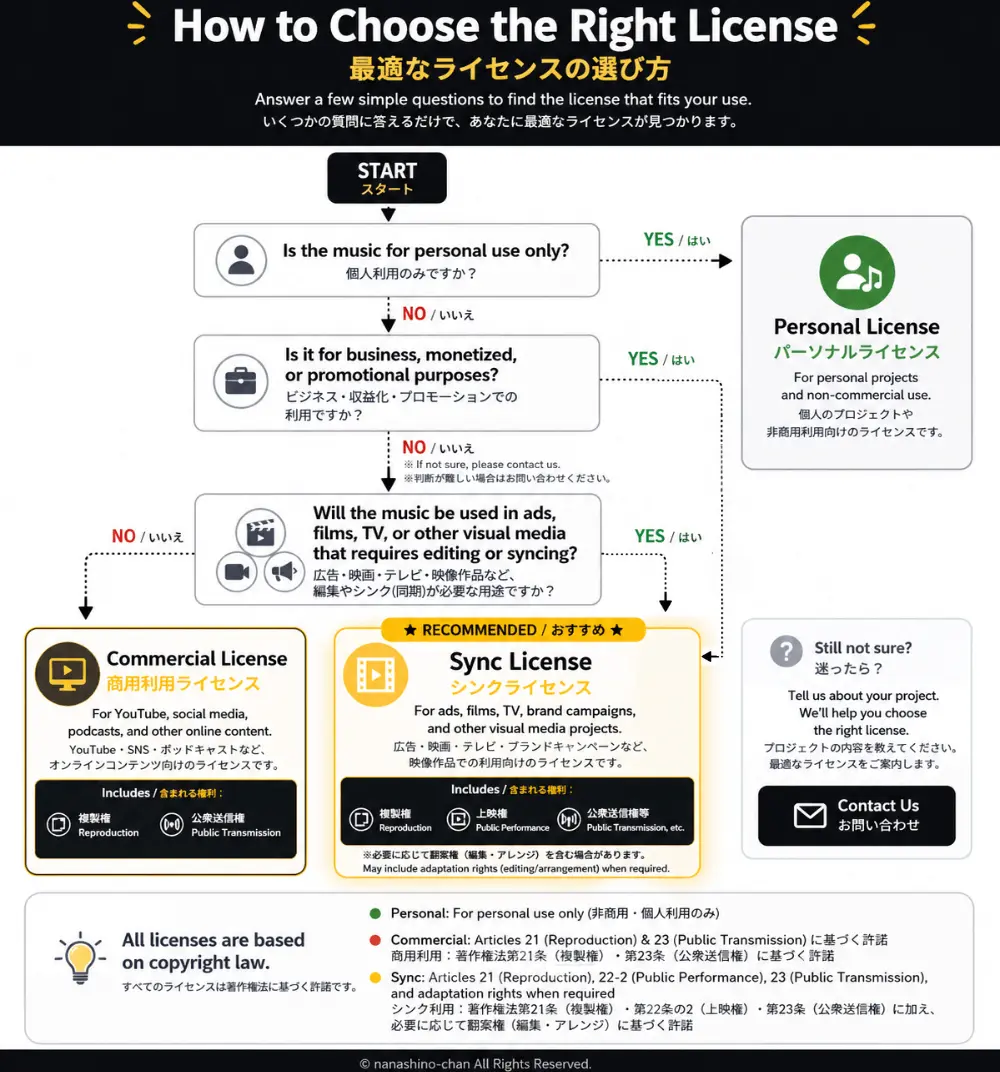
AI Ad Campaign Workflow and Sync License Documentation
A good AI ad music workflow should connect the music license to the campaign folder. This helps the team avoid confusion when there are multiple AI-generated versions, multiple platforms, multiple dates, and multiple stakeholders.
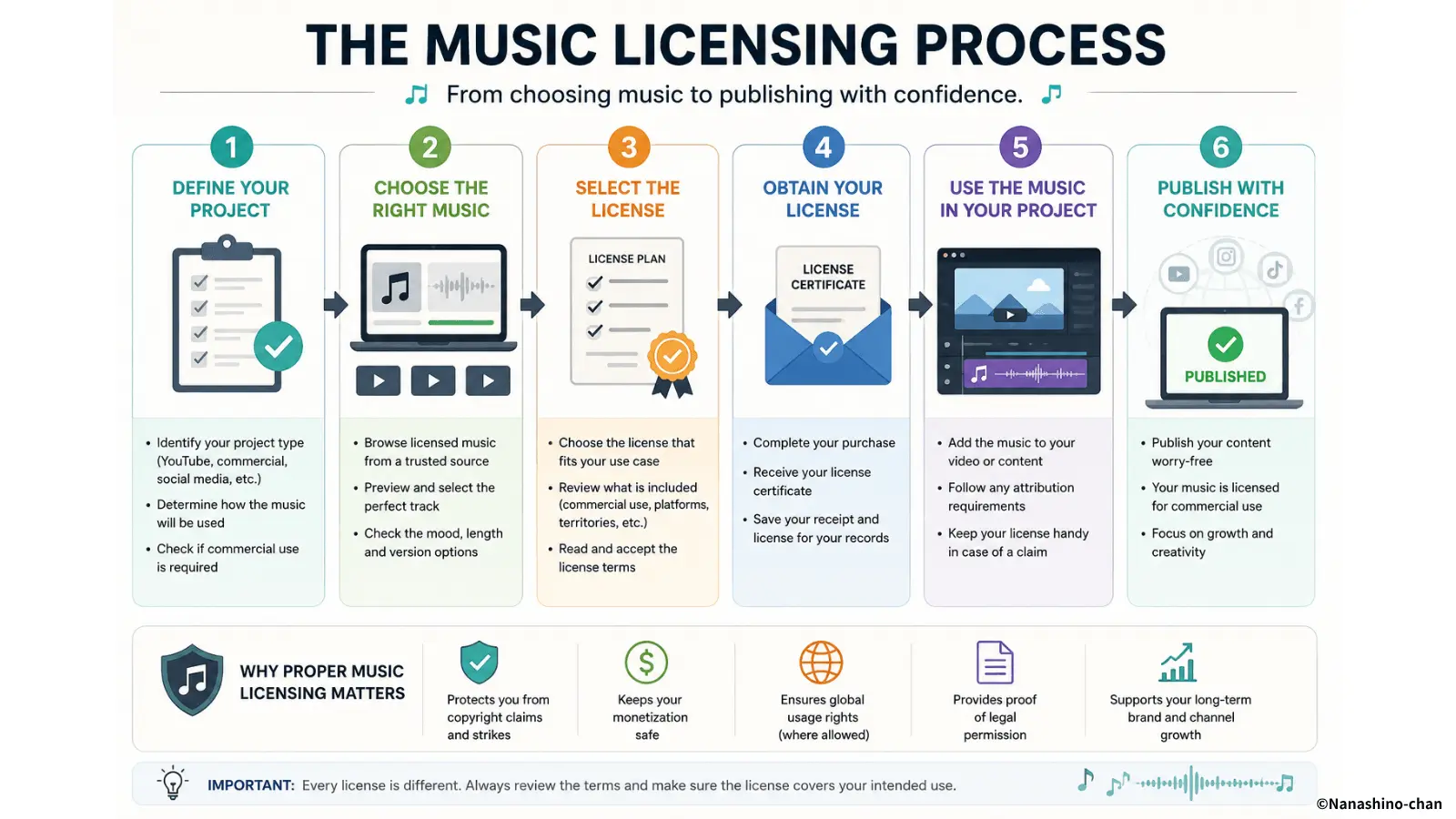
Platform Music vs Sync-Licensed Music for AI-Generated Ads
AI ad teams may be tempted to use music from social platforms, editing apps, templates, stock libraries, or unclear free sources. That can create problems when the creative becomes a paid ad.
A sound that seems convenient for an organic post may not be appropriate for paid media, retargeting, product launch ads, client deliverables, campaign reports, or off-platform reuse. Sync-licensed music is easier to document because the track, purchase, permission, campaign period, and paid use can be saved together.
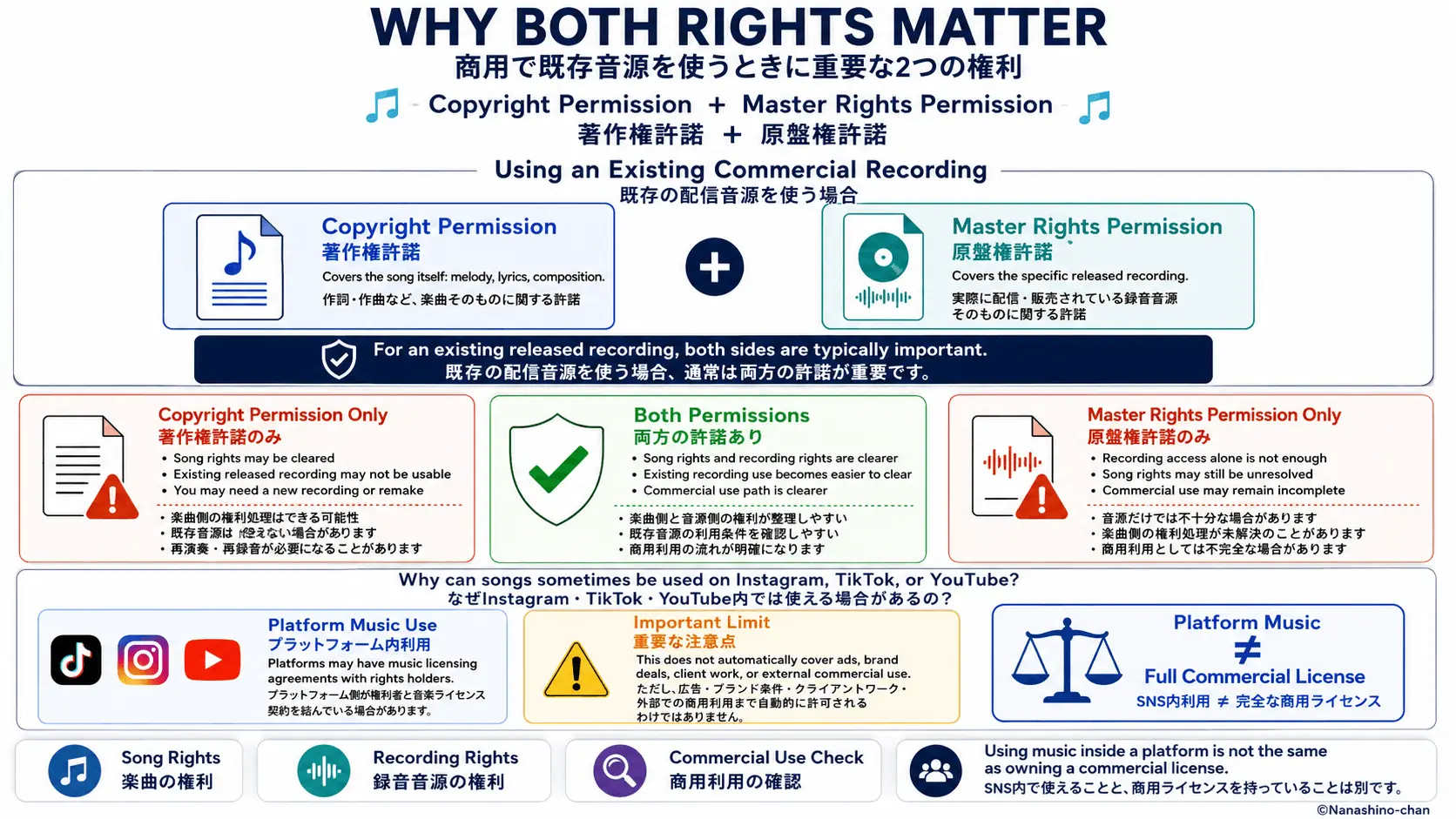
Why Both Master Rights and Copyright Permission Matter
AI-generated ads use a finished recording as part of a commercial advertising asset. Depending on the music source, paid advertising can involve permission connected to the master recording and permission connected to the underlying musical work.
This matters because AI ad campaigns often move across many paid and organic contexts: Meta ads, Instagram ads, TikTok ads, YouTube ads, LinkedIn ads, product pages, landing pages, retargeting funnels, campaign cutdowns, and agency deliverables.
Master Recording
Permission related to the actual recorded sound file used in the AI-generated ad creative.
Composition Rights
Permission related to the underlying musical work, melody, composition, and copyright.
Advertising Scope
Permission should match the actual use: paid ad, campaign period, platform list, client deliverable, and final ad assets.
AI-Generated Ad Music Documentation
AI ad projects often involve marketers, founders, agencies, editors, AI operators, prompt designers, product teams, clients, media buyers, and paid social teams. A simple music documentation record can prevent confusion after campaign launch.
Good documentation does not guarantee platform behavior, but it creates a clearer record of what music was used, where it was used, and what permission was obtained.
- • Sync License file or campaign license terms
- • Gumroad receipt or invoice
- • License certificate PDF if available
- • Track title and artist name
- • Brand, product, client, campaign, or project name
- • AI video tool or workflow notes if relevant
- • Ad platform list
- • Campaign period and usage dates
- • Final ad asset names, URLs, IDs, or export filenames
- • Notes about paid, boosted, retargeting, whitelisting, reposted, or reused content
- • Notes about excluded use or future reuse limits
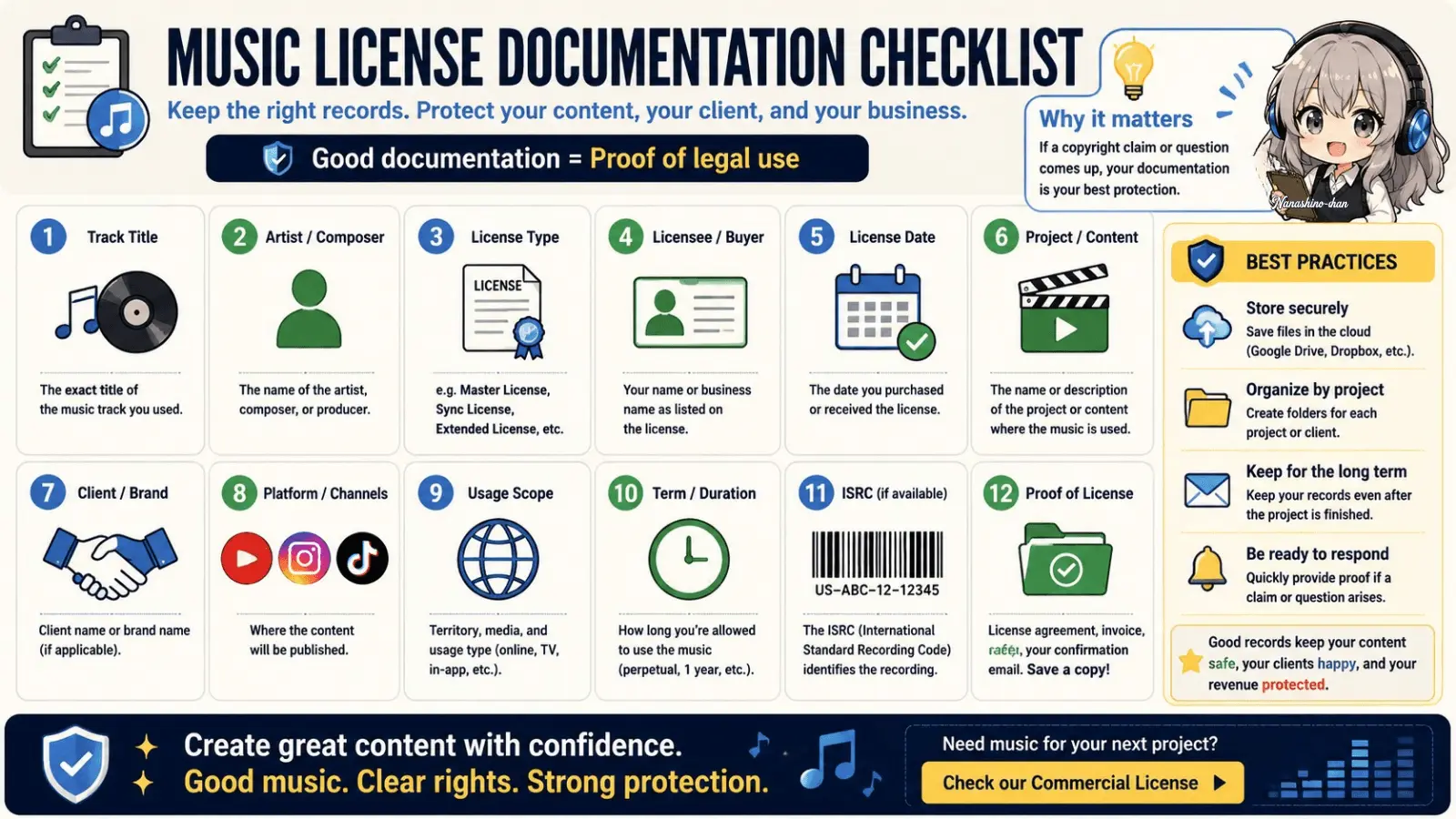
Sync License Checklist for AI-Generated Ads
Use this checklist before launching an AI-generated ad with music. The more paid, reusable, multi-platform, or client-facing the campaign is, the more important clear Sync License documentation becomes.
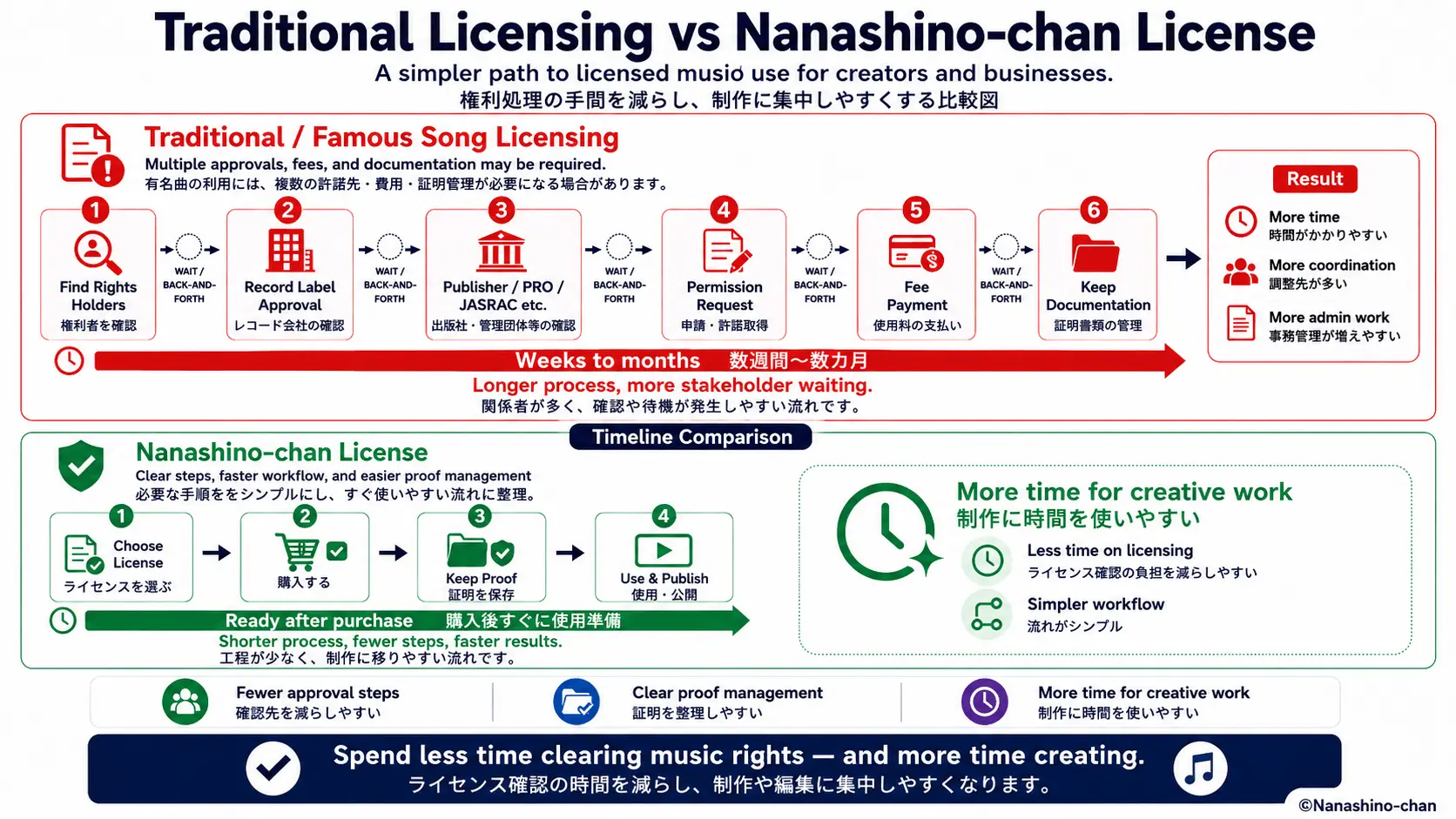
How Nanashino-chan Sync Licensing Helps AI Ad Campaigns
Nanashino-chan provides original lo-fi music for creators, AI-generated ads, paid social campaigns, AI product videos, product launch ads, SaaS ads, app install campaigns, B2B marketing videos, agencies, sponsored content, and commercial video production.
For AI-generated ads, the benefit is both sound and documentation. Lo-fi and chillhop music can make AI-generated ad creatives feel calmer, warmer, more human, and more polished while the Sync License record helps teams track campaign use.
For standard Sync License purchases, the Gumroad receipt / invoice and included license certificate PDF can be kept together as proof of license. This helps businesses, agencies, creators, AI video teams, media buyers, product marketers, and production companies document the music used in a paid AI advertising workflow.
For AI Ad Teams
Use original lo-fi music for AI-generated paid ads, product launch creatives, app ads, SaaS ads, and retargeting videos.
For Media Buyers
Keep music records connected to campaign period, platform list, final ad assets, paid use, and reporting folders.
For Agencies
Deliver AI ad campaigns with clearer music documentation for clients, paid campaigns, campaign reports, and multi-platform assets.
Official Platform Music Resources
AI-generated ads can involve platform music rules, business account restrictions, paid advertising review, client delivery, website use, product page use, and off-platform reuse. Always review the latest official information before publishing commercial, paid, client-facing, or product-related content.
- Instagram Licensed Music Library / Meta Sound Collection
- Meta Music Guidelines
- TikTok Commercial Use of Music
- TikTok Commercial Music Library
- YouTube Audio Library
- YouTube Creator Music License Tracks
This page is an educational guide and not legal advice. AI tools, social platforms, ad platforms, and music services may each have their own terms. Always review the relevant license terms and platform rules for the specific project.
Frequently Asked Questions
Do AI-generated ads need a Sync License?
AI-generated ads usually need Sync License review when music is combined with video and used in paid advertising, boosted posts, retargeting creatives, media buys, product launch campaigns, app install ads, or client campaigns. AI generation does not remove the need to license the music used in the finished ad.
What is a Sync License for AI-generated ads?
A Sync License gives permission to synchronize music with visual media. For AI-generated ads, it covers the use of music inside a finished advertising video, campaign creative, product ad, social ad, retargeting creative, or paid promotional asset, depending on the license scope.
Is a Commercial Creator License enough for AI-generated ads?
A Commercial Creator License may be suitable for some organic business videos if the use fits the scope. However, paid ads, boosted posts, media buys, retargeting, product launch ads, app install ads, and time-limited advertising usually need a Sync License or custom campaign license.
Can platform music be used in AI-generated ads?
Businesses should not assume that platform music is automatically cleared for AI-generated ads, paid campaigns, client work, websites, product pages, retargeting, or off-platform reuse. Dedicated Sync License documentation is usually easier to save and review for advertising workflows.
Can one Sync License cover multiple AI ad variations?
Only if the license scope allows the specific campaign structure. AI ad workflows often create multiple cutdowns, localized edits, aspect ratios, hooks, versions, and platform exports, so the license should match the campaign period, platform list, paid use, and final ad assets.
Can a Sync License cover retargeting creatives?
Possibly, if the license scope covers the campaign use. Retargeting is paid advertising, so the campaign period, platform list, final ad assets, and reuse limits should be documented before launch.
Do agencies need Sync License documentation for AI ad campaigns?
Yes. Agencies and production teams should keep music license documentation for AI-generated ad client projects, including the license file, receipt or invoice, license certificate if available, track title, artist name, client name, product name, campaign name, platforms, campaign dates, and usage notes.
What proof should businesses keep for AI-generated ad music?
Businesses should keep the Sync License file, receipt or invoice, license certificate if available, track title, artist name, product or campaign name, ad platform list, campaign dates, final ad URLs or asset names, and notes about permitted or excluded use.
Need a Sync License for AI-Generated Ads?
Use original lo-fi music with Sync License options for AI-generated ads, paid social campaigns, product launch ads, retargeting creatives, app install ads, SaaS ads, e-commerce ads, agency client campaigns, and commercial advertising videos.
Related Pages
Continue with related guides about AI advertising music licensing, Sync License use, AI product videos, paid social ads, marketing campaigns, agency documentation, and commercial music use.