Music Copyright for Content Creators
Content creators use music across YouTube videos, podcasts, livestreams, social media posts, online courses, client projects, brand campaigns, multimedia content, and AI-assisted video workflows.
As creator work becomes more commercial, music copyright is no longer only a legal topic. It becomes part of your publishing workflow, monetization strategy, brand safety, client delivery process, and long-term content management.
This guide explains music copyright, video licensing, content licensing, online media rights, freelancers, collaborations, and commercial music workflows for modern creators.
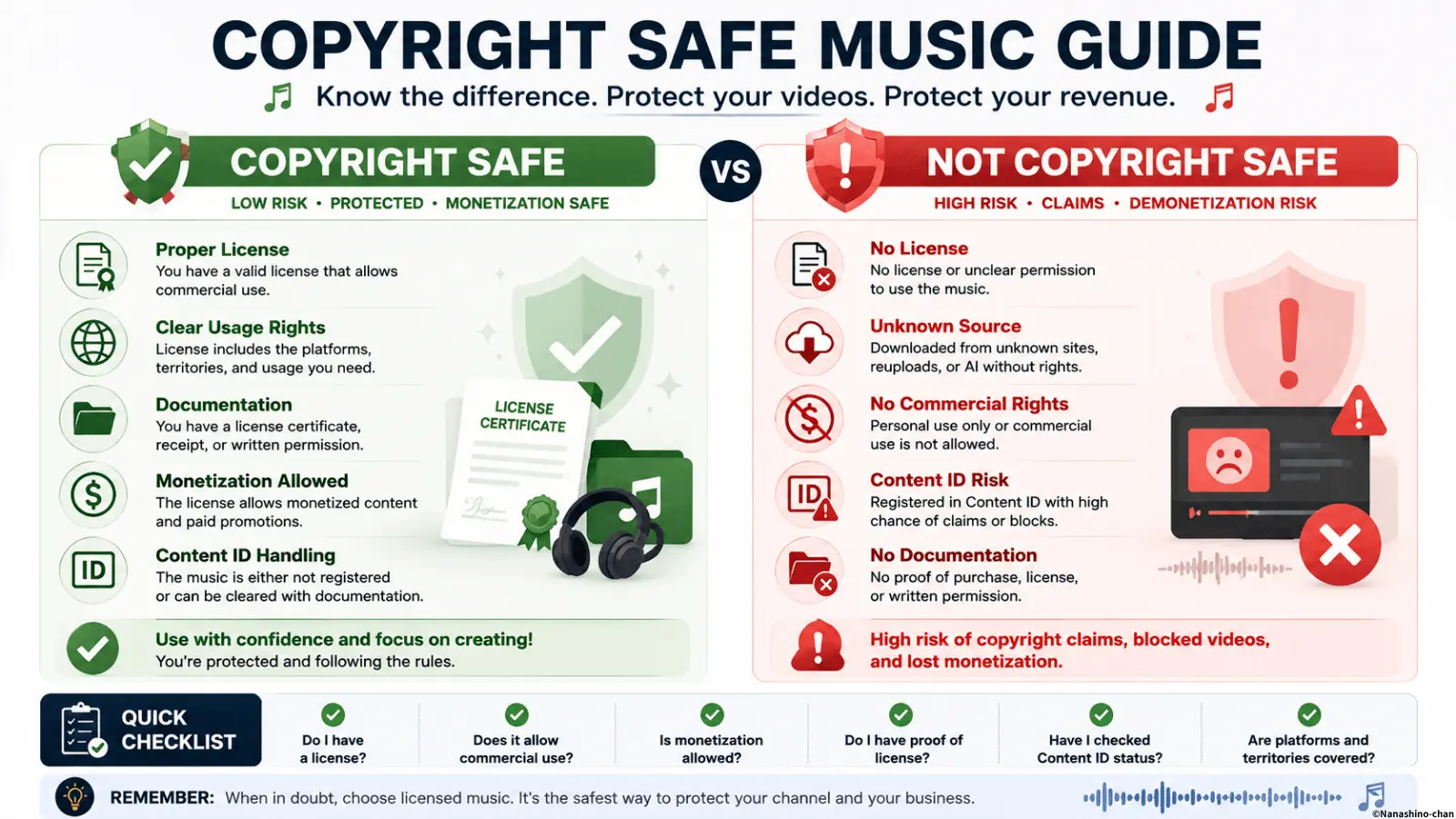
Direct Answer: Creators Need Rights, Not Just Music Files
A music file is not the same as permission. A downloaded song, a streaming track, a trending audio clip, or a track found inside a video editing app may not automatically include the rights needed for monetized videos, branded content, paid ads, client projects, online courses, or commercial campaigns.
For content creators, the safest question is not only “Can I download this music?” but “Can I use this exact track in this exact content, on these platforms, for this business purpose?”
- • Online video needs platform and usage rights
- • Monetized content needs commercial clarity
- • Client projects need documented permission
- • Multimedia and immersive media may require broader licensing
- • Partnerships and collaborations should define music usage responsibilities
What Is Music Copyright?
Music copyright refers to rights connected to musical works and recordings. In practice, creators often deal with multiple layers of rights at the same time.
A song can include composition rights, publishing rights, master recording rights, performance rights, synchronization rights, and platform-specific licensing rules. These rights can affect whether you can use the music in online content, videos, ads, podcasts, livestreams, or client work.
Composition Rights
Rights related to the written song, including melody, lyrics, and publishing interests.
Master Rights
Rights related to the specific sound recording used in your video or media asset.
Sync Rights
Permission to synchronize music with video, ads, films, social content, or visual media.
Platform Rules
YouTube, Instagram, TikTok, Facebook, and LinkedIn may each apply different systems and policies.
Video Licensing for Content Creators
Video licensing for content creators means checking whether every element in a video can be used for the intended purpose. Music is only one part of the workflow, but it is one of the most common sources of copyright confusion.
A video may include music, sound effects, stock footage, animation, fonts, AI-generated visuals, voice-over, clips, screenshots, logos, product images, and third-party assets. If the content is monetized, sponsored, client-facing, or commercial, each asset should have a clear usage basis.
- • YouTube videos and YouTube Shorts
- • Podcasts and video podcasts
- • Livestreams and recorded streams
- • Online courses and tutorials
- • Brand campaigns and sponsored content
- • Product videos and SaaS demos
- • Client deliverables and agency campaigns
- • AI-generated videos and avatar content
Music Licensing for Creators
Music licensing for creators means obtaining permission to use music in a defined way. The license should explain what platforms are covered, whether monetization is allowed, whether commercial use is permitted, and whether the music can be used in client work, ads, or brand campaigns.
For creator businesses, a license is not only a legal document. It is operational documentation that can help protect your channel, reassure brand partners, support client delivery, and reduce uncertainty when content stays online for years.
| Creator Use Case | Rights to Check | Recommended Approach |
|---|---|---|
| Personal creator video | Platform permission and attribution | Use platform-approved or clearly licensed music |
| Monetized YouTube content | Monetization and Content ID policy | Use commercial music with documentation |
| Sponsored video | Commercial and brand usage | Use commercial or sync licensing |
| Client project | Client-facing distribution and handoff rights | Use a license that covers client work |
| Multimedia or immersive media | Interactive, installation, app, or extended media scope | Request custom licensing if the use is unusual |
Content Licensing: Music, Video, Online Content, and Multimedia
Content licensing is broader than music licensing. It covers permission to use creative assets in online content, multimedia projects, commercial media, advertising, educational content, digital products, and collaborations.
Creators increasingly publish across many formats: videos, Shorts, Reels, TikTok posts, newsletters, podcasts, livestreams, AI videos, virtual events, digital courses, websites, and immersive media. Each format may have different licensing requirements.
- • Online content and social media videos
- • Multimedia campaigns and interactive content
- • Immersive media, event visuals, and installations
- • Educational content and online courses
- • Brand collaborations and sponsored partnerships
- • Client-facing commercial deliverables
- • Paid advertising and campaign assets
- • Repurposed content across multiple platforms
Freelancers, Editors, Agencies, and Client Work
Freelancers in music licensing and content production often sit between the creator, the client, the platform, and the rights holder. This makes licensing clarity especially important.
If you are a freelance video editor, social media manager, designer, agency producer, podcast editor, motion designer, or content marketer, you should know whether the music license covers your client’s use, not only your own editing process.
- • Who is the license holder: creator, freelancer, agency, or client?
- • Can the client publish the video on their own channels?
- • Are paid ads, social campaigns, or website use covered?
- • Can the client reuse the same video in future campaigns?
- • Is proof of license available for client delivery?
- • Are there limits on duration, territory, platform, or campaign scope?
Partnerships, Collaborations, and Shared Content
Collaborations can make licensing more complicated. A creator may work with a brand, sponsor, influencer, agency, editor, platform, podcast guest, or partner company. Each party may want to publish or repurpose the final content.
Before a collaboration goes live, decide who is responsible for music licensing, who can publish the content, where the content can appear, and whether paid promotion or commercial reuse is allowed.
- • Creator-brand partnerships
- • Influencer marketing campaigns
- • Podcast collaborations
- • Agency-client campaigns
- • Co-branded YouTube videos
- • Guest content and cross-posting
- • Sponsored Shorts, Reels, TikTok, and LinkedIn videos
- • AI-assisted collaborative video production
Common Music Copyright Misunderstandings
Many creators misunderstand music copyright because platforms make publishing feel simple. Uploading is easy, but permission is still important.
- • Buying music does not automatically grant video usage rights
- • Streaming access is not a commercial license
- • Attribution alone may not replace permission
- • “Royalty-free” can still include restrictions
- • “Copyright-free” is often vague and should be checked carefully
- • Social media trends do not prove that a song is safe for business use
- • Platform audio access may not cover paid ads or client projects
- • AI-generated visuals do not clear music rights
A Safer Music Workflow for Content Creators
A safer workflow helps creators reduce confusion before publishing. It also helps freelancers, agencies, and businesses document rights before delivering content to clients or campaign partners.
1. Identify the Music
Confirm the track title, artist, release source, and recording identity before using it.
2. Check the License
Review whether the license covers video, online content, monetization, ads, and client use.
3. Save Documentation
Keep license records, purchase proof, attribution text, and usage notes for future verification.
Commercial-Ready Music for Creator Workflows
Nanashino-chan provides original lo-fi music designed for content creators, YouTube channels, podcasts, AI videos, branded content, social media campaigns, client work, and commercial media production.
The goal is to support creators who need music that fits modern publishing workflows: calm background music, identifiable releases, commercial licensing options, and clearer usage direction for creators, freelancers, agencies, and businesses.
- • Music for YouTube creators and monetized videos
- • Music for podcasts, social content, and online media
- • Music for freelancers, agencies, and client projects
- • Music for branded content and sponsored campaigns
- • Music for AI-generated videos and multimedia workflows
- • Commercial licensing available for business use
Rights Management and ISRC Transparency
Music identification and rights management matter when creators publish at scale. Officially distributed tracks are easier to identify than anonymous audio files, reposted clips, or unclear social media audio.
Nanashino-chan’s officially distributed music is managed as identifiable recordings. Many releases are associated with formal recording metadata such as ISRC-based identification, helping clarify track identity and release context.
- ✔ Officially distributed recordings
- ✔ Clearer artist and track identity
- ✔ Commercial licensing available
- ✔ Designed for creator and business workflows
- ✔ Useful for monetized videos, brand content, client work, and online media
Identification and metadata support rights clarity, but they do not replace licensing. Always use the appropriate license for your video, campaign, collaboration, or commercial project.
Preview Music Before You License
Explore lo-fi music designed for content creators, monetized channels, podcasts, social media videos, client work, AI videos, and commercial media production.
Browse the catalog → All Tracks
Official Platform Copyright Policies
Major platforms officially state that purchasing or streaming music does not automatically grant rights for uploading, monetization, commercial use, or social media distribution. Always review the current official rules before publishing monetized or commercial content.
- YouTube Copyright Guidelines
- YouTube Audio Library Help
- Instagram Copyright Information
- Facebook Copyright Policy
- TikTok Copyright Policy
- LinkedIn Copyright Policy
This page is an educational guide and not legal advice. Always review the latest official guidelines and consult qualified counsel for high-value campaigns, disputes, or complex rights questions.
FAQ
Why do content creators need to understand music copyright?
Content creators need to understand music copyright because music usage can affect YouTube videos, online content, monetization, client work, brand campaigns, podcasts, multimedia projects, and commercial publishing.
What is video licensing for content creators?
Video licensing for content creators means confirming that all media used in a video, including music, visuals, footage, sound effects, and voice assets, can be used for the intended platform, audience, monetization model, and commercial purpose.
What is music licensing for creators?
Music licensing for creators means obtaining permission to use music in videos, podcasts, livestreams, social media posts, online courses, ads, client projects, branded content, or other media formats.
Do freelancers need music licenses for client work?
Yes. Freelancers, editors, designers, and agencies should confirm that music licenses cover client-facing use, commercial publishing, platform distribution, campaign scope, and any handoff to the client.
Does buying music automatically give content usage rights?
No. Buying, downloading, or streaming music generally does not automatically grant rights to use that music in online content, videos, ads, social media, client projects, or commercial media.
What is safer music workflow for content creators?
A safer workflow is to use identifiable music, check the license scope, confirm commercial permissions, keep proof of license, avoid unclear audio sources, and choose dedicated commercial licensing for monetized, sponsored, or client-facing content.
Need Licensed Music for Creator Content?
Use original lo-fi music designed for YouTube creators, online content, podcasts, social media videos, freelancers, agencies, client work, AI videos, branded content, and commercial media production.
Related Pages
- Music License for YouTube Creators
- How to Choose a Music License for Videos
- YouTube Audio Library vs Commercial Music
- How Music Copyright Works
- Music Rights Explained
- Music License for Agencies
- Music for B2B Marketing Videos
- Can You Use Famous Songs on Social Media?
- ISRC and Shazam Music Identification
- Copyright-Safe Music for Creators
- Licensing Page