Music for Online Animation & Episodic Storytelling
Music for Animated Web Series: Licensed Lo-Fi for Episodes, Trailers & Online Animation
Animated web series need music that supports character, pacing, dialogue, and visual rhythm across complete episodes as well as trailers and social cutdowns. The right cue can add continuity to short-form animation without overwhelming voice acting, sound effects, captions, or scene transitions.
This guide explains how to choose music for animated episodes and promotional assets, how an animated web series differs from a webtoon trailer, and when commercial, sync, or custom recurring-series permission may be required for creators, animation studios, producers, agencies, and advertisers.
Direct Answer: What Music Should You Use for an Animated Web Series?
Use music that supports the series genre, scene purpose, dialogue, animation rhythm, and episode structure. A dialogue scene may need a restrained musical bed, while an opening sequence, montage, reveal, or finale may need a clearer motif, transition, and ending.
The license must also cover where the music appears. Music embedded in a complete recurring episode, a monetized YouTube series, a client-produced animation, an organic trailer, and a paid advertising campaign are not automatically the same use.
- Match the music to the genre, character, scene function, and intended audience.
- Leave space for voice acting, captions, ambience, sound effects, and transitions.
- Confirm whether the music appears in the episode, trailer, organic post, or paid advertisement.
- Document the series, episodes, platforms, versions, languages, campaign period, and production parties.
- Keep the music license, receipt, track details, cue sheet, and published URLs together.
Where Music Is Used in an Animated Web Series
Music may appear inside the series itself and across the promotional campaign. These uses should be planned separately because full-episode integration, trailers, social cutdowns, monetized distribution, and paid ads may require different permission.
Episode Background Music
Support conversation, daily life, emotional pauses, location changes, memory, tension, and scene continuity.
Openings & Intros
Create a recognizable series identity for title sequences, cold opens, recurring intros, and episode starts.
Dialogue & Character Scenes
Support voice acting, internal monologue, relationship development, comic timing, and dramatic exchanges.
Montages & Transitions
Connect time changes, travel, routines, memories, visual sequences, and movement between story locations.
Endings & Credits
Resolve the episode, hold the final emotion, support credits, and create a consistent closing identity.
Trailers & Episode Previews
Introduce the premise, characters, conflict, new episodes, season launches, and release schedule.
Vertical Social Cutdowns
Adapt scenes for Reels, TikTok, Shorts, character clips, behind-the-scenes posts, and series announcements.
Paid Series Campaigns
Use music in sponsored posts, boosted trailers, paid social ads, platform campaigns, and launch promotion.
Why Lo-Fi Music Works for Animated Web Series
Online animation often needs efficient music that can support short episodes, dialogue, recurring characters, and modest visual movement. Lo-fi can provide emotional continuity without forcing every scene to feel cinematic or oversized.
Voice Acting-Friendly
Restrained arrangements can sit below dialogue, voice-over, internal monologue, and character interaction.
Strong for Everyday Scenes
Lo-fi naturally supports rooms, cafés, classrooms, workplaces, city nights, routines, and reflective moments.
Emotion Without Overstatement
Warm harmony, soft rhythm, and subtle texture can suggest romance, tension, memory, or healing.
Efficient for Limited Animation
A steady musical bed can connect held poses, loops, simple camera movement, typography, and economical transitions.
Flexible Across Markets
Instrumental music can support dubbed versions, multilingual captions, localized trailers, and cross-border distribution.
Episodic Continuity
A defined music direction can connect recurring locations, character motifs, episode openings, previews, and social clips.
The best music gives an animated web series a recognizable emotional language while leaving enough space for character performance, dialogue, sound design, and visual storytelling.
Animated Web Series vs Webtoon Trailers
These formats are related, but music serves a different production role. A webtoon trailer is usually a promotional asset built from panels or character art. An animated web series contains complete scenes and recurring episodes, so the music may become part of the story product itself.
| Creative Element | Animated Web Series | Webtoon Trailer |
|---|---|---|
| Primary Visuals | Complete animated scenes, voice acting, sound effects, recurring characters, locations, and episodes. | Panels, speech bubbles, character art, scene transitions, animated frames, and motion-comic elements. |
| Role of Voice Acting | Often central because characters perform complete scenes and conversations. | Optional; panels, captions, and selected dialogue can communicate the trailer premise. |
| Role of Music | Supports full scenes, recurring themes, emotional transitions, openings, endings, and episodic continuity. | Supports visual pacing, character movement, panel reveals, and animated sequences. |
| Editing Rhythm | Follows scene changes, performance, action, dialogue pauses, visual timing, and episode structure. | Often follows panel changes, action beats, expressions, camera movement, and scene reveals. |
| Common Extensions | Full episodes, shorts, trailers, recaps, vertical cutdowns, season launches, and recurring series content. | Motion comic, character PV, vertical animation, episode teaser, and animated adaptation. |
Choosing Music by Animated Web Series Genre and Story Tone
Choose cues by the scene function and character perspective, not only by the genre label. Two romance series may need completely different music if one is warm and domestic while the other is tense and tragic.
Romance & Contemporary Drama
Warm jazzhop, soft piano, mellow beats, and intimate textures for chemistry, memory, and emotional restraint.
Slice of Life
Relaxed lo-fi, gentle rhythm, café atmosphere, and understated melody for daily life and character connection.
Fantasy & Isekai
Atmospheric harmony, dreamlike synths, soft cinematic texture, and restrained mystery for world-building.
Mystery & Suspense
Minimal percussion, darker ambience, repeating motifs, and controlled tension for questions and reveals.
Urban & Night Stories
Chillwave, vaporwave, synth-influenced lo-fi, and nocturnal rhythm for city settings and digital culture.
Healing & Reflective Fiction
Soft ambient lo-fi, gentle piano, warm room tone, and slow movement for recovery, memory, and introspection.
Comedy & Character Stories
Light rhythmic cues, playful jazzhop, and clean transitions for introductions, misunderstandings, and reactions.
Action & Dark Fantasy
Use stronger rhythmic or cinematic material selectively, especially for a climax, threat, or adaptation announcement.
Music Planning by Animated Web Series Format
| Format | Recommended Structure | Best Use | Music Priority |
|---|---|---|---|
| 15–30 Second Clip | Immediate mood, one character beat, visual hook, title, or release action. | Reel, TikTok, Short, scene cutdown, character clip, or episode announcement. | Recognizable opening, simple pulse, minimal development, clean ending or loop. |
| 30–60 Second Trailer | Premise, characters, conflict, emotional turn, title, and call to action. | Series trailer, season launch, episode preview, crowdfunding video, or paid ad creative. | Clear progression while leaving room for voice, text, and two or three visual changes. |
| 1–3 Minute Short Episode | Opening, scene setup, dialogue or action, emotional turn, resolution, and ending. | Micro-series, vertical episode, comedy short, character story, or social-first animation. | Dialogue-friendly underscore, reusable motifs, scene transitions, and a concise ending. |
| 4–10 Minute Episode | Multiple scenes, character development, transitions, climax, resolution, and credits. | YouTube series, independent animation, episodic fiction, web platform, or client-produced series. | Several cue functions, controlled repetition, variation, clear rights, and documented recurring use. |
Voice Acting, Dialogue, Captions & Sound Effects
In an animated web series, voice acting and sound design often carry the scene. Music should support intelligibility and emotional pacing instead of filling every frequency and every second.
- Choose arrangements with space in the vocal frequency range.
- Lower the music under voice acting instead of relying only on the platform's overall volume.
- Allow a short musical gap before an important line, reaction, reveal, or transition.
- Plan music together with ambience, footsteps, doors, impacts, UI sounds, and character effects.
- Test captions and voice on a phone speaker, headphones, and muted playback.
- Check openings, scene changes, endings, and credits for abrupt or conflicting audio transitions.
If the scene remains understandable while muted, and the music adds emotion without reducing speech clarity or masking important effects, the mix is usually moving in the right direction.
Episode Use, Organic Promotion & Paid Advertising Are Different
A track can be used inside an episode, in an organic trailer, or in a paid advertisement. Review the permission before recurring use, monetization, boosting, localization, syndication, or transferring the animation to a client, platform, distributor, or production partner.
| Use | Typical Example | Licensing Consideration |
|---|---|---|
| Personal Non-Commercial Animation | A hobby animator shares a non-monetized personal project without business or client promotion. | May fit a personal-use license only when every non-commercial condition is satisfied. |
| Organic Commercial Post | A creator, studio, producer, or business promotes an animated series without paid media. | Usually requires commercial permission even when the post itself is not boosted. |
| Monetized Video | An episode, trailer, compilation, or scene clip appears on a monetized YouTube channel. | Confirm that monetized distribution is included in the selected commercial license. |
| Client Deliverable | An animator, studio, editor, or agency produces a series or trailer for a client or platform. | The buyer, client, final asset owner, platforms, and reuse rights should be documented. |
| Paid Advertisement | A studio or distributor boosts a trailer or runs a campaign on Instagram, TikTok, YouTube, or another ad network. | A sync or campaign-specific license is generally the safer category to review. |
| Recurring Episode Integration | Music becomes part of one or more complete episodes, a recurring series package, app, or permanent release. | This may require custom terms beyond a standard promotional-video license. |
Commercial Creator, Sync & Recurring-Series Licensing
Choose the license by the actual media plan rather than the size of the creator or studio. Music embedded in recurring episodes is different from a single organic trailer, and both are different from paid advertising.
Commercial Creator License
For eligible monetized videos, one-off creator projects, organic business social content, trailers, and defined commercial uses.
Sync License
For eligible paid ads, boosted posts, sponsored campaigns, launch campaigns, and time-limited commercial synchronization.
Custom License
For recurring episode integration, multiple cues, season packages, apps, broadcast, distribution deals, adaptations, or unusual scope.
Can You Use Instagram or TikTok Music for an Animated Web Series?
Platform music tools can be useful for content created and published inside the platform, but availability should not automatically be treated as a transferable license for every commercial use. Access may depend on account type, region, catalog, content category, and whether the post is organic, sponsored, boosted, or used as an advertisement.
The risk increases when a social clip becomes part of a reusable animation package. A scene may begin as an organic Reel and later appear inside a full episode, TikTok ad, YouTube compilation, series website, platform pitch, event presentation, campaign, or client delivery.
- Music available to a personal account may not be available to a business account.
- A trending sound may not be cleared for a complete episode, series, product, studio, or service promotion.
- An organic post may not be approved for boosting or paid advertising.
- Platform access may not transfer to another platform, website, presentation, or ad network.
- A studio, platform, distributor, or client may require documented permission before accepting the final animation.
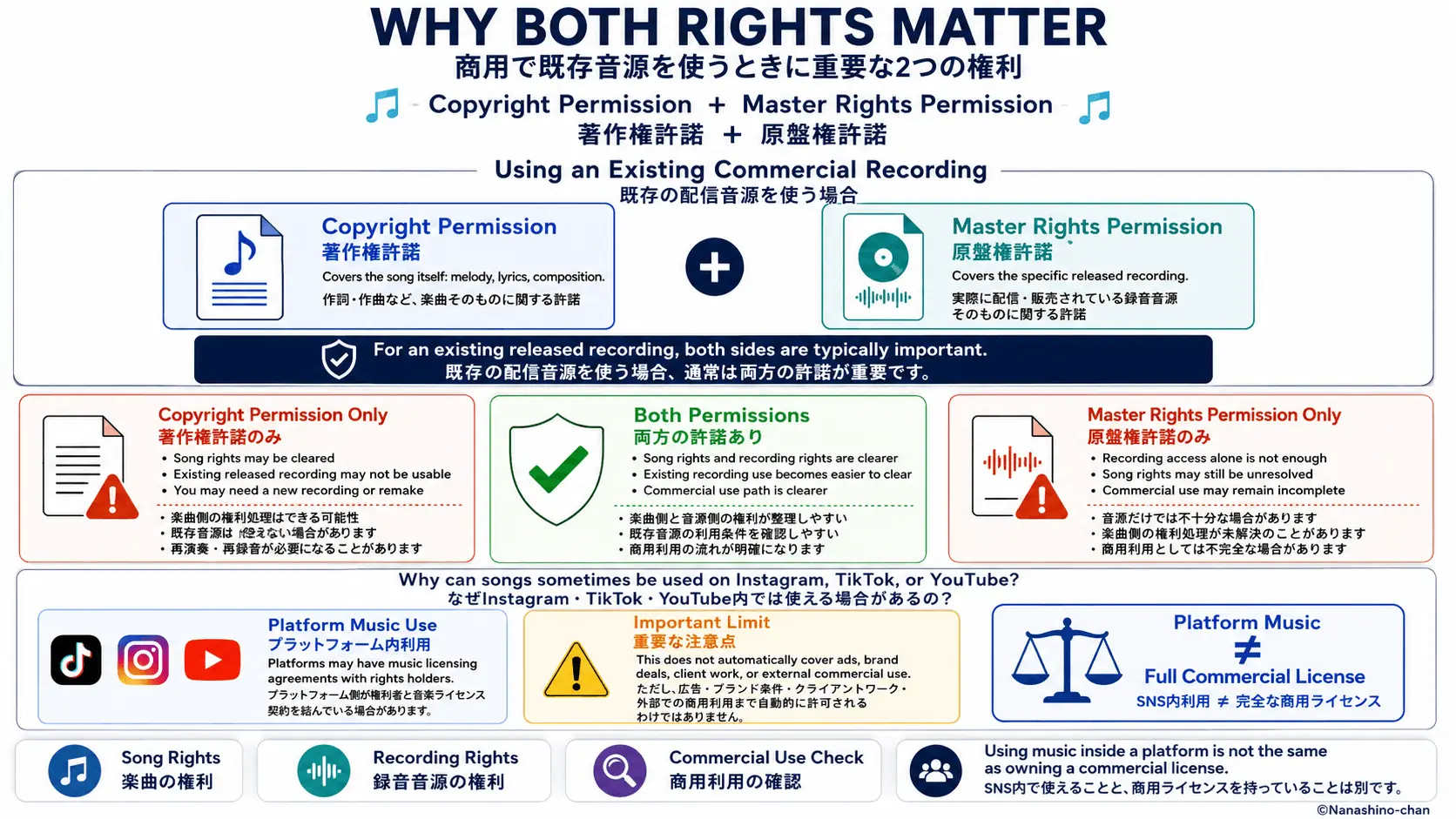
- Commercial use may require permission for both the recording and the underlying composition.
For a reusable animated web series, dedicated licensing provides clearer documentation than relying only on a platform's in-app music picker. Platform access should not be assumed to clear permanent episode integration.
Why Master Rights and Composition Rights Both Matter
Existing commercial songs commonly involve at least two rights layers. An animated episode or trailer may need permission connected to both the specific recording and the underlying musical work.
Master Recording Rights
These rights concern the specific recorded performance and audio synchronized with the episode or trailer.
Composition Rights
These rights concern the underlying melody, harmony, arrangement, and musical composition.
Synchronization Scope
The agreement should explain how the music may be combined with visual media and where the result may be distributed.
When the recording and composition are controlled by different parties, clearance may require multiple approvals. Nanashino-chan directly manages the original recordings and underlying compositions offered through its licensing workflow, which can simplify many standard commercial-use discussions.
Actual licensing requirements depend on the project, distribution, campaign, territory, jurisdiction, and agreement. This page provides general educational information and is not legal advice.
Industry Participation & Animated Web Series Collaboration
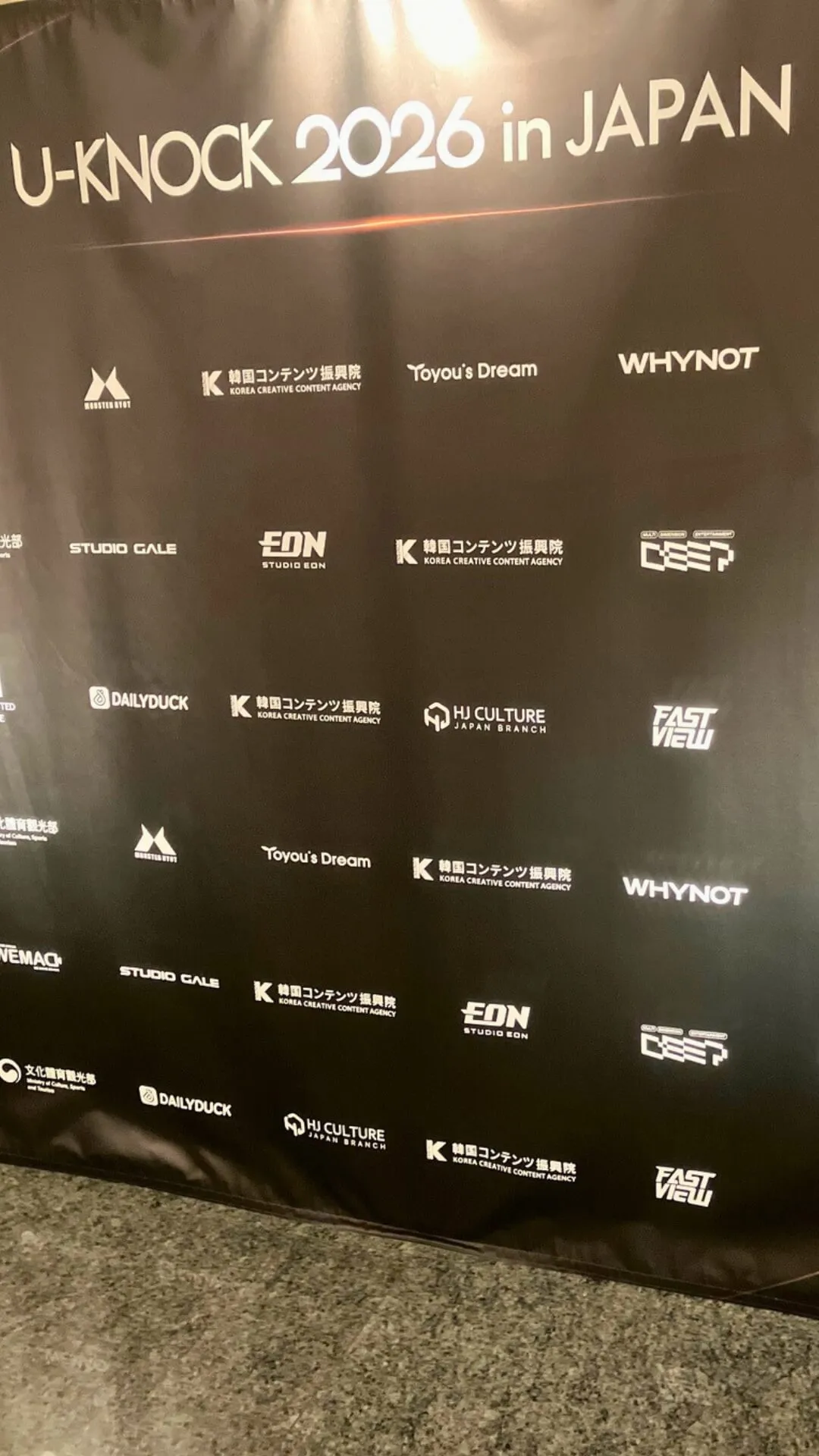
Nanashino-chan participated in the U-KNOCK 2026 in Japan Summit in Tokyo to explore music, licensing, and IP collaboration opportunities with Korean content companies working across webtoons, web novels, animation, character IP, AI video, games, and digital storytelling.
This professional context is relevant because one story IP may expand from a webtoon or web novel into animated episodes, vertical shorts, trailers, games, social campaigns, and longer-form adaptations. Music planning becomes more valuable when episode use and promotional reuse are documented from the beginning.
Animated Episodes & Shorts
Music for dialogue scenes, character moments, transitions, openings, endings, episode previews, and social-first animation.
Webtoon & Web Novel Adaptation
Music planning for motion comics, vertical animation, character PVs, web novel trailers, and episodic adaptations.
Character IP & Campaigns
Music for character teasers, merchandise announcements, events, launch campaigns, and brand partnerships.
AI-Assisted Video Production
Original licensed music for AI-assisted animation, localization, automated cutdowns, and multi-format production workflows.
Official Event & Professional References
The following public links provide context about the summit, participating organizations, and Nanashino-chan's professional activity.
- U-KNOCK 2026 in Japan Summit — Official event information.
- Korea Creative Content Agency (KOCCA) — Korea's public agency supporting the content industry.
- beSUCCESS Media Group — Event operation and global business support organization.
- Nanashino-chan on LinkedIn — Professional profile and licensing activity.
- U-KNOCK 2026 Participation Post — Public participation record.
Participation does not imply endorsement, sponsorship, partnership, official affiliation, or a confirmed licensing relationship with KOCCA, U-KNOCK, beSUCCESS Media Group, participating companies, or displayed organizations.
What Nanashino-chan Can Provide for Animated Web Series Projects
2,000+ Original Lo-Fi Tracks
A large catalog spanning warm, romantic, urban, reflective, jazz-inspired, chillwave, synthwave, and ambient moods.
Commercial Licensing
Defined permission for eligible monetized videos, creator projects, trailers, studio content, and organic commercial social use.
Sync Licensing
Time-limited licensing options for eligible paid advertising, social campaigns, and promotional synchronization.
Rights Review
Project discussion covering the intended media, platforms, versions, duration, campaign period, and reuse.
License Documentation
Clear records for creators, animation studios, producers, agencies, clients, distributors, and campaign teams.
Recurring-Series Planning
Music review for recurring episodes, multiple cues, seasonal packages, promotional cutdowns, localization, and future adaptation.
Music Options by Animated Web Series Use
| Production Use | Creative Priority | Music Direction | Rights Question |
|---|---|---|---|
| Episode Underscore | Dialogue clarity, scene mood, character perspective, and emotional continuity. | Restrained cues with space for voice and effects. | How many episodes, platforms, versions, and monetized channels are covered? |
| Opening or Ending Theme | Series recognition, title identity, recurring structure, and credits. | A memorable motif with repeatable start and end points. | Does permission cover recurring use in every episode and season? |
| Episode Trailer | Fast recognition, character hook, cliffhanger, and release action. | A short repeatable opening or loop-friendly section. | Does the license cover recurring posts and multiple episodes? |
| Vertical Scene Cutdown | Mobile-first pacing, character moment, subtitle clarity, and immediate hook. | Clean build with a precise reveal moment. | Will the cutdown remain organic, be boosted, or become a paid advertisement? |
| Montage or Transition | Time passage, travel, routines, memories, location changes, or visual rhythm. | Steady pulse, useful edit points, and controlled development. | Is the cue licensed for the complete episode and future cutdowns? |
| Paid Launch Campaign | Immediate hook, clear offer, strong call to action, and version testing. | Distinctive cue with short cutdowns and clear endings. | Are the advertiser, platforms, dates, territory, and versions covered? |
| Recurring Series Package | Multiple episodes, seasons, reusable cues, localized versions, and long-term distribution. | A consistent palette of compatible cues and motifs. | Are episode count, term, territory, platforms, reuse, and production partners documented? |
License Documentation for Creators, Studios, Producers & Agencies
Music permission should be documented before an episode or trailer is delivered, monetized, localized, repurposed, or transferred to another team. Documentation becomes especially important when animators, voice actors, editors, producers, studios, agencies, platforms, and clients share the production.
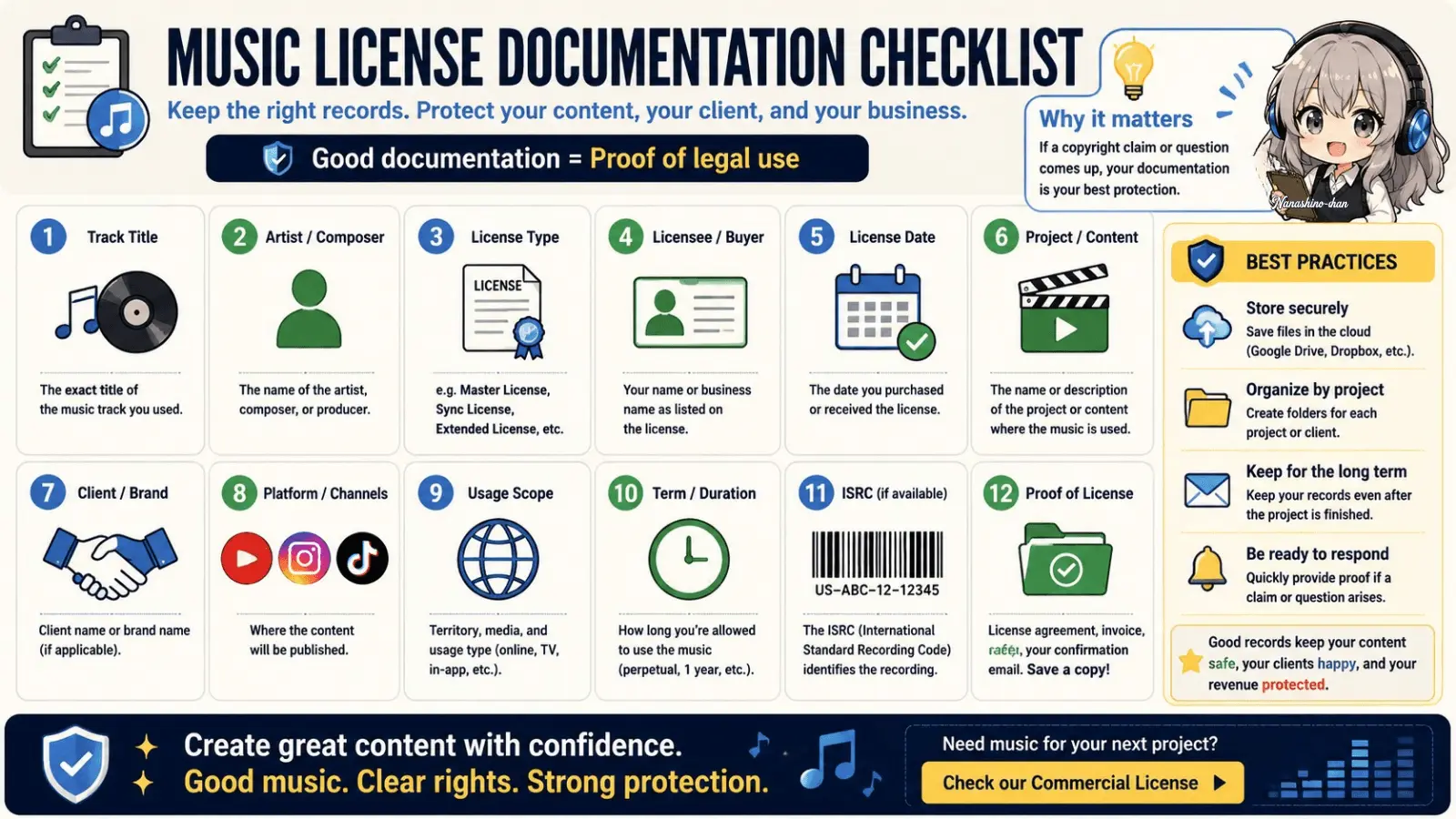
Track Information
Save the title, artist, album or release URL, ISRC when available, and the exact recording used.
License Information
Keep the license name, purchase date, buyer, permitted uses, restrictions, receipt, and certificate.
Project Information
Record the series title, episode numbers, creator, producer, studio, agency, client, editor, and final asset owner.
Distribution Information
List platforms, URLs, territory, publication dates, campaign dates, paid media, and planned reuse.
Creative Versions
Keep final episodes, trailers, cutdowns, localized versions, vertical edits, compilations, and advertising variants.
Claim Instructions
Record any Content ID information, attribution requirement, dispute process, and licensing contact details.
A Practical Animated Web Series Music Workflow
A defined workflow reduces late music replacement, unclear client approval, dialogue problems, episode delays, and uncertainty when scenes or cues are reused.
1. Define the Music Function
Decide whether the cue supports dialogue, atmosphere, montage, action, opening, ending, trailer, recap, or advertisement.
2. Confirm Distribution
List Instagram, TikTok, YouTube, Shorts, websites, apps, presentations, events, and paid media.
3. Choose the Emotional Promise
Identify the genre, scene purpose, character perspective, animation pace, voice style, and desired viewer response.
4. Select Music Before Final Editing
Plan scene timing, voice pauses, action, transitions, openings, endings, and credits around suitable cues.
5. Choose the Correct License
Separate personal work, monetized episodes, client production, recurring series use, organic promotion, and paid advertising.
6. Save Documentation
Store the license, receipt, certificate, track data, buyer, series, episodes, platforms, versions, and campaign dates together.
7. Test the Final Mix
Review dialogue clarity, ambience, sound effects, transitions, mobile playback, loudness, and final credits.
8. Review Every Reuse
Check permission before adding episodes, reusing cues, creating compilations, monetizing, localizing, or changing distribution.
An animated web series can become a long-term IP asset. Plan music rights before production so episodes, trailers, vertical cutdowns, localized versions, compilations, paid campaigns, and future adaptations do not depend on permission that covered only one initial video.
Frequently Asked Questions
What kind of music works for an animated web series?
The best music supports the series genre, scene tone, dialogue, animation rhythm, and episode format. Lo-fi, jazzhop, ambient, emotional piano, chillwave, and restrained cinematic music can work for romance, slice-of-life, urban, comedy, fantasy, reflective, and character-focused animated stories.
Do animated web series creators need a music license?
Yes. The license should cover the actual use, including whether music appears in the episode itself, a monetized channel, a client production, organic promotion, a recurring series, or paid advertising.
Can Instagram or TikTok music be used in an animated web series advertisement?
Music available inside a platform should not automatically be treated as a complete cross-platform commercial license. Paid ads, boosted posts, studio campaigns, client deliverables, and reuse inside full episodes or outside the platform may require separate permission.
What license is needed for paid promotion of an animated web series?
A paid campaign will generally need a sync or campaign-specific license that covers the advertiser, platforms, campaign period, territory, versions, and intended distribution.
Can the same track be used across multiple animated episodes?
Only when the license expressly covers recurring episode use, the number or duration of episodes, the relevant channels, monetization, and any promotional reuse. A one-video license should not be assumed to cover an entire series.
Can Nanashino-chan music be used for animated web series promotion?
Nanashino-chan offers original lo-fi music and licensing options for animated episodes, character scenes, dialogue, series trailers, vertical cutdowns, studio social content, and selected commercial campaigns. Recurring or permanent series use should be discussed before publication.
Official Platform Music Resources
Platform rules can change. Before using in-app music for studio promotion, a client project, paid advertising, sponsored content, or a cross-platform trailer, review the latest official guidance.
- Instagram Licensed Music Library and Meta Sound Collection
- Meta Music Guidelines
- TikTok Commercial Use of Music
- TikTok Commercial Music Library
- YouTube Audio Library Help
This page provides general educational information and does not constitute legal advice. Review the current platform terms and the specific music license before publication.
Explore Nanashino-chan Music Licensing
Choose a licensing option based on whether the project is a personal animation, monetized episode, client production, recurring series, organic promotional asset, or paid advertising campaign.
Personal Use License — $19
For eligible non-commercial, non-monetized personal projects. It does not cover business or studio promotion.
Commercial Creator License — $500
For eligible monetized videos, creator projects, one-off animations, organic commercial social content, and defined business uses.
1-Month Sync License — $500
For eligible paid advertising, social campaigns, launch activity, and time-limited commercial synchronization.
3-Month Sync License — $1,200
For longer eligible campaigns requiring a broader paid distribution period across selected platforms.
Recommended Tracks for Animated Web Series
Nanashino-chan offers 2,000+ Original Lo-Fi Tracks across calm, romantic, urban, reflective, jazz-inspired, chillwave, synthwave, and atmospheric moods. These starting points can help define an episode or trailer direction.
Smooth Groove
Warm and polished for contemporary romance, lifestyle fiction, character introductions, and modern urban stories.
Vaporwave Streets
Synth-influenced city-night atmosphere for mystery, technology, urban fantasy, and stylish character edits.
Smooth Transitions
A flexible background direction for dialogue beds, montage, recurring locations, title sequences, and scene transitions.
Stillness Vibes
A softer reflective mood for dialogue scenes, internal monologue, memory, healing, and quiet emotional moments.
Related Guides
Continue with the parent webtoon guide and related pages about digital storytelling, social promotion, platform music, commercial video rights, and sync licensing.
Need Licensed Music for an Animated Web Series?
Use original lo-fi music for animated episodes, dialogue scenes, character moments, openings, endings, trailers, vertical cutdowns, studio social content, and paid campaigns.
Choose a commercial license for eligible organic or monetized uses, a sync license for eligible paid campaigns, or contact Nanashino-chan to discuss recurring episode use, multiple cues, a season package, distribution, adaptation, or another custom project.