Music for Stories, Characters & Digital IP
Music for Digital Storytelling: Webtoons, Web Novels, Motion Comics & Animation
Digital stories now move across illustrated panels, narrated excerpts, character videos, social teasers, motion comics, animated episodes, vertical formats, AI-assisted production, advertising, and international content campaigns.
Original licensed music can give these formats a consistent emotional identity while supporting dialogue, captions, narration, visual pacing, character development, and commercial distribution.
Direct Answer: What Music Works for Digital Storytelling?
Use music that reinforces the story’s emotional direction without competing with dialogue, narration, captions, artwork, animation, or visual information.
The right music depends on the story genre, character perspective, format, duration, distribution platform, commercial purpose, and whether the finished content will be used organically, monetized, delivered to a client, or distributed through paid advertising.
- Match the music to the story, character, world, and emotional arc.
- Leave enough arrangement space for dialogue, captions, and narration.
- Edit music around major narrative sections rather than every visual cut.
- Confirm whether the project is personal, commercial, monetized, or client-funded.
- Separate organic social promotion from paid advertising.
- Check recurring-use rights before using the same music across episodes.
- Keep the license, receipt, track data, project details, and final URLs.
What Is Digital Storytelling?
Digital storytelling combines narrative, visual design, text, sound, music, voice, animation, interaction, and platform-specific presentation. It can begin as a comic, novel, character concept, or original IP and expand into several connected media formats.
Visual Storytelling
Stories communicated through webtoon panels, digital comics, illustrations, animation, character art, editing, motion, and visual composition.
Written Storytelling
Web novels, serialized fiction, book trailers, narrated excerpts, chapter promotion, character profiles, and publishing content.
Audiovisual Storytelling
Motion comics, voice comics, trailers, animated episodes, character PVs, vertical videos, and story-driven promotional media.
Interactive Storytelling
Apps, games, reading platforms, interactive videos, character experiences, websites, and audience-participation formats.
Transmedia Storytelling
A single IP expanding across comics, novels, animation, audio drama, games, merchandise, social media, live events, and licensing.
AI-Assisted Storytelling
Creative workflows using AI-supported images, animation, editing, localization, voices, video generation, or content adaptation.
Digital storytelling is not one production format. It is a connected content system in which the same story, character, or IP may move across several platforms and commercial uses.
Digital Storytelling Music Guides
Use the following guides to plan music according to the specific story format, production workflow, commercial purpose, and licensing requirement.
Digital Storytelling Formats That Use Music
Music may be part of the main story, a promotional asset, an adaptation, a campaign, or a business presentation. Each use creates a different creative and licensing context.
Webtoon Trailers
Series launches, character introductions, episode previews, relationship edits, adaptation announcements, and platform promotion.
Motion Comics
Animated panels, dialogue, narration, sound effects, camera movement, transitions, limited animation, and full episodes.
Web Novel Trailers
Narrated excerpts, book promotion, character reveals, chapter announcements, publishing campaigns, and crowdfunding videos.
Animated Web Series
Independent animation, short-form episodes, recurring stories, character-driven content, online releases, and adaptation projects.
Vertical Animation
Mobile-first animated stories, 9:16 character videos, Reels, TikTok, Shorts, episodic clips, and social campaigns.
Character PVs
Videos built around a character’s identity, visual design, voice, relationship, backstory, theme, or emotional development.
Audio Drama Promotion
Trailers, cast announcements, story previews, narrated scenes, character voices, and social promotion for audio productions.
Game & Interactive IP Promotion
Character introductions, world-building videos, story trailers, visual novel promotion, app previews, and campaign content.
AI-Assisted Story Videos
Videos combining AI-supported artwork, animation, voices, editing, subtitles, localization, and original licensed music.
Why Music Matters in Digital Storytelling
Music helps separate a sequence of images, words, voices, and edits from a complete emotional experience. It can also give several pieces of content a shared identity.
Establishes the World
Music can immediately suggest romance, city life, fantasy, mystery, technology, nostalgia, calm, danger, or emotional distance.
Defines Character Identity
A recurring texture, rhythm, or track can reinforce a character’s personality, emotional state, status, or development.
Supports Narrative Pacing
Musical structure can help control panel duration, transitions, narration, dialogue pauses, reveals, action, and endings.
Connects Different Media
A consistent music direction can link a webtoon trailer, character video, motion comic, animated teaser, and campaign asset.
Communicates Without Language
Instrumental music can carry emotion across markets while translated captions and localized voices remain central.
Strengthens Commercial Presentation
Clear audio direction can improve trailers, pitch videos, investor presentations, publisher materials, advertising, and partnership proposals.
Creative Fit and Rights Clearance Are Separate Questions
A track may fit the story perfectly while still lacking permission for client delivery, monetized video, paid advertising, recurring episodes, localization, or cross-platform distribution.
Choosing Music by Story Genre & Emotional Tone
Genre provides the starting point, but the strongest music choice reflects the specific scene, character perspective, emotional tension, and narrative promise of the project.
Romance & Relationship Drama
Warm lo-fi beats, mellow jazzhop, soft piano, gentle guitar, and restrained ambient textures can support attraction, intimacy, uncertainty, separation, memory, and emotional growth.
Slice of Life
Relaxed rhythms, café-inspired keys, light percussion, soft vinyl textures, and understated melodies work naturally with school, work, friendship, family, routines, and everyday character development.
Urban & Night Stories
Chillwave, synthwave, nocturnal lo-fi, muted bass, and atmospheric electronic music can support city lights, late-night travel, ambition, technology, loneliness, and contemporary relationships.
Fantasy & Supernatural
Ambient layers, mysterious piano, reversed textures, subtle percussion, cinematic hybrids, and dreamlike sound design can create wonder, magic, uncertainty, mythology, and spiritual tension.
Mystery & Psychological Drama
Minimal harmony, low pulses, sparse percussion, filtered textures, unstable ambience, and restrained dissonance can support secrets, doubt, suspense, memory, and unreliable perspective.
Comedy & Character Stories
Light jazz, playful percussion, quirky rhythms, concise musical stops, and controlled accents can support reactions, misunderstandings, awkward timing, and visual punchlines.
Action & Suspense
Pulsing bass, rhythmic builds, controlled percussion, electronic tension, and defined structural changes can support pursuit, confrontation, danger, reveals, and rapid visual movement.
Healing & Reflection
Soft ambient lo-fi, gentle piano, slow acoustic textures, and low-intensity beats can support recovery, grief, memory, self-discovery, nature, and emotionally quiet storytelling.
Luxury & Fashion-Oriented IP
Polished jazzhop, elegant electronic music, restrained groove, and atmospheric textures can support premium character visuals, fashion narratives, beauty campaigns, and sophisticated world-building.
Music Direction by Digital Story Format
| Format | Primary Music Function | Recommended Direction | Main Risk |
|---|---|---|---|
| Webtoon trailer | Introduce the title, characters, world, conflict, and release information | Immediate emotional identity, compact structure, dialogue space, and a clear title-card ending | A slow introduction may fail to communicate the story before the viewer scrolls away |
| Motion comic | Connect panels, dialogue, narration, sound effects, and limited animation | Flexible instrumental arrangements, multiple sections, controlled dynamics, and scene-specific edits | One repetitive loop may flatten the emotional development of the episode |
| Web novel trailer | Translate written atmosphere, character conflict, and narrative themes into audiovisual form | Music with a strong sense of mood, gradual development, narration space, and an evocative ending | Music may become too literal and reduce the audience’s imaginative interpretation |
| Animated web series | Support recurring characters, episodic structure, transitions, action, dialogue, and emotional continuity | Several cues, recurring themes, character motifs, and a broader series-level audio strategy | A single-project license may not cover recurring episodes or long-term distribution |
| Vertical animation | Communicate story and character quickly in a mobile-first 9:16 format | Immediate hook, caption-friendly pacing, mobile clarity, compact edits, and loop-aware endings | Cutting every visual movement to the beat can reduce readability and story comprehension |
| Character PV | Define personality, visual identity, relationship, voice, backstory, or emotional arc | Distinctive but controlled music that can become associated with the character | An overly dramatic cue may create an identity that does not match the full story |
| Publishing or investor presentation | Explain the IP, audience, expansion strategy, visual identity, and commercial opportunity | Professional, unobtrusive music that supports narration, slides, clips, and key business information | Music that is too dominant can make the presentation feel like a trailer rather than a business proposal |
| Paid digital campaign | Drive awareness, engagement, app installs, subscriptions, purchases, or launch activity | Strong opening, approved cutdowns, multiple aspect ratios, recognizable identity, and campaign-ready licensing | Music cleared only for organic content may not cover advertising or sponsored distribution |
How Music Supports a Story’s Emotional Arc
Music should develop with the story rather than remain emotionally static. Even a short promotional video can contain an opening state, change, tension point, reveal, and ending.
Establish the Initial World
Introduce the genre, location, emotional temperature, character perspective, or visual identity within the opening seconds.
Create Narrative Movement
Add rhythm, harmony, texture, or instrumentation as the story introduces conflict, attraction, uncertainty, ambition, or discovery.
Support the Turning Point
Use a lift, pause, drop, tonal change, or new musical layer when the story reveals a relationship, threat, decision, or transformation.
Control the Climax
Reserve the strongest musical section for the most important image, line, action, title reveal, or campaign message.
Design the Ending
Choose a resolved chord, abrupt stop, suspended texture, soft fade, final accent, or loop-friendly transition that matches the intended response.
The music should not reveal the entire emotional meaning before the story does. Allow the narrative, performance, artwork, and pacing to participate in the emotional development.
Music for Dialogue, Narration, Captions & Sound Design
Digital storytelling often combines music with several competing layers. A successful mix gives each element a clear function and priority.
Dialogue
Character voices should remain intelligible and emotionally natural. Music should leave space in both volume and arrangement.
Narration
Narration carries story information, context, and perspective. Long spoken sections usually benefit from sparse and stable musical beds.
Captions & On-Screen Text
Visual rhythm should give viewers enough time to read titles, dialogue, episode information, credits, and calls to action.
Sound Effects
Impacts, transitions, footsteps, interfaces, weather, magical effects, and environmental actions should not compete with dense music.
Ambience
Room tone, cafés, rain, traffic, crowds, wind, schools, and natural environments can connect scenes when music is reduced.
Silence
A deliberate absence of music can strengthen confessions, reveals, reactions, danger, grief, and emotional pauses.
- Choose instrumental arrangements when dialogue carries the story.
- Avoid strong lead melodies beneath important voice performances.
- Reduce music level during names, plot information, and emotional lines.
- Use quieter sections beneath narration-heavy material.
- Leave room for impact sounds, transitions, and environmental details.
- Test the final mix on phones, laptops, headphones, and small speakers.
- Use volume automation instead of one fixed background level.
More Audio Layers Do Not Automatically Create Better Storytelling
Dialogue, narration, sound effects, ambience, and music should not all remain equally active. Reducing one layer can make another layer more meaningful.
Planning Music Across an IP Content Lifecycle
A digital story may begin as an illustrated or written work and later expand into trailers, motion comics, animation, advertising, games, audio, and international campaigns. Music planning should account for this progression.
| IP Stage | Typical Content | Music Role | Licensing Consideration |
|---|---|---|---|
| Concept development | Mood boards, internal tests, pitch prototypes, character concepts, and unpublished drafts | Explore tone, genre, pacing, and emotional direction | Confirm whether the material remains private or will be presented publicly |
| Audience introduction | Character posts, concept teasers, launch announcements, crowdfunding, and creator portfolios | Create an initial identity and attract early interest | Personal, portfolio, and commercial promotion may require different permission |
| Official launch | Series trailer, publisher campaign, app promotion, press material, and social content | Connect the title, platform, characters, and launch message | Client use, business publication, multiple platforms, and paid promotion should be defined |
| Ongoing publication | Episode teasers, seasonal videos, motion comics, character clips, and community content | Maintain consistency while supporting new story developments | Recurring-use, episode quantity, title scope, and term become important |
| Adaptation | Animation, audio drama, game, live action, interactive content, or serialized video | Support a larger production with themes, cues, transitions, and recurring identity | Standard trailer or creator licenses may not cover permanent production use |
| International expansion | Localized trailers, dubbed versions, regional social accounts, partners, and distribution campaigns | Preserve the original identity while supporting new languages and markets | Territory, localization, partner distribution, and creative versions should be addressed |
| Commercial extension | Advertising, merchandise promotion, events, brand collaboration, and licensing presentations | Connect the story world with a broader commercial campaign | Paid media, advertiser identity, campaign period, territory, and associated products should be reviewed |
Music selected during early development may later become associated with the IP. Before building a long-term identity around a track, confirm whether the rights can support recurring, commercial, international, and adaptation use.
Creating a Consistent Music Identity Across Formats
A digital storytelling project does not need to use the same track everywhere. Consistency can also come from a shared mood, instrumentation, rhythm, sonic texture, or emotional vocabulary.
Recurring Main Theme
Use one recognizable track or motif across trailers, episodes, character videos, and adaptation announcements when the license permits recurring use.
Shared Sonic Palette
Use related instruments, textures, tempos, and production styles across different tracks to maintain identity without repetition.
Character-Based Direction
Assign distinct musical qualities to major characters, relationships, locations, organizations, or emotional conflicts.
Format-Specific Variations
Use a subtle version for dialogue, a stronger version for trailers, and a compact version for vertical promotion.
Seasonal Development
Allow the music direction to evolve as the story becomes darker, more romantic, more complex, or more expansive.
Localized Consistency
Keep the core music identity while changing narration, captions, voices, editing, and platform-specific presentation.
When to Use One Track, Several Tracks, or Custom Music
| Music Approach | Best For | Advantages | Limitations |
|---|---|---|---|
| One licensed track | Short trailers, character PVs, social teasers, simple narrated videos, and compact promotional edits | Fast selection, consistent tone, clear documentation, and efficient production | May lack enough variation for longer stories or several emotional stages |
| Several licensed tracks | Motion comic episodes, longer trailers, web series, presentations, and multi-scene digital stories | Greater emotional range, clearer scene separation, and better narrative development | Requires more editing, documentation, mixing, and license management |
| Recurring licensed catalog | Ongoing content programs, creator channels, studio workflows, character campaigns, and title promotion | Consistent music source, flexible mood selection, and repeatable production workflow | Project quantity and recurring-use rights must be clearly defined |
| Custom-composed music | Flagship animation, exclusive campaigns, major character IP, opening themes, and long-term audiovisual identity | Project-specific structure, timing, motifs, exclusivity options, and deeper brand integration | Higher cost, longer production time, revisions, ownership negotiations, and delivery requirements |
A Practical Music Selection Workflow
Define the Story Format
Identify whether the project is a trailer, motion comic, web novel video, animated episode, character PV, vertical clip, presentation, or advertisement.
Define the Emotional Objective
Choose the feeling the audience should experience: curiosity, comfort, tension, attraction, nostalgia, urgency, wonder, or reflection.
Map the Narrative Structure
Mark the opening, character introduction, dialogue, change, reveal, climax, title card, and ending.
Review Voice & Text Requirements
Identify narration-heavy sections, dialogue, captions, sound effects, and moments where silence is needed.
Confirm Distribution
List every platform, client, account, website, app, advertisement, presentation, territory, and planned version.
Select the Music
Compare mood, arrangement density, tempo, structure, editability, sound quality, and emotional fit.
Confirm the License
Review commercial use, synchronization, monetization, advertising, recurring episodes, client delivery, localization, and reuse.
Edit & Mix the Project
Use phrase-based edits, transitions, automation, silence, sound effects, and a deliberate ending.
Store Documentation
Save the license, receipt, certificate, track data, project details, creative versions, publication dates, and final URLs.
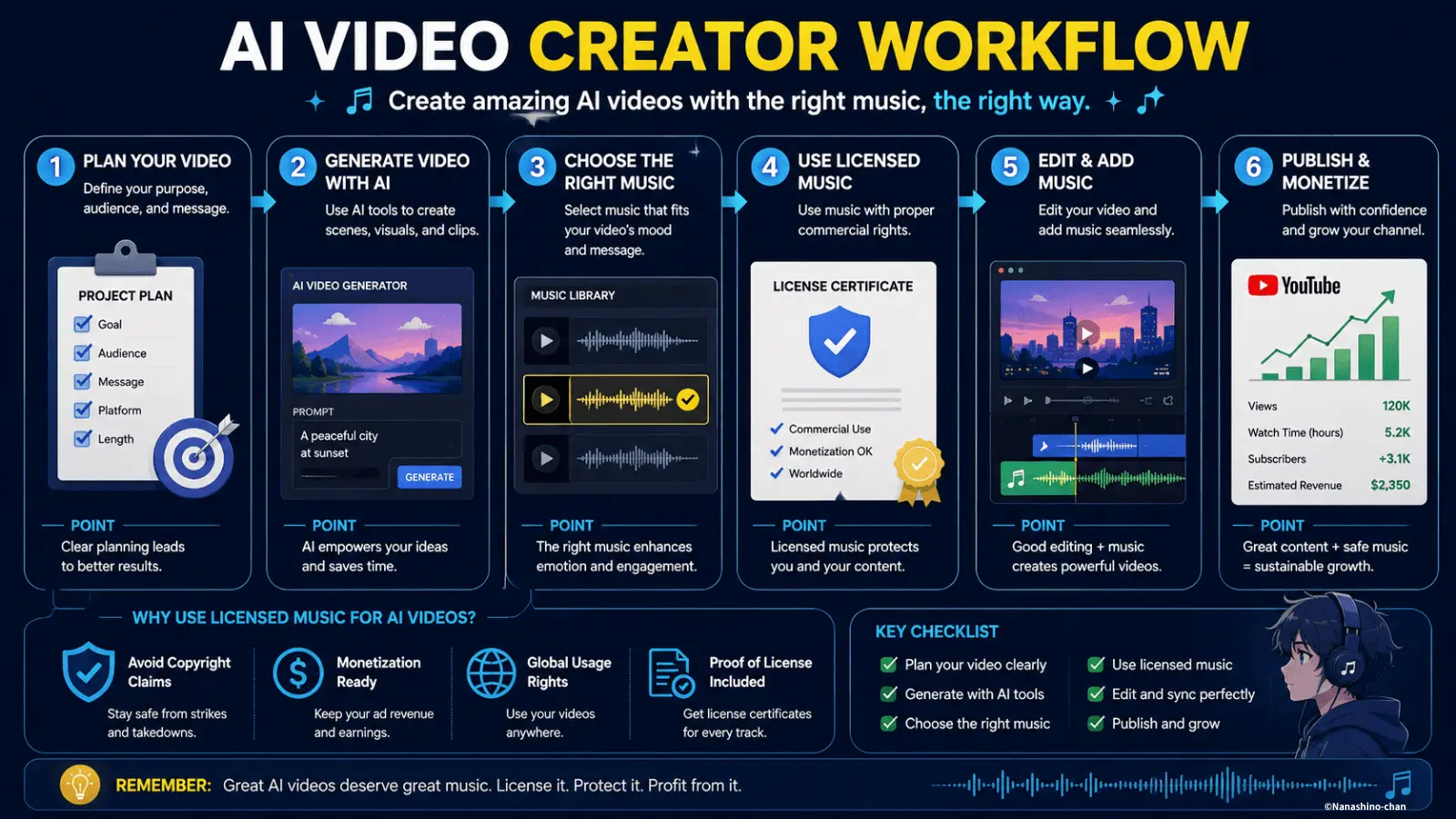
Music for AI-Assisted Digital Storytelling
AI-supported tools can help creators produce images, animation, voices, subtitles, translations, video edits, and promotional variations. Music rights must still be reviewed separately from the visual production workflow.
AI-Generated Visual Stories
Original licensed music can support videos created with AI-generated illustrations, environments, motion, and scene transitions.
AI-Assisted Animation
Music can provide continuity when visual movement is generated or enhanced through image-to-video, interpolation, lip sync, or automated effects.
AI Voice & Narration
Dialogue-friendly instrumental music can support synthetic narration, multilingual voices, character speech, and automated dubbing.
Automated Localization
A consistent music bed can connect translated caption versions, regional edits, and localized voice tracks.
Multi-Format Generation
AI-assisted workflows may produce horizontal trailers, vertical clips, short ads, social cutdowns, and several language versions.
Commercial Rights Separation
Permission to use an AI tool does not automatically include rights to the music added to the final production.
AI Production Does Not Remove Music Licensing Requirements
A video can be generated, edited, narrated, and localized with AI while still requiring separate permission for the recording, composition, synchronization, advertising, client use, and distribution.
Music Licensing for Digital Storytelling Projects
Digital storytelling may involve several creative formats, teams, platforms, and commercial stages. The music license should reflect the complete use rather than only the first published video.
| Project Type | Typical Use | Likely Licensing Direction | Key Review Point |
|---|---|---|---|
| Private concept test | Internal mood video, storyboard, unpublished prototype, or production experiment | Internal use may not require public distribution rights, but the music must not be redistributed | Will the project remain private, or will it be shown to clients, investors, publishers, or audiences? |
| Non-commercial personal story | A creator publishes an original project without monetization, advertising, business promotion, or client involvement | A Personal Use License may be suitable when the exact use is included | Is the project genuinely non-commercial and unrelated to paid services, crowdfunding, or professional promotion? |
| Monetized creator content | A webtoon trailer, narrated story, motion comic, or animated video appears on a monetized channel | A Commercial Creator License may be appropriate when monetized audiovisual use is covered | Which channel, project, platforms, and number of videos are included? |
| Official business promotion | A publisher, studio, creator business, agency, or platform posts an organic promotional video | A Commercial Creator License may be suitable for eligible business content | Who is the licensed party, and which organization will publish the final creative? |
| Client production | An editor, animator, agency, or production studio creates content for another rights holder | The license should expressly cover client work, delivery, and publication | Does the license follow the buyer, the client, the project, or a defined combination? |
| Paid digital campaign | Promoted posts, social advertisements, app-install campaigns, launch promotion, or sponsored distribution | A Sync License or campaign-specific agreement is generally the safer direction | Which advertiser, platforms, territories, campaign period, and creative versions are covered? |
| Recurring episodic content | Motion comic episodes, animated web series, vertical story episodes, or repeated character videos | A custom or broader recurring-use agreement may be required | How many episodes, seasons, titles, platforms, and years are included? |
| Adaptation or platform integration | Animation, game, audio drama, interactive app, streaming series, or embedded reading experience | Custom licensing review is usually necessary | Does the project involve permanent integration, broadcast, downloads, software, or long-term distribution? |
The video duration does not determine the license by itself. A 10-second paid advertisement may require broader rights than a ten-minute unpublished internal prototype.
Personal Use, Commercial Use, Sync Licensing & Custom Rights
Personal Use License
Designed for eligible non-commercial personal projects that do not involve monetization, client delivery, business promotion, paid media, or commercial campaigns.
Commercial Creator License
Designed for eligible monetized videos, creator projects, business social media, client-facing content, and defined commercial audiovisual uses.
Sync License
Designed for eligible paid advertising, launch campaigns, sponsored distribution, and time-limited synchronization of music with visual media.
Custom License
Designed for recurring episodes, animated adaptations, platform integration, broadcast, exclusive rights, broad territories, long terms, or unusual commercial arrangements.
Standard Licenses Do Not Automatically Cover Every IP Expansion
Permission for a trailer does not automatically cover a motion comic series, animation adaptation, game, audio drama, interactive application, soundtrack release, or permanent platform integration.
Can Platform Music Be Used for Digital Storytelling?
Music available inside Instagram, TikTok, YouTube, or another platform should not automatically be treated as a complete commercial license for a reusable digital storytelling asset.
Platform music tools may operate under platform-specific agreements. Access can depend on account type, location, catalog availability, content category, business status, and whether the content is organic or paid.
- A track available to a personal account may not be available to a business account.
- Music used in an organic post may not be cleared for boosting or advertising.
- Permission inside one platform may not transfer to another platform, website, app, or presentation.
- A publisher, agency, investor, or client may require written proof of music permission.
- A short platform clip may not provide rights for a full motion comic episode or animated series.
- Downloading and extracting platform audio may fall outside the platform’s permitted workflow.
- Catalog availability and platform terms can change after a video is published.
Dedicated commercial music licensing is generally easier to document when the final creative will be reused across platforms, localized, delivered to a client, monetized, archived, or distributed through paid media.
Organic Story Promotion vs Paid Advertising
| Distribution Method | Digital Story Example | Licensing Direction | Documentation Priority |
|---|---|---|---|
| Organic personal post | An independent creator shares a non-commercial character teaser or story experiment | Personal Use License when the project remains genuinely non-commercial | Keep the license terms, receipt, track title, and post URL |
| Organic commercial post | A creator, studio, publisher, or business promotes an official title without paid distribution | Commercial Creator License when business social promotion is included | Record the project, publisher, platform, publication date, and license scope |
| Monetized video | A motion comic, web novel trailer, or animated story appears on a monetized channel | Commercial licensing must expressly cover monetized audiovisual use | Keep upload URLs, monetization details, license proof, and claim instructions |
| Boosted post | An existing Reel, TikTok, or social video is converted into paid promotion | Review the license before boosting; a Sync License may be required | Record the advertiser, campaign dates, platforms, and approved creative |
| Paid social advertisement | A webtoon, animation, app, or publishing campaign runs through paid media | Sync License or campaign-specific commercial agreement | Document the campaign term, territories, formats, advertiser, and media |
| Long-term multi-platform campaign | The same IP campaign uses social ads, websites, apps, presentations, partner channels, and localized versions | A broader custom or campaign agreement may be appropriate | Maintain a centralized record of all versions, platforms, partners, and territories |
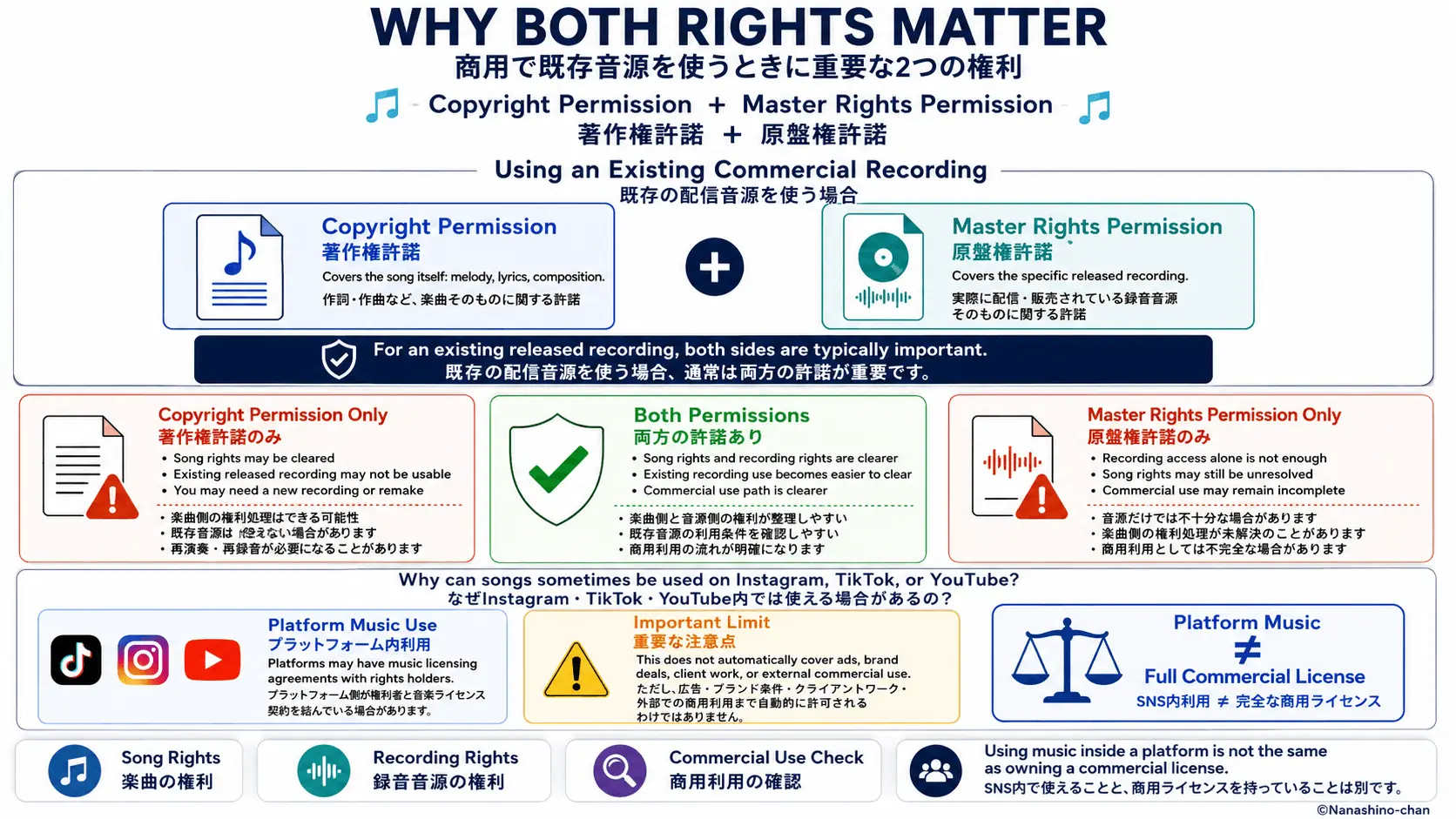
Master Rights, Composition Rights & Synchronization
A single song can involve several rights layers. Understanding these layers helps creators, publishers, studios, and agencies avoid assuming that access to an audio file equals complete permission.
Master Recording Rights
These rights concern the specific recorded version placed in the trailer, episode, animation, advertisement, or presentation.
Composition Rights
These rights concern the underlying melody, harmony, structure, and musical work.
Synchronization Rights
These rights concern combining music with visuals, panels, animation, captions, dialogue, narration, and edited video.
Distribution Scope
The license should identify where the finished project may be uploaded, shared, monetized, advertised, delivered, or archived.
Editing Permission
The agreement should clarify permitted trimming, fading, looping, cutdowns, rearrangement, and other production edits.
Recurring & Adaptation Use
Repeated synchronization across episodes, seasons, languages, adaptations, or platforms may require broader permission.
Nanashino-chan directly manages the offered original recordings and underlying compositions. This can simplify many standard licensing discussions because the project does not need to begin by identifying separate recording and composition owners.
Direct control of the offered rights does not mean that every possible use is automatically included. The applicable license still determines the project, platforms, media, term, territory, advertising rights, and restrictions.
When Standard Licensing May Not Be Enough
Some projects use music as part of an ongoing IP production rather than as background for a single video. These situations often require a custom review.
Recurring Web Series
Music appears across multiple episodes, seasons, character stories, promotional edits, and platform versions.
Animated Adaptations
A webtoon, novel, or character IP becomes a full animation, short film, streaming series, or broadcast production.
Interactive Applications
Music is embedded in a reading app, visual novel, game, interactive story, website experience, or downloadable product.
Official Soundtrack Use
Music is distributed as a soundtrack, album, download, bonus file, collectible, or standalone commercial product.
Exclusive Character Themes
The project requires category exclusivity, competitor restrictions, ownership transfer, or a specially commissioned theme.
Large International Campaigns
The project involves broad territories, long terms, many localized creatives, substantial media spend, or several commercial partners.
Broadcast & Theatrical Use
Television, cinema, festivals, public events, exhibitions, transportation media, and other offline uses may require additional scope.
Franchise-Level Licensing
The same music is used across comics, novels, games, animation, merchandise campaigns, events, and brand partnerships.
Licensing Music for Client & Agency Projects
Digital storytelling projects often involve different parties for music purchase, production, approval, publication, advertising, and long-term ownership.
The Licensed Buyer
The creator, studio, agency, publisher, platform, advertiser, or organization that obtains the license.
The Production Team
The editor, animator, sound designer, motion designer, localization team, voice studio, or subcontractor using the music during production.
The Final Publisher
The IP owner, creator, studio, publisher, platform, advertiser, or partner distributing the completed content.
- Confirm who will purchase the music license.
- Identify the client, project, title, and final publisher.
- Confirm whether subcontractors may access the track.
- Confirm whether the completed project may be delivered to the client.
- Check whether portfolio display is permitted.
- Separate organic publication from paid advertising.
- Confirm whether the client may create additional edits.
- Check whether the music may be reused for later episodes or campaigns.
- Determine who will retain the license records after delivery.
Do Not Transfer the Standalone Music File Without Permission
Many licenses allow a completed video to be delivered to a client but do not allow the original music file to be resold, redistributed, uploaded to a shared asset library, or transferred as a standalone production asset.
Music Licensing for Localized Digital Stories
Digital stories often move across languages, regions, platforms, and distribution partners. Localization may create several new versions of the same underlying project.
Translated Captions
Subtitle and on-screen text changes may produce additional creative versions for different languages or markets.
Localized Voice Acting
New narrators, character actors, and dubbed dialogue create separate audiovisual masters.
Regional Social Accounts
A publisher or platform may release the same content through country-specific or language-specific channels.
Territory Expansion
A campaign licensed for one market may need review before wider international distribution.
Platform-Specific Versions
Horizontal trailers, vertical clips, app previews, website videos, pitch decks, and advertisements may use different edits.
Partner Distribution
Regional publishers, licensors, broadcasters, adaptation partners, agencies, and commercial collaborators may require explicit authorization.
A translated subtitle version, dubbed version, shortened advertisement, and regional social edit may all be treated as separate creative variations. Include planned localization and territory expansion in the licensing discussion.
Music License Documentation for Digital Storytelling Teams
Clear documentation helps creators, studios, publishers, agencies, platforms, and clients verify which music was used and which rights were obtained.
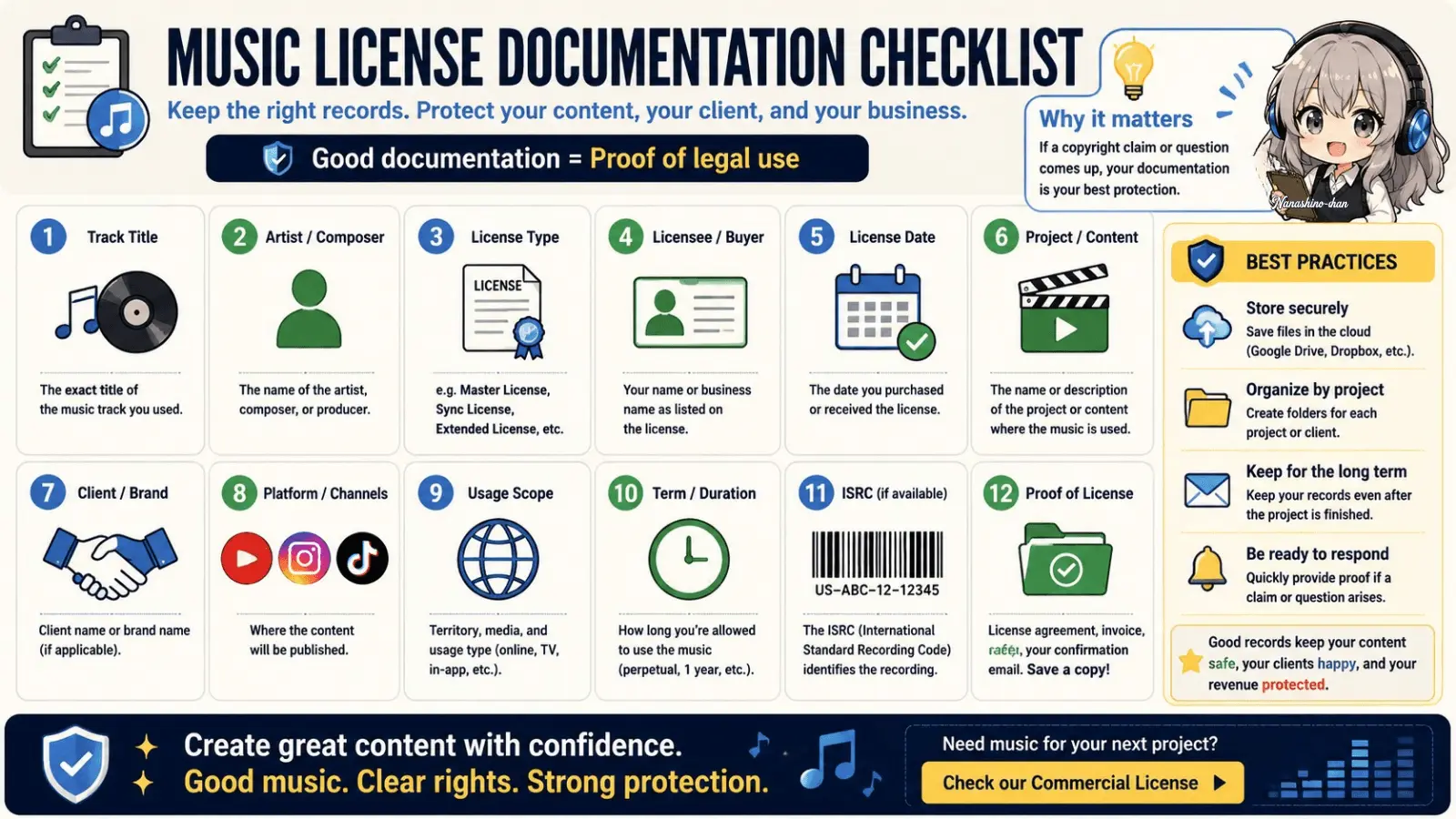
Track Information
Save the track title, artist, album or release URL, ISRC when available, version, edit length, and exact audio file used.
License Information
Keep the license name, purchase date, buyer, terms, restrictions, receipt, invoice, certificate, and licensing contact.
Project Information
Record the IP title, episode, trailer, character, campaign, client, publisher, studio, agency, and final rights holder.
Distribution Information
List every website, app, platform, account, territory, partner channel, publication date, and intended archive period.
Advertising Information
Save the advertiser, campaign dates, paid media platforms, territories, audience markets, and approved creative versions.
Final Creative Files
Keep copies of the master video, trailers, vertical cutdowns, subtitles, localized versions, advertisements, and presentation edits.
What Proof of Music Permission Should Be Kept?
- The complete music license and applicable terms.
- The purchase receipt, invoice, or transaction record.
- The license certificate when available.
- The track title, artist, version, and source URL.
- The IP title, project name, episode, and client.
- The permitted platforms, territories, media, and term.
- The approved number of videos, episodes, and campaign variations.
- The final publication URLs and launch dates.
- Content ID claim instructions or written approvals.
- Copies of all final and localized creative versions.
A Receipt Alone Does Not Define the Rights
A payment receipt shows that a transaction occurred, but it may not explain whether the music can be used in paid campaigns, client work, recurring episodes, localized versions, adaptations, or cross-platform distribution.
Store the receipt together with the complete license terms and any certificate or written approval.
Content ID & Digital Storytelling Uploads
A valid license and an automated platform claim are related but separate issues. Content identification systems may detect a recording before they know that the uploader has permission.
Automated Music Claim
A platform may identify the recording and apply monetization, tracking, visibility, or territorial settings.
Copyright Strike
A formal removal request or account strike is generally more serious than an automated music-identification claim.
License Evidence
The uploader may need the license, receipt, certificate, track information, project details, and claim-release instructions.
- Check whether the selected track may be registered with a content identification system.
- Save the music license before uploading the project.
- Use the correct licensed buyer, company, or channel name.
- Keep the upload URL and claim reference details.
- Follow the licensor’s dispute or claim-release procedure.
- Do not falsely claim ownership of music you did not create.
- Allow enough review time before a major launch or advertising campaign.
A Claim Does Not Automatically Mean the Use Is Unauthorized
Automated systems identify matching audio. They do not always know which creator, studio, publisher, or advertiser purchased permission for a specific project. Stored licensing records help establish authorized use.
Industry Participation & Korea–Japan Digital Content Collaboration
Nanashino-chan participated in the U-KNOCK 2026 in Japan Summit in Tokyo to explore music, licensing, and IP collaboration opportunities with Korean content companies working across webtoons, web novels, animation, character IP, AI video, and digital storytelling.
The event provided direct industry context for considering how original music can support cross-border content development, promotional trailers, motion comics, vertical animation, character videos, localization, adaptation campaigns, and commercial distribution.
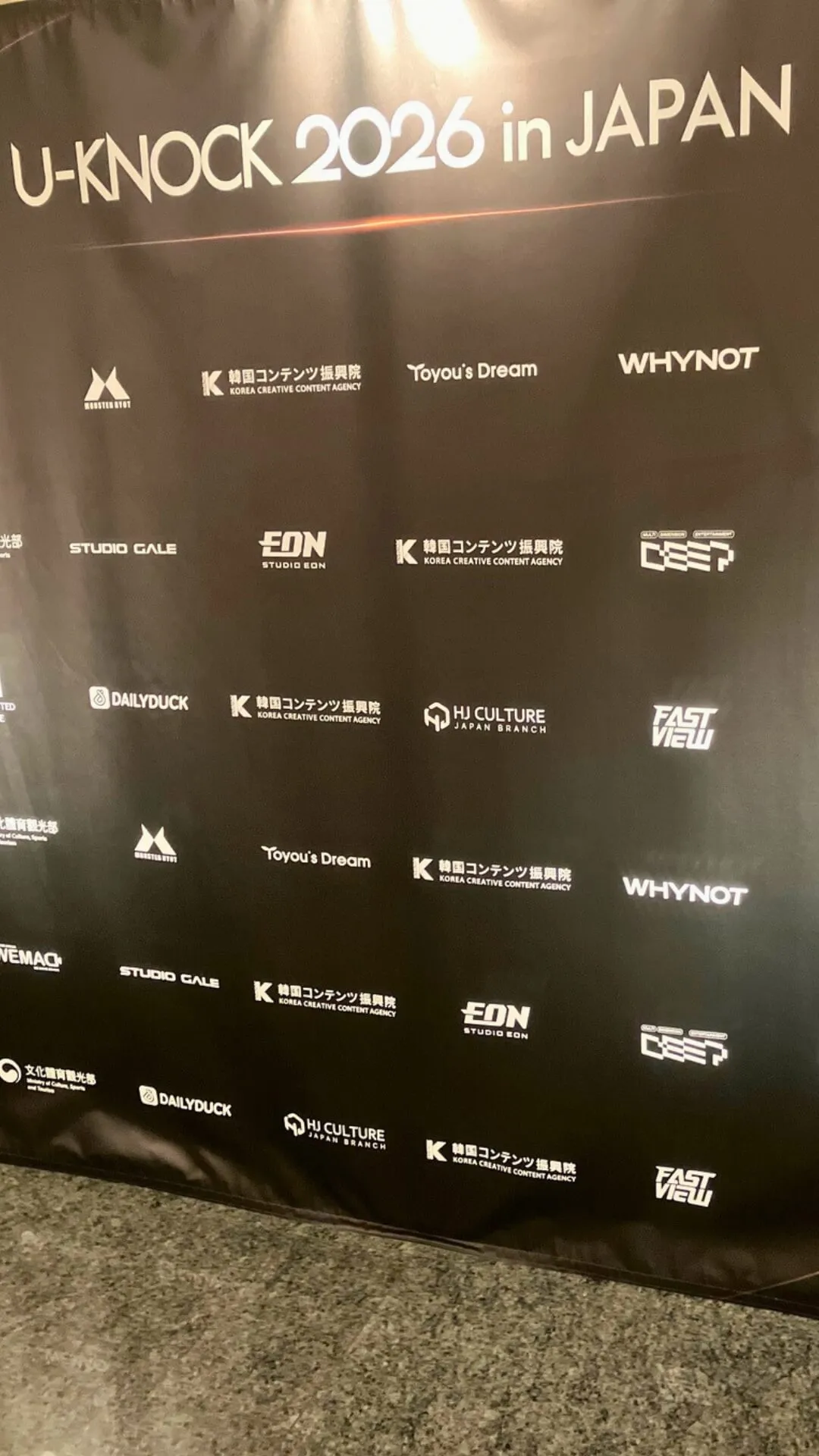
Event and Professional References
- U-KNOCK 2026 in Japan Summit — Official event information.
- Korea Creative Content Agency (KOCCA) — Korea’s public agency supporting the content industry.
- beSUCCESS Media Group — Global business support and event operation organization.
- Nanashino-chan LinkedIn Profile — Professional profile and licensing activity.
- U-KNOCK 2026 Participation Post — Public event participation record.
Participation does not imply endorsement, sponsorship, partnership, official affiliation, or a confirmed business relationship with KOCCA, U-KNOCK, beSUCCESS Media Group, participating companies, or displayed organizations.
Nanashino-chan Music for Digital Storytelling
Nanashino-chan provides original lo-fi music for webtoon trailers, web novel promotion, motion comics, character videos, animated web series, vertical stories, creator content, business promotion, and selected advertising campaigns.
2,000+ Original Lo-Fi Tracks
The catalog includes lo-fi hip hop, chillhop, jazzhop, ambient, chillwave, synthwave, emotional, urban, calm, reflective, and atmospheric music.
Story-Friendly Instrumentals
Many tracks are suitable beneath narration, dialogue, captions, character scenes, visual transitions, and limited animation.
Direct Rights Workflow
Nanashino-chan manages the offered original recordings and underlying compositions, simplifying many standard licensing discussions.
Commercial Creator Licensing
Available for eligible monetized videos, creator projects, business content, client-facing media, and defined commercial uses.
Campaign Sync Licensing
Available for eligible paid advertisements, launch campaigns, promotional distribution, and time-limited synchronization.
License Documentation
Buyers can retain the applicable license terms, Gumroad receipt or invoice, and certificate as evidence of permission.
Cross-Format Planning
Music can be considered across trailers, motion comics, character videos, vertical edits, localized versions, and campaign assets.
Custom Project Review
Studios, publishers, agencies, platforms, and IP owners can discuss recurring episodes, adaptations, broader territories, and unusual distribution.
Quick License Decision Guide for Digital Storytelling
Use the project’s commercial purpose, publishing method, client structure, campaign scope, and future expansion to identify the appropriate licensing direction.
| Project Situation | Likely Licensing Direction | Review Before Publication |
|---|---|---|
| Private, unpublished story prototype | Internal use may not require public distribution rights, but the music file must not be redistributed or supplied to unrelated parties | Confirm that the project will remain private and will not be used for promotion, investment outreach, client delivery, monetization, or advertising |
| Non-commercial personal story video | Personal Use License when the project is genuinely non-commercial and remains within the applicable terms | Check whether the project promotes commissions, crowdfunding, subscriptions, paid chapters, professional services, sponsorship, or commercial activity |
| Monetized creator video | Commercial Creator License when monetized audiovisual use and the relevant platforms are included | Confirm the licensed buyer, title, channel, platform, number of videos, and permitted project scope |
| Official publisher, studio, or business post | Commercial Creator License when organic business promotion is covered | Confirm the client, final publishing account, platform list, localization, and future promotional reuse |
| Paid advertising campaign | Sync License or campaign-specific commercial agreement | Confirm advertiser, campaign period, platforms, territories, paid media, creative versions, and archive rights |
| Recurring digital story series | Custom License or broader episodic-use agreement | Confirm the number of episodes, seasons, titles, tracks, territories, platforms, term, and monetization model |
| Animation, game, app, or audio adaptation | Custom licensing review before reusing music | Confirm permanent integration, software use, streaming, downloads, broadcast, interactive implementation, and adaptation promotion |
| Exclusive character or franchise theme | Separate custom negotiation | Confirm exclusivity, ownership, competitor restrictions, term, territory, media, and future availability to other licensees |
The safest licensing decision begins with the complete distribution plan. Do not choose a license based only on video length, file format, or the platform used for the first upload.
Common Digital Storytelling Music Mistakes
Choosing Music Only by Genre
A track may match “romance,” “fantasy,” or “action” while failing to support the specific character, dialogue, emotional arc, or narrative pacing.
Using One Track for Every Format
A full motion comic, vertical teaser, presentation, character PV, and paid advertisement may need different edits, structures, or music choices.
Relying on Platform Availability
Music available inside a social platform should not automatically be treated as cleared for client work, monetization, cross-platform reuse, or advertising.
Ignoring Dialogue & Caption Space
Dense music can make voices difficult to understand and encourage visual cuts that move too quickly for viewers to read.
Publishing Before Licensing
Purchasing permission after a client complaint, campaign launch, platform claim, or public release may not authorize earlier use.
Assuming a Trailer License Covers an Adaptation
A trailer, motion comic, recurring web series, animation, game, and embedded app experience are materially different uses.
Ignoring Localization
Translated subtitles, dubbed versions, shortened ads, regional accounts, and partner distribution may create additional creative versions.
Failing to Keep Records
Projects become difficult to verify when teams lose the license, receipt, track data, campaign dates, client information, and final URLs.
Frequently Asked Questions
What is digital storytelling music?
Digital storytelling music is music used to support stories presented through webtoons, web novels, motion comics, animation, character videos, vertical content, trailers, interactive media, and other digital formats.
What kind of music works for digital storytelling?
The best music depends on the story genre, emotional tone, character perspective, dialogue, narration, visual pacing, platform, and audience. Lo-fi, chillhop, jazzhop, ambient, piano, electronic, synthwave, and cinematic hybrid music can support different narrative formats.
Do digital storytelling projects need a music license?
Public, monetized, promotional, client-funded, commercial, advertising, and episodic projects should have permission covering the recording, composition, synchronization with visuals, platforms, and intended reuse.
Can the same music be used for a trailer and adaptation?
Not automatically. A trailer, motion comic, paid campaign, animated episode, recurring series, game, audio drama, and permanent platform integration may require different or broader permission.
Can Instagram or TikTok music be used in digital storytelling campaigns?
In-app music should not automatically be treated as a portable commercial license. Client delivery, monetization, paid advertising, cross-platform reuse, and long-term distribution may require separate permission.
Can music be edited for different story formats?
It depends on the license. Many audiovisual licenses allow basic trimming, fading, looping, and synchronization edits while restricting remixing, stems, standalone derivatives, and major alterations.
Can one license cover several episodes?
Not automatically. A single-project license may cover only one defined video, title, or campaign. Repeated use across episodes, seasons, characters, or properties may require broader licensing.
Can Nanashino-chan music be used for digital storytelling?
Nanashino-chan offers original music and licensing options for eligible webtoon trailers, web novel promotion, motion comics, character videos, animated web series, vertical animation, business videos, and selected paid campaigns.
Official Platform Music Resources
Platform music catalogs, account restrictions, advertising rules, and commercial-use conditions can change. Review current official guidance before relying on in-app music for a digital storytelling project.
- Meta Music Guidelines
- Meta Sound Collection
- TikTok Commercial Use of Music
- TikTok Commercial Music Library
- YouTube Audio Library Help
This page provides general educational information and does not constitute legal advice. The applicable music license, platform terms, production agreement, and local law determine the final rights position.
Choose a Nanashino-chan Music License
Nanashino-chan offers licensing options for eligible personal projects, monetized creator content, commercial videos, business social media, client projects, and paid campaigns.
Personal Use License
For eligible non-commercial projects that do not involve monetization, client delivery, business promotion, paid advertising, sponsorship, or commercial campaigns.
Commercial Creator License
For eligible monetized videos, creator projects, business social media, client-facing content, and other commercial audiovisual uses included in the license terms.
1-Month Sync License
For eligible paid advertisements, launch campaigns, social media advertising, promotional distribution, and time-limited synchronization with visual content.
3-Month Sync License
For longer eligible promotional and advertising campaigns requiring an extended campaign period across approved platforms.
Custom Review May Be Required
Recurring episodes, animated adaptations, platform integration, software use, broadcast, soundtrack release, exclusive rights, franchise-level licensing, and large international campaigns may fall outside standard license products.
Recommended Music Directions for Digital Stories
The Nanashino-chan catalog includes 2,000+ Original Lo-Fi Tracks for romance, slice-of-life, city nights, character development, reflective stories, suspense, visual promotion, and modern digital content.
Smooth Groove
A warm and polished direction for romance, lifestyle stories, character introductions, modern settings, and sophisticated promotional content.
Vaporwave Streets
A synth-influenced urban direction for city nights, technology, mystery, stylish characters, modern fantasy, and late-night scenes.
Smooth Transitions
A flexible background direction for motion, scene changes, narration, title cards, presentations, and cross-format storytelling.
Stillness Vibes
A quiet emotional direction for memory, reflection, healing, loneliness, internal monologue, and restrained dramatic scenes.
Lazy Afternoon Vibes
A relaxed direction for slice-of-life stories, cafés, friendships, school scenes, everyday routines, and calm character moments.
Soft Lights, Quiet Thoughts
A subtle atmospheric direction for narration, night scenes, emotional distance, thoughtful dialogue, and introspective storytelling.
Dreamy Vibes
A soft imaginative direction for fantasy, romance, memory, magical scenes, dream sequences, and emotionally open storytelling.
Autumn Pages
A reflective seasonal direction for web novels, reading scenes, nostalgia, personal growth, quiet relationships, and literary promotion.
Explore the Digital Storytelling Guide Cluster
Continue with the format-specific guides for webtoons, motion comics, web novels, animation, vertical stories, commercial licensing, and rights documentation.
Need Licensed Music for a Digital Storytelling Project?
Use original lo-fi music for webtoon trailers, web novels, motion comics, character videos, animated web series, vertical stories, publisher presentations, creator content, and paid campaigns.
Choose the license according to the actual project, client, platforms, monetization, advertising method, number of episodes, campaign period, territory, localization, and future reuse.
Home | All Guides | Music | Licensing | Works | About | Contact